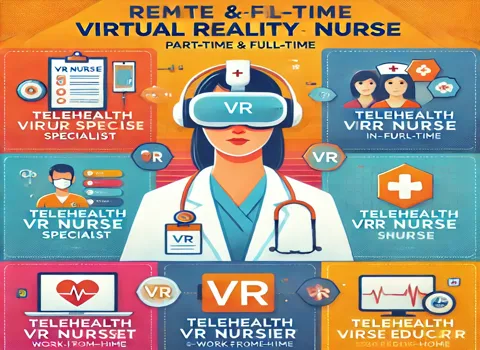
A stroke survivor works through a motor rehabilitation exercise inside a VR headset, guided by a nurse who's tracking every response in real time from hundreds of miles away. That's not a future scenario — it's this role. We're hiring a Telehealth Virtual Reality Nurse to deliver clinical care through immersive technology, remotely, to people who'd otherwise face a long drive, a waitlist, or no realistic option at all.
The Basics
Full-time, fully remote, paying $148,500 a year. Hours are largely flexible, with some coordination required around scheduled patient sessions.
What the Role Actually Involves
This isn't traditional bedside nursing translated onto a screen. It's a genuinely different clinical skill set, blending direct patient care with technology most nursing programs never covered.
- Delivering therapeutic care through VR platforms — guided sessions, virtual consultations, and immersive health education
- Training patients to use VR headsets and applications safely, especially those new to the technology
- Monitoring patient progress in real time using integrated analytics and direct clinical observation
- Adjusting care protocols as a patient's needs shift over the course of treatment
- Documenting patient sessions and outcomes accurately in electronic medical records
- Collaborating with physical therapists, behavioral health specialists, and software developers to refine patient-specific VR programs
What You'll Need
- Education: Associate degree required
- Experience: At least 3 years of clinical nursing experience; telehealth or remote care experience is a strong plus
- Active Registered Nurse (RN) license in good standing, multi-state privileges preferred
- Comfort with digital clinical tools — EMR systems, patient portals, and video conferencing platforms
- Genuine interest in or working knowledge of VR/AR platforms and wearable health technology
- Strong interpersonal skills for building trust with patients who've never met you in person
- Sound clinical judgment in a setting where you can't rely on physical presence to read a situation
Where You Can Stand Out
- Advanced nursing certification or specialized training from an accredited program
- Time spent specifically in remote therapy work, cognitive rehab programs, pain management, or behavioral health settings
- A background touching digital health tools, telemedicine platforms, or the UX/UI side of immersive design
- Fluency in more than one language to support a broader range of patients
What a Shift Actually Looks Like
The day usually opens with a review of the schedule and any updates to patient care plans or VR modules. From there, sessions run one-on-one — maybe guiding a stroke survivor through gamified motor exercises, or helping a veteran manage anxiety inside a calming VR environment. Between sessions, there's time to work with developers to refine features based on real patient feedback and to review session data — range of motion, response times, engagement levels — before updating a care plan accordingly.
Why This Work Actually Matters
Distance and mobility limitations keep many people from receiving consistent care. This role removes a real chunk of that barrier — patients get expert clinical support without a commute, a waiting room, or the logistics that often cause people to skip appointments altogether. Naukri Mitra listed this role with that access gap specifically in mind, since immersive telehealth is one of the more direct ways nursing can reach patients who'd otherwise fall through the cracks.
What Comes With the Role
- Fully remote work with scheduling flexibility around patient sessions
- Health insurance coverage
- Paid time off and standard holidays
- Support for continuing education and advanced certifications in digital health and telemedicine
Where This Can Lead
This isn't a role with a fixed ceiling. Nurses who build strong results here often move into supervisory roles, help lead new virtual care initiatives, or contribute directly to testing and developing new VR healthcare applications. Others expand into multidisciplinary work touching AI-assisted diagnostics or biofeedback technology as those tools mature.
Who Tends to Thrive Here
The strongest fit isn't necessarily the most tech-fluent nurse in the building — it's someone with solid clinical judgment who's genuinely curious about new tools rather than intimidated by them. Comfort with ambiguity matters too, since immersive care is still a developing field and not every situation has an established protocol yet.
Eligibility
This role is open to candidates in the United States, Canada, the United Kingdom, EU member states, Australia, and India, as well as a number of other approved regions.
How to Apply
Send your resume, your active RN license details, and any relevant telehealth or VR-related experience. Shortlisted candidates will be invited to a clinical scenario discussion as part of a final conversation.