
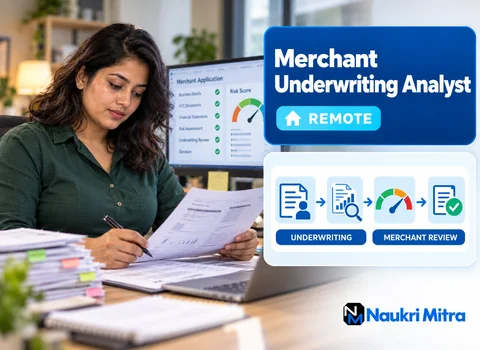
"Free trial, then $49.95 a month." That line is printed beneath the checkout button of an online store selling keto weight-loss gummies, and its application arrives with three months of bank statements. This opening sits among the remote merchant underwriting analyst jobs open worldwide: full-time, fully remote, with $4,000 USD paid each month. Below, the file is opened page by page.
Every merchant underwriting analyst job description starts with the website. You confirm that the products match the application and that the model fits risk policy. Reviewers check:
A common beginner mistake is approving a polished homepage without testing checkout. The risky detail usually sits in grey text under "Pay".
KYB means Know Your Business: confirming the company exists and is controlled by the people listed. You pull the registration record, match directors and address, and identify beneficial owners (often anyone holding 25% or more). Each owner then gets identity verification, sanctions and PEP screening, and an adverse media search.
Card acquiring adds the Mastercard MATCH list, which records merchants (and their principals) terminated by other acquirers. A director listed under an earlier company is usually an escalation rather than an instant decline, because the reason code matters. A typical case note: "Director 2 matches MATCH entry for prior entity, reason: excessive chargebacks. Escalated to senior underwriter, file on hold."
You compare deposits with stated volume, check the average balance, count returned items, and look for payouts from other processors (the merchant may be leaving after problems). The gummies store's summary could read:
Rationale: the business is real, but trial billing and the undisclosed processor raise chargeback exposure, so volume is capped at proven levels and the reserve covers refunds. Figures are illustrative.
The decision is rarely a plain yes or no. You set a monthly processing limit, sometimes a per-transaction cap, and reserve terms: rolling (a percentage of each settlement held for a period), upfront, or delayed settlement. The core sum is exposure: how much could come back as refunds and chargebacks between sale and delivery. Pre-orders push it up fast. Then you approve, decline or escalate beyond your authority limit, writing a note a colleague could follow months later.
Many payments teams aim for a first decision within 24 to 48 business hours on standard files, with longer windows for high-risk cases. A realistic daily target is around 8 to 15 files. Working from home on that clock means:
The listing asks for a finance, accounting or business graduate with 1 to 3 years in merchant underwriting, credit or payments onboarding. Teams train newer analysts on their own policies, but you should already be able to read a balance sheet and a bank statement comfortably. The merchant underwriting analyst skills that matter most are statement reading, KYB checks, card network rules and judging exposure, backed by strong Excel (pivot tables, lookups) and clear written English.
NMI, a payments technology company, has advertised Risk and Underwriting Analyst roles, and HubSpot has advertised a Payments Underwriting Risk Analyst role for HubSpot Payments. Neither is the employer of this listing.
Pay is a flat $4,000 USD monthly for full-time work, or $48,000 a year before tax in your country. In India, the conversion lands around ₹3.8 lakh, rising or falling with the rupee. When comparing offers, use the merchant underwriting analyst salary per month, not an annual figure padded with variable pay, and check your bank's conversion charges.
People typing merchant underwriting analyst jobs no experience into a search bar are usually graduates new to payments. This listing asks for 1 to 3 years, but the route in is short. Good first roles are merchant onboarding associate, KYC analyst, credit processing officer and chargeback analyst. The usual answer to "how to become merchant underwriting analyst" is a year in one of these, then shadowing underwriting decisions. Most entry level remote merchant underwriting analyst jobs go to people who took that step.
No single merchant underwriting analyst course is mandatory; financial statement analysis plus payments fundamentals covers most theory. A well-known merchant underwriting analyst certification is the Certified Payments Professional (CPP) from the Electronic Transactions Association. It helps, but statement reading is still tested.
On your merchant underwriting analyst resume, put numbers on the work: files reviewed per week, average turnaround, chargeback outcomes. Expect merchant underwriting analyst interview questions such as:
Credit underwriting asks whether a borrower can repay a loan. Merchant underwriting estimates what the processor stands to lose through refunds, chargebacks or a vanished merchant. The evidence overlaps, but merchant work adds website review, MCCs, card network rules and delivery-time exposure. Credit officers often cross over.
The usual ladder runs analyst, senior underwriter (higher authority limits), underwriting lead, then risk manager, who owns policy, portfolio monitoring and loss targets. Analysts who write clear notes and spot patterns across files tend to move up first.
Applying, and every later step, costs nothing.
Treat your application like a clean merchant file: a one-page resume and a short note on underwriting or onboarding work you have done. Applying is free. If you have been tracking remote merchant underwriting analyst jobs hiring now, send your resume through this page. It is one of the merchant underwriting analyst jobs remote worldwide, so any country is fine, and unlike many merchant underwriting analyst work from home jobs, it carries full-time monthly pay and genuine approve-or-decline work.