
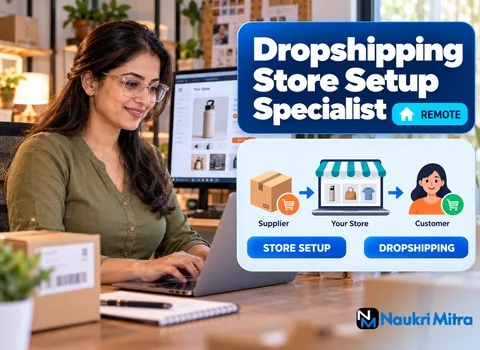
The final message to a dropshipping client is short. Store is live. Test order placed and refunded. Refund, shipping, privacy and terms pages published. Payments connected to your own account. Supplier app linked and syncing. Getting to that note is what you are paid for. It falls under online dropshipping store setup specialist jobs, part-time and remote at $25 per hour in USD, wherever in the world you are based. You take Shopify stores from an empty admin to a working checkout, then hand them over cleanly. That, in one line, is the dropshipping store setup specialist job description.
A real build starts with access, and the right kind. The client creates the store under their own name and email. You send a collaborator request from your Shopify Partner dashboard, the client approves it, and you only get the permissions they tick. If a client offers to send their login and password instead, decline politely and explain why. Shared owner logins blur who did what and leave you holding keys you should never have had.
Some owners switch on a collaborator request code, a short code they share with you so random requests are blocked. That is a good sign.
Start with a free Shopify theme such as Dawn unless the client already owns a paid one. Free themes load fast, get updates and cost the client nothing. Customisation here means the theme editor: colours, fonts, logo, header and footer menus, a homepage with a clear hero section, collection pages and a product template. Move sections around without breaking the mobile layout, and check every page on a phone, because most buyers will see the store on one.
This is the step where clients need the most protection. The payment account must belong to the store owner and be verified by them, with their own identity documents and their own bank account. You can walk them through Shopify Payments, PayPal or a third-party gateway on a call and check the settings afterwards. You do not enter your bank details, upload your ID, or receive payouts on their behalf. Ever.
Which gateways are available depends on the country the business is registered in, so check Shopify's current list for that country instead of assuming. If verification is pending at handover, say so in writing.
Dropshipped orders usually ship from a supplier's warehouse, sometimes from another continent. Set up zones for the countries the client will sell to, with delivery estimates the supplier can actually meet. A store promising three-day delivery on a two-week product earns chargebacks.
Then the policy pages: refund, shipping, privacy and terms of service, plus a contact page with a real email. Shopify can generate templates, but they are not legal advice. Fill in the real return window, and tell the client plainly that the final wording is their responsibility.
Most clients arrive with an app in mind. DSers ties the store to AliExpress listings. AutoDS pulls from several supplier sources and automates price and stock updates. Zendrop works with its own supplier network. Each has its own subscription plans, which the client normally pays for, so check current pricing with them before you install anything.
You install the app from the client's account, import the products they chose, map variants such as size and colour, set pricing rules, and confirm orders will route to the supplier. You will hear clients and course sellers talk about "winning products". That is a marketing term, not a category of item. The client picks what to sell. You build the shop around it.
Imported listings arrive with machine-translated titles, near-identical photos and promises nobody can keep. A good product page has a plain title, an opening line saying what the thing does, a few scannable points, honest specifications and size guidance. Cut any claim about health effects or certifications that the supplier cannot prove.
For images, crop to a consistent square, compress files so pages load quickly, and write alt text. Canva or Photoshop is enough. If you use AI tools for copy or images, check each tool's current terms on commercial use, and tell the client.
Before handover, place a real order with a real card, watch it reach the admin and the supplier app, then refund and cancel it. Also try a discount code, check tax and shipping lines, and open the confirmation email on a phone. Broken variant images, a missing shipping zone and an unlinked supplier product are the usual finds.
Then the handover itself: the note at the top of this page, a short screen recording of where things live, and removal of your own collaborator access once the client confirms they are happy.
Hands-on Shopify experience is the main requirement, and no degree is needed. Beyond that, the expected dropshipping store setup specialist skills are familiarity with DSers, AutoDS or Zendrop, basic theme customisation, product page copywriting, and payment, shipping and policy setup. Links to stores you have built are expected, and good English matters because most of the job happens in client chats.
A free Shopify Partner account is worth having. It lets you request collaborator access and build development stores for practice. Shopify's free learning material covers most of the admin. No dropshipping store setup specialist certification is required, and no paid dropshipping store setup specialist course replaces two stores you built yourself.
On money: this listing sets the dropshipping store setup specialist salary per hour at $25 USD, for part-time dropshipping store setup specialist work from home. Hours depend on how many stores come through, so no weekly total is promised, and tools on your side, such as a Canva plan, are your expense.
A setup specialist works inside the admin and the theme editor: settings, apps, content, testing. A Shopify developer writes Liquid, builds custom sections, edits theme files in code, and connects APIs. A little CSS is fine in this role, but if a client asks for a custom app, a headless storefront or heavy theme rewrites, say it is developer work and quote it separately or refer it on.
With no client history, build two demo stores in development mode, in different niches, with written product pages and policies. Those links beat any resume. When you write one, list stores, apps used and what you fixed.
Freelance dropshipping store setup specialist jobs are posted on Fiverr and Upwork, though neither is the only option. A fixed-scope offer is easier to say yes to than an open hourly listing. Newcomers can find dropshipping store setup specialist jobs for freshers, but the first client usually comes from one small job done carefully, then a review. Expect questions like how you would set up payments for a client in another country.
Fake clients are common. Watch for a "project brief" sent as a download from an unknown link, a request to buy a theme with your money first, or an offer to pay outside the marketplace to "save fees", which breaks platform rules and removes your protection. The overpayment trick still works: a client pays more than agreed, asks you to refund the difference another way, and the original payment is reversed later.
Protect clients too. If a client paid for a course promising easy passive income, be honest that dropshipping profits are not guaranteed and that a setup specialist builds the store but cannot promise sales. If a supplier has hundreds of identical five-star reviews, suggest ordering a sample before launch.
An application for these part time dropshipping store setup specialist jobs needs links to the stores you have built, a line on which supplier apps you have used, and a short note on how you handle collaborator access and payment setup.