
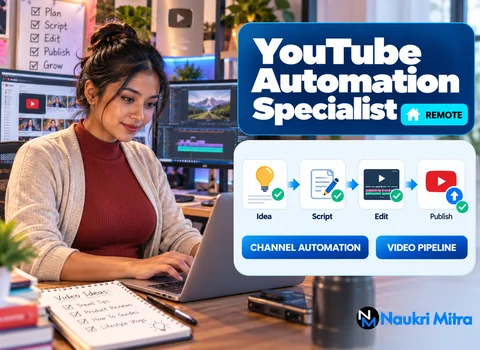
Sketch the team behind one faceless channel and it looks like a wheel. The scriptwriter finishes drafts in her evening on one side of the world. The narrator is not a person at all but an ElevenLabs voice, rendered whenever someone asks for it. The editor cuts in CapCut eight or nine hours ahead of the writer, and the thumbnail designer, on a third continent, mostly replies while everyone else sleeps. At the hub sits one person holding the schedule, and that is the seat online youtube automation specialist jobs like this one are filling. The hours are part-time, the work happens remotely from wherever you live in the world, and USD $18 is paid for each hour.
A word of caution about the title. Very little of this runs by itself. Software takes over some of the slow, repetitive production steps, and what is left is coordination, review and judgement. That leftover is the job.
Every video begins as a row in a topic sheet. You use vidIQ and TubeBuddy to see what viewers in the channel's niche are typing into search, which subjects are already crowded by large channels, and where smaller uploads on a theme have done unusually well. Both tools hand out scores; use them to narrow a long list, then sanity-check the shortlist against the channel's own audience data in YouTube Studio.
You hand over a topic, an angle, a note on what rival videos already say, and a target runtime. The channel owner usually sets the overall direction. Your part is keeping that queue far enough ahead that no writer ever sits waiting for an assignment.
Each script goes out with a short assignment note: topic, angle, runtime, sources worth checking and any claims the owner never wants made. When the draft returns, you read it twice. Once for facts and structure, and once out loud, because a synthetic voice will read it word for word. Long sentences, stacked brackets and ambiguous abbreviations trip a text-to-speech model far more than they trip a human narrator.
You also send back scripts that simply restate the top three videos on the topic, whether a person or an AI tool wrote them. That kind of draft is where channel monetisation trouble usually starts, as a later section explains.
Approved scripts become audio in ElevenLabs. Your work there is practical: fixing pronunciations of names and places, adjusting pacing, regenerating the lines that come out flat, and exporting clean files named the way the editor expects.
Voice rights deserve real care. A voice from the platform's library is used under whatever terms the account's plan currently allows. A cloned voice needs clear, written consent from the person it belongs to, and nobody should clone a celebrity, a public figure or another creator. Commercial use depends on the plan, so read the tool's terms rather than assuming. Subscriptions often land on the freelancer, so confirm early whether the channel owner covers the account. YouTube also asks creators to disclose realistic altered or synthetic content in certain cases; read the current rules before upload.
You are not the editor, but you are the first viewer. Watch every cut before it goes near the channel and check that the narration and visuals stay in sync, the footage actually matches what is being said, music and stock clips are licensed for the channel's use, captions are spelled correctly and no watermark slipped into the export.
Send notes once, consolidated, with timestamps. Scattered feedback can cost a remote editor a day of back-and-forth.
The designer's thumbnail gets checked at phone size next to the title it will sit beside. You settle the final title, write the description and chapters, add tags, set end screens, tick the altered-content setting where it applies and schedule the video in YouTube Studio. Access should come through channel permissions on your own Google account, never a shared password.
Once a week you open the analytics and note views, click-through rate, average view duration and the retention curve for each recent upload. Then the useful part: which topics held attention and which thumbnails earned the click. Those notes go straight back into the topic sheet. You flag patterns; the owner decides what changes.
Most of this youtube automation specialist job description is managing freelancers and deadlines. Because it is youtube automation specialist work from home for everyone involved, a shared tracker shows every video's stage, owner and due date. Write handoff times in each person's local time, build a buffer of a day or two into every stage, and keep a backup editor in mind for the week someone goes quiet. Chase politely and early.
This is also where the line with a channel manager falls. A channel manager often looks after the whole channel: strategy, community, comments, sometimes sponsorships. An automation specialist runs the production line for faceless videos and reports upward. On small channels one person may do both, but this listing is about the line.
YouTube's monetisation rules expect original content that adds value for viewers. Channels built on reused material, such as other people's clips with little commentary, or on repetitious, mass-produced uploads that differ only slightly from each other, risk being refused for the Partner Program or demonetised later. YouTube now groups mass-produced, repetitive uploads under its inauthentic content policy. A template video with fresh AI narration over scraped text invites exactly that scrutiny.
Policies get revised, so read the current YouTube Partner Program policies and advertiser-friendly guidelines yourself instead of trusting a course summary. In practice you are the quality brake: if a batch of scripts starts to look interchangeable, say so before anything gets voiced.
Degrees are not part of the requirement. Of the youtube automation specialist skills, basic YouTube knowledge and strong organisation matter most, followed by familiarity with vidIQ, TubeBuddy, ElevenLabs and CapCut, the ability to manage freelancers and deadlines, and good English for written briefs and feedback. YouTube creator courses help, including the free lessons YouTube publishes for creators. You will need a laptop and a stable internet connection.
No certification is required either. A youtube automation specialist course can speed up learning the tools, but people hiring care more about a working tracker and a few finished videos. On a youtube automation specialist resume, show one pipeline you have run and how long each stage took. Typical youtube automation specialist interview questions cover a missed edit deadline or a script you rejected.
The pay here is $18 per hour. As with most part time youtube automation specialist jobs, the weekly hours swell and shrink with the upload calendar and nobody can guarantee them, and any youtube automation specialist salary figure you see elsewhere is a rough reference, not a promise.
The fastest way to learn how to become a youtube automation specialist is to run the whole pipeline once on a small test channel: three videos, start to finish, with your own voice or a properly licensed library voice, plus the tracker you used. That record answers most questions a hiring owner will ask, which is why youtube automation specialist jobs for freshers do exist.
Places to look include YTJobs, a board built around YouTube creator roles, and Upwork, where freelance youtube automation specialist jobs appear among other video work. Lead with your test channel, keep the pitch short and never pay to apply.
Be sceptical of courses promising passive income while you sleep, paid "done-for-you" channels sold as ready-made businesses, screenshots of earnings with no context, and any service selling subscribers or views, which breaks YouTube's fake engagement policy and can get a channel removed. Real faceless channels take months of steady work, and plenty never qualify for monetisation at all. A role like this one pays you for organised effort by the hour, which is a more honest deal.