📚 Table of Contents
- Introduction: Healthcare That Follows You, Not the Other Way Around
- Telemedicine in Simple Terms: More Than Just Video Calls
- The Future of Telemedicine: What Is Really Changing
- Healthcare That Feels More Immediate
- AI Becoming a Quiet Assistant in Healthcare
- Wearables Turning Daily Life into Health Data
- Healthcare Without Borders
- Why Telemedicine Is Growing So Fast
- Access That Actually Reaches People
- Lower Pressure on the System
- Faster Decisions, Less Waiting
- Challenges That Still Cannot Be Ignored
- Not Everyone Is Online Yet
- Trust and Privacy Matter More Than Ever
- Rules Are Not the Same Everywhere
- Some Things Still Need Physical Care
- Opportunities That Are Quietly Expanding
- Reaching Underserved Regions
- Specialized Digital Clinics
- Healthcare at Work
- Smarter Medical Travel Decisions
- Technology Behind the Shift
- Where Things Are Headed Next
- Conclusion: A Shift That Is Already Underway
The Future of Telemedicine: Global Remote Healthcare Opportunities
Introduction: Healthcare That Follows You, Not the Other Way Around
There was a time when getting medical help meant rearranging your entire day—sometimes your entire week. You would sit in crowded waiting rooms, flip through old magazines, and hope your turn would come soon. That version of healthcare is slowly fading. Today, the future of telemedicine is unfolding in a much quieter, more seamless way. A doctor is now just a video call away. A prescription can arrive digitally. A follow-up doesn’t always require another trip across town. For many people, especially in remote and underserved regions, this shift is not just convenient—it is life-changing. The interesting part is how naturally it has all started blending into daily life. What once felt like a backup option during emergencies is now becoming a preferred way to access care.Telemedicine in Simple Terms: More Than Just Video Calls
At its core, telemedicine is about using technology to deliver healthcare without physical presence. But reducing it to just “online consultations” misses the bigger picture. It includes remote diagnosis, digital prescriptions, mobile health tracking, and continuous patient monitoring. In many cases, it also connects specialists across countries with patients who may never have had access to them otherwise. The shift has been driven by a mix of necessity and innovation. Over time, people have become more open to digital healthcare transformation, especially as smartphones and internet access have become more integrated into everyday life. A few forces have quietly pushed this change forward:- Growing reliance on online doctor consultation services
- Faster mobile internet and smartphone adoption
- Healthcare gaps in rural and semi-urban regions
- Increasing comfort with digital-first solutions
The Future of Telemedicine: What Is Really Changing
When we talk about the future of telemedicine, it is not just about technology upgrades. It is about how healthcare itself is being redefined.Healthcare That Feels More Immediate
One of the biggest changes is speed. People no longer want to wait days for basic medical advice. They expect quick, reliable answers. This is where virtual healthcare consultation services are making a real difference. Whether it is a child with a fever or someone managing long-term conditions, the ability to connect with a doctor quickly changes the entire experience.AI Becoming a Quiet Assistant in Healthcare
Artificial intelligence is not replacing doctors, but it is supporting them in subtle ways. It helps analyze symptoms, organize patient data, and even identify risks earlier than traditional methods. In many cases, AI-driven tools serve as an extra layer of support in remote healthcare services, enabling faster, more data-informed decision-making.Wearables Turning Daily Life into Health Data
Think about how often people wear smartwatches now. Heart rate, sleep cycles, oxygen levels—health data is being collected continuously without any effort from the user. This is quietly changing medical consultations. Doctors are no longer relying only on what a patient describes; they are also looking at real-time patterns.Healthcare Without Borders
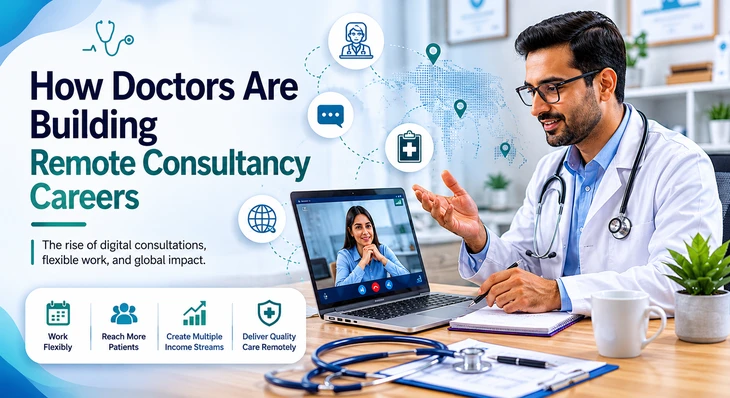
One of the most powerful shifts is global access. A patient in one country can now consult a specialist thousands of kilometers away through global telehealth platforms. This is especially meaningful for rare conditions or specialized treatments where local expertise may be limited.Why Telemedicine Is Growing So Fast
If you look closely, the rise of telemedicine is not surprising. It solves problems that healthcare systems have struggled with for decades.Access That Actually Reaches People
For someone living far from a city, even a basic consultation can mean hours of travel. Telemedicine removes that barrier completely. Healthcare becomes something that reaches the patient, not the other way around.Lower Pressure on the System
Hospitals are often overloaded with cases that don’t always need physical visits. Remote healthcare services help filter and manage these cases more efficiently. This allows doctors to focus more on serious conditions that truly need in-person care.Faster Decisions, Less Waiting
There is a certain frustration that comes with waiting—waiting for appointments, reports, and advice. Online doctor consultation services significantly reduce that delay, especially for follow-ups and non-critical issues.Challenges That Still Cannot Be Ignored
Even with all its progress, telemedicine is not perfect. And pretending otherwise would not be realistic.Not Everyone Is Online Yet
A major gap in internet access still exists. In some regions, connectivity is unreliable, which directly affects the quality of care.Trust and Privacy Matter More Than Ever
When health data moves online, security becomes a serious concern. Patients need to feel confident that their information is protected.Rules Are Not the Same Everywhere
Healthcare regulations differ widely between countries. This creates friction for platforms trying to scale globally.Some Things Still Need Physical Care
No matter how advanced technology becomes, certain diagnoses require touch, examination, and physical observation. Telemedicine supports healthcare—it does not fully replace it.Opportunities That Are Quietly Expanding
Despite challenges, the space is full of growth potential.Reaching Underserved Regions
One of the most impactful opportunities lies in rural healthcare. Even basic access to a doctor can change outcomes dramatically in these areas.Specialized Digital Clinics
We are also seeing more focused platforms—mental health support, skin care consultations, chronic disease management—all handled digitally with increasing precision.Healthcare at Work
Companies are beginning to include virtual healthcare consultation services as part of employee benefits. It saves time, reduces absenteeism, and supports overall well-being.Smarter Medical Travel Decisions
People considering treatment abroad now often start with online consultations. It helps them understand options before committing to travel.Technology Behind the Shift
The backbone of this transformation is technology working quietly in the background. Cloud systems store patient records securely. Mobile apps make consultations simple. AI tools assist diagnosis. High-speed networks make video consultations smooth. Blockchain adds an extra layer of data protection. Each of these tools is useful individually. Together, they are reshaping how healthcare operates.Where Things Are Headed Next
Looking ahead, healthcare will likely become more blended rather than fully digital or fully physical. We will see hybrid models where patients move between online and offline care depending on their needs. Some clear directions are emerging:- More routine care is shifting to digital platforms
- Stronger public investment in healthcare technology
- Personalized treatment plans based on continuous data
- Wider acceptance of global telehealth platforms