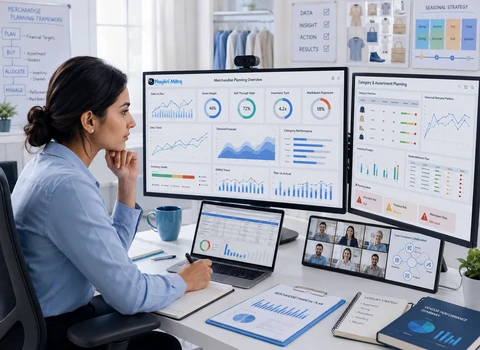
A merchandise plan looks fine on paper right up until the first week of actual sales data comes in and tells a different story. Knowing how to read that shift — and act on it before it turns into a stockroom full of markdowns — is what separates a planner who's good with spreadsheets from one who actually moves the business. We're hiring a
Virtual Retail Merchandise Planner who does the second kind of work.
This is a remote role paying $100,000 annually. You'll own merchandise strategy for your assigned categories, balancing sales forecasts, inventory levels, and vendor relationships without ever setting foot in an office.
What the Role Covers
Merchandise planning here isn't a single task — it's a handful of interlocking ones, and you'll touch most of them in any given week.
You'll build and run merchandise plans for your categories, using sales trends and market signals to forecast demand rather than guess at it. Inventory needs constant attention too: tracking stock levels, catching discrepancies during audits, and managing markdowns before excess inventory eats into margin. On the analysis side, you'll dig into sales performance, put together KPI reports covering margin and inventory metrics, and build financial forecasts that actually hold up against real targets.
Vendor relationships fall under this role as well — negotiating pricing and delivery terms, and holding suppliers accountable when performance slips. You'll also shape product assortments alongside design and product teams, adjusting the mix as seasons and customer behavior shift.
- Develop merchandise plans aligned with broader business goals, not just category-level targets
- Monitor inventory and adjust plans to avoid both stockouts and overstock
- Analyze sales data and present KPI reports to leadership
- Negotiate vendor terms and evaluate supplier performance regularly
- Curate and refine product assortments based on real sales data and market trends
What You Need to Bring
A bachelor's degree in merchandising, business administration, finance, or a related field is required, along with at least 3 years of experience in retail merchandise planning — remote experience is a plus, but not mandatory.
Beyond that, you should be comfortable interpreting complex datasets and translating them into decisions, not just charts. Fluency in Excel and retail planning software is expected. You'll need to communicate clearly with a fully remote team, juggle competing priorities without dropping deadlines, and bring a proactive streak to problems rather than waiting for someone else to flag them first.
What Sets a Strong Application Apart
E-commerce or online retail merchandising background stands out immediately. So does a genuine handle on current retail trends and shifting consumer behavior — not textbook knowledge, but the kind that comes from watching a category move in real time. Strong attention to detail matters too; a missed decimal in a forecast doesn't stay small for long.
How the Team Actually Operates
You won't be planning in a vacuum. Marketing, operations, and finance all weigh in on merchandise strategy, and part of the job is keeping those conversations moving instead of letting plans stall in someone's inbox. Regular check-ins keep everyone aligned on what's working and what needs a course correction. Naukri Mitra connected this listing with planners who want ownership over their categories without losing that cross-functional support — which is exactly the balance this role is built around.
Tools You'll Rely On
Retail planning software does the heavy lifting on forecasting and inventory tracking, and staying current on new tools in that space is part of the job, not an afterthought. You'll also help train teammates on using these systems effectively, since a planning tool is only as useful as the team's comfort with it.
Compensation and Benefits
The role pays $100,000 annually. Beyond salary:
- Fully remote flexibility, with no relocation or office requirement
- Professional development support, including training on retail planning software and industry certifications
- Performance-based bonus opportunities tied to category and business results
- A collaborative, cross-functional team structure rather than siloed planning work
What Success Actually Looks Like
A category running well under this role means fewer emergency markdowns, forecasts that hold up against real demand, and vendor relationships that don't require constant firefighting. It's less about hitting every KPI perfectly and more about catching problems early enough that they never become KPIs worth worrying about.
Who We're Looking to Add
This role suits someone who's equal parts analytical and decisive — comfortable pulling apart a spreadsheet, but just as comfortable making a call when the data only tells part of the story. If you've spent a few years in retail planning and are ready to run categories with real autonomy, this is a strong fit.
Ready to Apply?
Send your resume along with a short note on the categories or brands you've planned for, and what kind of impact you've had on inventory turnover or margin in past roles. We review applications as they arrive, and candidates from all backgrounds are welcome and encouraged to apply.