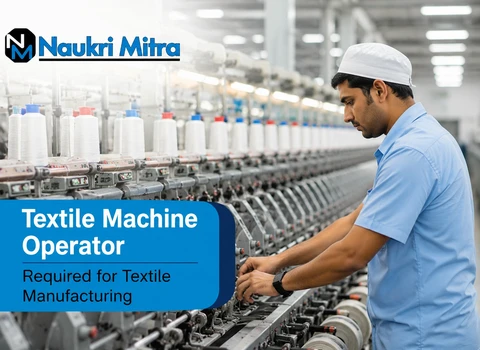
What Does a Textile Machine Operator Actually Do?
Walk into any spinning or weaving unit in Surat, and you'll notice the same thing: rows of machines running non-stop, and someone standing near each one, watching, adjusting, catching problems before they turn into wasted fabric. That's the job of a Textile Machine Operator. It's a full-time position based in Surat, Gujarat, India, and it sits right at the center of how textile fabric actually gets made, not designed on paper, but produced on the floor, meter by meter.
Surat has been a textile town for decades. Ask around, and most people here know someone who works in a mill or processing unit. That's not a coincidence; the city's economy leans heavily on fabric production, and units are always looking for operators who can keep machines running without constant supervision.
Why This Role Exists in the First Place
Machines don't run themselves, not reliably anyway. Yarn breaks. Tension shifts. A roller can start slipping without warning. If nobody's watching, a small issue turns into hours of bad fabric before anyone notices. That's the gap this role fills. An experienced operator catches these things early, sometimes just from the sound of the machine changing, and that alone can save a factory a lot of money in wasted material.
A Regular Shift, Start to Finish
Most shifts begin with a walk-around to check oil levels, yarn tension, and machine settings before anything starts running. Once production begins, the real work is in staying alert. You're watching for thread breaks, checking fabric as it comes off the machine for weak spots or uneven texture, and making small adjustments when something's off. Toward the end of the shift, there's usually paperwork noting output, any downtime, and material used, so the next shift knows exactly where things stand.
The Daily Responsibilities
On paper, the job covers a fixed set of tasks. In practice, no two days feel identical because the problems that come up vary.
- Operating and adjusting spinning, weaving or processing machines during the shift
- Loading yarn, thread or fabric rolls, and unloading finished material
- Spotting defects in fabric, uneven weave, broken threads, discoloration
- Keeping daily logs of output and any machine downtime
- Basic cleaning and oiling of machine parts between runs
- Flagging bigger mechanical problems to the maintenance team instead of trying to fix everything solo
Where People in This Role Actually Work
Spinning mills, powerloom units, weaving sheds, fabric processing houses- this is the range of places hiring for this kind of work in and around Surat. Some units handle cotton, others work mostly with synthetic or blended fabric, and the machines can differ slightly depending on what's being produced. What stays constant is the pace; textile floors rarely slow down during working hours.
Machines You'll Get to Know
Spinning frames, power looms, warping machines, sizing units- these become familiar fast once you're on the floor regularly. Alongside the big machines, operators also use smaller tools like tension gauges and thread counters to check quality as fabric moves through production. None of this requires an engineering degree to learn, but it does require patience and repetition before it becomes second nature.
What Employers Look For
A background in ITI, particularly in a textile or machining-related trade, gives candidates an edge, since it means less time spent explaining basic machine mechanics. That said, plenty of units bring in freshers and train them on the specific machines they'll be working with. What matters more than a certificate, honestly, is whether someone stays focused during long shifts and doesn't panic when something goes wrong mid-run.
The Physical Side of the Job
This isn't desk work. Expect to be on your feet for most of the shift, moving between machines, occasionally lifting rolls of fabric or yarn. Units typically run in shifts, so operators should be prepared for rotating or fixed shift schedules depending on how the factory operates. The floor can get warm, especially near running machinery, and it's rarely silent.
Staying Safe on the Floor
Moving parts and fast machines mean safety isn't optional. Most units require safety shoes at a minimum, and, depending on the section, ear protection or masks may also be needed due to the noise and dust levels near certain machines. Before doing any manual adjustment near a running machine, operators are expected to follow proper shutdown steps, not shortcuts, even if it slows things down by a minute or two.
What Trips Up New Operators
Early on, the hardest part isn't the machine itself; it's learning to recognize when something's wrong before it becomes obvious. That skill comes with time on the floor, not from a manual. Shift timings can also take adjustment, especially for anyone new to factory work. Most operators say the first few weeks are the toughest, and things settle into a rhythm after that.
Building a Career from Here
Operators who stick with it and perform consistently often move up to senior operator roles, or shift into supervisory and quality inspection positions within the same unit or industry. Growth here tends to come from reliability and a solid track record on the floor rather than from formal promotions alone.
Pay and What Else Might Come With It
This role, full-time, based in Surat, Gujarat, pays ₹26,000 per month. Beyond the base salary, some employers offer extras like overtime pay, PF, ESI coverage, bonuses, uniforms, or transport support, though these vary by factory and aren't guaranteed across the board.