
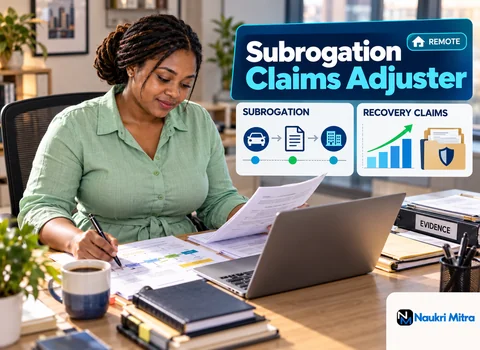
Run through an invented file. A sedan is stopped at a red light. A pickup behind it doesn't brake in time, and the sedan's rear bumper, trunk lid and a tail lamp are crushed. Your side of the ledger already took the hit: the insured filed, the shop was paid, the rental was covered. The file now sits on your desk with a single open question. Who pays it back? Answering it is the core of remote subrogation claims adjuster jobs. Your task is to recover what was paid from the at-fault driver's carrier, fairly and completely, and to keep pressing until the account is settled or a neutral panel has ruled.
The post is a full-time, remote one that takes candidates from any country and carries a monthly rate of USD 4,350. The work calls for persistence and good manners, and it begins after the repair has already been paid for.
People often ask what a subrogation claims adjuster actually does. In general terms, once a first-party claim is paid, the adjuster steps into the insured's shoes and pursues the party responsible for the loss. That usually means another driver's insurer, sometimes an uninsured person, occasionally a business. Recovering claim payments from at-fault parties and insurers is the core of the job, and every other task supports it.
The rear-end crash above is the friendly version. Plenty of files are murkier: a lane change nobody admits to, a parking lot with no cameras, a hailstorm that only looks like a collision. Part of the craft is deciding early which files are worth chasing and which ones are not.
The best recoveries are flagged in the first days of a claim, not the first months. Evidence fades and witnesses stop answering their phones. When a new paid claim lands in the queue, you read the first notice of loss and look for clues: a second vehicle, a named other driver, a citation, a contractor on site, a defective part. Any of these can point to someone else being at fault.
A quick triage note on every file helps, something like "rear-impact, adverse carrier identified, police report requested, strong." Two weeks later, that note saves you from rereading forty pages.
A demand is only as strong as the file behind it. Expect to collect:
Missing one piece doesn't kill a file, but it hands the other side an easy argument. Chasing a records clerk for a report number is unglamorous and part of the job.
Liability asks who caused the loss. Comparative fault asks how blame splits when more than one driver contributed. If the pickup driver was following too closely but the sedan's brake lights were out, the other carrier may argue for a shared split, say 80/20, and that changes the recoverable amount.
How fault is weighed, and whether a partly responsible party can recover at all, depends on where the loss happened. Rules vary by jurisdiction, and you should expect to check the relevant guidance on each file rather than relying on memory. Nothing here is legal advice; it is a description of the kind of reasoning the role involves.
Once liability looks solid, you build the demand: a cover letter, the payment ledger, supporting documents and a clear statement of the amount sought. Then you send it to the adverse carrier and wait.
Negotiation calls are a big part of the day. The adjuster across the line may accept liability outright, offer a percentage, or dispute the damages. You answer with facts and keep your tone even. A typical call might be: "Your insured received a citation for following too closely, and the photos show full rear impact. I'm not seeing a basis for 80/20. Can you walk me through it?" Fair, steady follow-up is what usually brings the money back.
Caseloads in this kind of desk role are often large, with many files at different stages, so tidy diary dates and clean notes matter as much as a good pitch.
When two carriers can't agree, a dispute may go to Arbitration Forums, an organisation that runs arbitration programs between member companies. In general terms, you prepare a filing that lays out the facts, attaches the evidence and states the amount in dispute. The other side responds, and an arbitrator decides. You may also be on the receiving end, answering a filing against your own company.
Daily tools include Arbitration Forums' online filing system, your carrier's claims system for notes, payments and diary entries, plus email, spreadsheets and a phone. The listing specifically asks for experience filing and presenting cases there.
Not every file comes back whole. A carrier may pay 75 percent, or the at-fault driver may carry low limits. Part of the job is deciding when a partial offer is the best realistic result and documenting why.
The insured's deductible is part of this picture. Speaking generally, when money is recovered, the insured's out-of-pocket deductible is often addressed in the recovery, and how a partial recovery is shared can depend on company practice and local rules. You keep the insured informed in plain terms without promising outcomes.
Closing the file means recording every recovery in the claims system, matching it to the ledger and writing a final note so an auditor six months later understands what happened.
The listing sets two to three years of claims or subrogation experience as the bar, with an adjuster licence where required; check your jurisdiction. Expected skills include negotiation, a working grasp of liability and comparative fault, and hands-on Arbitration Forums filing. The NASP CSRP designation (the National Association of Subrogation Professionals' Certified Subrogation Recovery Professional) helps your case without being mandatory.
Many people come to this from auto physical damage, first-party property or liability desks. The jump makes sense: you already read reports and estimates, and now you point that skill at the other side. Compared with a liability claims adjuster, who decides what their own company owes a third party, the subrogation adjuster is on the collecting end, asking someone else's company to pay. With two to three years expected, this posting doesn't belong among entry level remote subrogation claims adjuster jobs.
The monthly figure is USD 4,350, full-time, and candidates in any country may apply. Subrogation claims adjuster jobs remote worldwide reward people who stay organised at a home desk. Like most subrogation claims adjuster work from home jobs, it runs on email, phone and a claims system. No shift schedule, bonus or perk is promised, so raise time zones and coverage during the interview.
Demand for recovery specialists tends to follow claim volume, and experienced adjusters can grow into senior recovery, team lead or arbitration-focused roles over time.
For your subrogation claims adjuster resume, lead with numbers you can honestly back up: files handled, recovery types, arbitration filings. Name the claims systems you've used. Mention licence status clearly.
Common subrogation claims adjuster interview questions include walking through a disputed liability file, explaining comparative fault to a non-specialist, and handling an adjuster who stops responding. Practise saying each answer out loud.
For a subrogation claims adjuster course or extra subrogation claims adjuster certification, look first at NASP's own educational material and at training your employer may provide. Reading Arbitration Forums' published program rules is also useful preparation.
Attach your resume and add a few lines on the claim types you've worked and any arbitration experience. If you hold a licence or the CSRP, say so up front. Applications through Naukri Mitra are free of charge; anyone requesting a fee to process yours should be reported rather than paid.