
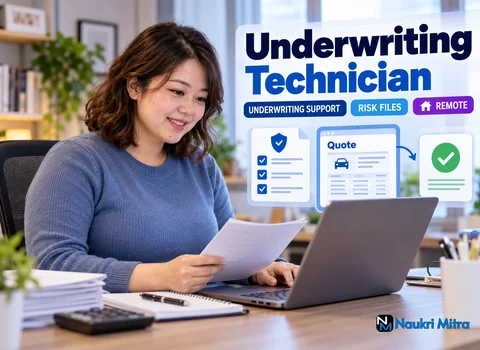
Suppose this note, invented for the example, lands in the shared queue at 11:15: "Need the file complete by 3 p.m.: missing loss runs and the signed application." If your first instinct is to check which of those two items will take longer to chase, you already think like the people who do well in remote underwriting technician jobs. Loss runs come from a prior carrier and can sit for a day; a signature only needs the broker to nudge the insured. So you request the loss runs first, then email the broker about the application, then note the file with both asks and the times you sent them. The opening sits among underwriting technician jobs remote worldwide and, like most underwriting technician work from home jobs, needs someone who keeps files moving without letting quality slip.
Strip any underwriting technician job description down and it says the same thing: the technician builds and maintains the paper trail an underwriter relies on. You receive submissions, confirm they hold everything needed, pull in outside reports, key the details into Guidewire PolicyCenter, help assemble quotes, and issue the policy once the underwriter signs off. Whether a risk is acceptable, what terms apply and what price is right are not your calls. That judgement sits with the underwriter. Your part is making sure that when they open a file, nothing is missing, nothing is mistyped and nothing is waiting on a reply nobody chased.
Most days start with fresh submissions. Here is roughly how one moves across your desk.
Open the submission and compare it with the checklist for that line of business. A typical small commercial package might need an application, a schedule of locations, prior loss history, and a statement of values. When the application arrives unsigned, or the location schedule lists four buildings but values for only three, you flag it straight away and write to the broker with a specific request, not a vague "please send the rest."
Depending on the account, the underwriter may want loss runs from previous insurers, a property inspection, a motor vehicle record check or a credit-based report where that is permitted. Exactly which reports apply, and the rules around them, vary by product and jurisdiction, so you follow the carrier's guidelines rather than guessing. Your part is placing the order, logging the request date and following up when it stalls.
Once the pieces are in, you enter the account, locations, coverages requested and supporting details into Guidewire PolicyCenter. A swapped digit in a construction year or a ZIP code can change a rating outcome, so this step rewards patience more than speed.
You may run the rating in the system, attach worksheets, and prepare the quote document for the underwriter to review. If something looks off, say a premium far out of line with similar accounts, you raise it. You don't adjust it yourself.
Approval kicks off the back half of the work. You bind and issue the policy in PolicyCenter, check that the declarations match the approved quote, and send documents to the broker. Endorsements follow the same pattern: a mid-term request to add a vehicle or change an address comes in, you prepare it, the underwriter approves where needed, and you process the change. Renewals start well ahead of expiry. You pull the expiring file, request updated information, and stage it so the underwriter can review early rather than in the last week.
Underwriting teams usually work to turnaround targets for quotes, endorsements and issuance. The exact targets differ by team and are set by the employer, but the habit that meets them is the same everywhere: a clean diary. Every open item gets a follow-up date. Loss runs requested Monday get a check Wednesday morning. A broker who has not returned a signed application gets a second message before lunch, not at 2:55. When a deadline cannot be met, you tell the underwriter early and say what is outstanding. A remote underwriting technician workflow depends heavily on this kind of visibility, because nobody can lean over to your desk and ask where a file stands.
Before any file goes back to an underwriter, run your own quick audit:
It takes a few minutes per file and can spare the underwriter a lot of rework.
An associate or bachelor's degree is preferred, not demanded. You'll want one to two years around insurance operations or underwriting support, though trainees may be considered, so people coming from a claims assistant role, an agency service desk or a policy processing team should read on. The underwriting technician skills that matter most are accuracy and steady turnaround habits. Coursework toward the AINS or CPCU designations is a plus; it shows you understand coverage basics and the vocabulary underwriters use, though the listing makes neither compulsory.
Readers browsing entry level remote underwriting technician jobs, or with no insurance experience yet, should be honest in your application about where you stand. A trainee who explains how they track tasks and check their own work often reads better than someone who lists every system they have ever opened.
Comfort with Guidewire PolicyCenter is needed. If you have used it at a carrier, mention the modules or transaction types you handled, such as new submissions, policy changes or renewals. Excel is the other daily tool. Expect to keep a tracking sheet of open submissions, use filters and conditional formatting to spot overdue items, and build simple lookups to compare a statement of values against what was entered. Advanced macros aren't needed; sorting a 200-row location schedule and finding duplicate addresses without help is the bar.
Pay is USD 4,350 per month for this full-time, home-based post, and candidates from any country can apply. If you are comparing underwriting technician salary per month figures, treat this as one employer's stated number rather than a benchmark. Hours, time zone overlap and payment method are things to confirm with the employer during interviews. No bonuses or extra benefits are stated, so don't assume any.
A strong underwriting technician resume reads like a well-kept file: short, dated and specific. Put the line of business you supported, the systems you used and one example of a process you tightened, such as cutting the number of submissions returned for missing documents. Keep your skills list honest.
For underwriting technician interview questions, prepare to talk through the opening scenario on this page. Interviewers often ask how you would prioritise three files due the same afternoon, what you do when a broker stops replying, or how you would catch an error in a rated quote. Walk through your actual steps rather than describing yourself as detail-oriented.
On underwriting technician certification, the honest answer is that coursework helps without being a gate. Introductory insurance courses, carrier training material and the AINS program are common starting points. If how to become an underwriting technician with no background is your question, an underwriting technician course in insurance basics plus solid Excel practice is a reasonable first step.
Remote underwriting technician jobs hiring now include this one, and this page's apply button is the way in. Submitting costs you nothing, and a recruiter who asks you to pay is no recruiter at all. Include a short note on your PolicyCenter experience, your Excel comfort level, and any AINS or CPCU coursework completed or in progress. If you are a trainee, say so plainly and mention what you have done to prepare. Then keep an eye on your inbox, since the employer contacts shortlisted applicants directly.