
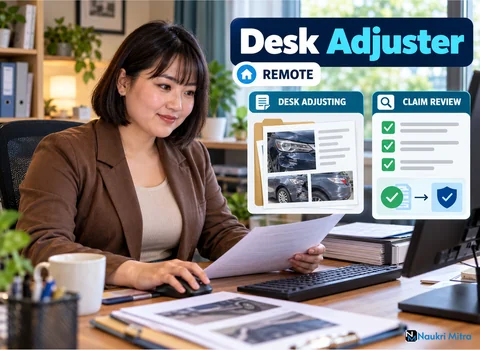
Say a file drops into your queue mid-morning; the details are invented, but the pattern is common. A field adjuster inspected a hail-damaged roof the day before and uploaded sixty-odd photos and a Xactimate estimate. Most of the estimate agrees with the pictures. Then line 14 calls for replacing 48 linear feet of ridge cap, and every photo of the ridge shows clean, unbruised shingles. Somebody has to catch that before money goes out, and on this listing that somebody is you. Naukri Mitra carries it among remote desk adjuster jobs: a full-time seat at USD 4,350 per month, with applicants welcome from anywhere.
The desk adjuster job description starts after someone else has visited the property. You do not inspect anything yourself. You work from what the field adjuster produced (the report, the photos, the roof diagram and the estimate) and turn it into a claim decision that holds up.
In practice that means checking the estimate against the evidence, applying the policy, talking to the people involved, and closing the file with a payment and a clear written record of why.
Open the photos before the estimate, so the pictures shape your view rather than the totals. Then work through the Xactimate estimate item by item and ask two plain questions of each one. Can I see this in the photos? Is the quantity right?
When something doesn't line up, like that ridge cap on line 14, you don't just delete it. You note what you saw and send a short question back to the field adjuster. Maybe a close-up never got uploaded; maybe the line came from a template. The notes should say which.
A clean estimate is only half the decision. The other half is coverage. You read the declarations page and the relevant forms and work out, at a general level, what the policy says about this loss: whether the cause of loss is covered, which limits apply, what deductible is in play (some homeowners policies carry a separate wind or hail deductible), and whether depreciation is held back until repairs are finished.
Nobody expects legal opinions from you. You are expected to read policy wording carefully, flag anything unusual to a supervisor, and explain the outcome to a homeowner in ordinary language. Coverage and claim-handling rules vary by carrier and jurisdiction, so the team's guidelines are your reference.
Roof claims rarely close on the first estimate. A roofer starts the tear-off and finds soft decking, or a local building requirement adds an item the field estimate left out, and a supplement request arrives with new photos and an invoice. You review it like the original: evidence, then line items, then price. Approve what is documented, ask for what is missing, and decline what isn't supported, with the reason written down.
Plenty of this happens on the phone. Homeowners ask why your figure is lower than the roofer's bid; contractors want supplements approved. Calls go better when the estimate is open on one screen and you can talk through specific lines: "Drip edge is included on all four sides. The ice and water shield on the rakes isn't in any photo, so I need a picture before I can add it."
Every decision goes into the claims management system as a note that someone unfamiliar with the file could read months later and understand. What did you review, what did you change, why, and who did you speak with? Then you set up the payment: the payees the file and carrier guidelines call for, the deductible applied, and any recoverable depreciation tracked so it can be released once repairs are confirmed.
Desk adjusters work a queue, not one claim at a time. New files, supplement requests and callbacks all compete for the same day, and volume jumps after a hail or wind event. The habits that help are simple: touch each file with a purpose, set the next diary date before you close it, and never let a file sit for a week because one document is missing when a two-line email would get it.
The home setup is part of the job, and the listing asks for it directly. Two monitors are expected because you will nearly always have photos open on one screen and the estimate or policy on the other. You also need a phone arrangement that holds up through long calls, which usually means a decent headset and either a softphone on the computer or a dedicated line. Add reliable internet that can load a large photo set without stalling and a quiet room for calls.
An active adjuster licence is required. Which licence, and whether you need more than one, depends on where the claims sit and where you live, so check your jurisdiction and follow the hiring team's instructions. Beyond the licence, the listing wants one to three years of property claims work, whether you did it in the field or at a desk.
The desk adjuster skills that matter most here:
According to the listing, the monthly rate is USD 4,350 for full-time work. Desk adjuster salary per month at other firms will move with the carrier, the claim mix and the engagement model, so weigh any offer against its own details. Desk adjuster work from home jobs also skip the travel costs field adjusters carry. The listing doesn't mention bonuses, overtime or other benefits, so raise anything that matters to you with the hiring team before you say yes.
If you came here wondering how to become a desk adjuster from scratch, the usual order is licence first, then claims experience, then software depth. Licensing exam prep is widely available, and a desk adjuster course can fill gaps. No single desk adjuster certification is named as a requirement here. Vendor Xactimate training and practice estimates matter more.
Entry level remote desk adjuster jobs do exist, often as trainee or storm-season desk roles at independent adjusting firms, but this one expects some property claims history, a year at minimum. Anyone hunting for desk adjuster jobs with no experience usually does better starting on a first notice of loss team, in a claims contact centre or as a field adjuster during a busy storm season, then moving to the desk.
On your desk adjuster resume, lead with your licence details, the kinds of property losses you have worked and the systems you know. Expect desk adjuster interview questions that test judgment, such as "Talk me through how you would review this roof estimate" or "A contractor says your figure is wrong. What happens next?"
Because applicants can be based anywhere, this role sits among desk adjuster jobs remote worldwide. Apply via this listing and attach a resume covering your licence, your Xactimate level and your property claims history. As you look through remote desk adjuster jobs hiring now, keep one rule in mind: no real employer charges candidates, whatever the stage, and Naukri Mitra doesn't charge job seekers to apply.