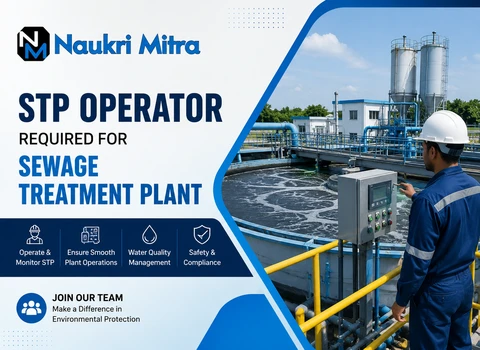
Understanding the Role of an STP Operator
Keeping water clean before it re-enters the environment is one of the most practical and essential jobs in modern industry. An STP Operator is responsible for operating and monitoring a Sewage Treatment Plant, ensuring wastewater is properly treated before it is released or reused. This Full-time position is based in Pune, Maharashtra, India, and offers a monthly salary of ₹26,000. For anyone exploring a stable, hands-on career in environmental operations, this role is worth understanding in detail.
Why This Position Exists in Growing Cities
As residential complexes, industrial units, and commercial buildings expand across cities like Pune, the volume of wastewater generated also increases. Municipal bodies, housing societies, and industrial estates need trained personnel to operate treatment systems that meet pollution control standards. This is why the demand for a skilled plant operator remains steady rather than seasonal.
A Day in the Life of a Plant Operator
The technician's daily routine typically begins with checking equipment readings from the previous shift. From there, the work includes monitoring aeration tanks, checking chemical dosing systems, and recording flow rates. Unlike office-based jobs, this role requires being physically present near tanks, pipelines, and control panels for most of the shift.
Core Daily Tasks
- Starting and stopping pumps, blowers, and motors as per schedule
- Monitoring water quality parameters such as pH, dissolved oxygen, and turbidity
- Operating chlorination or UV disinfection units
- Maintaining daily log sheets and shift reports
- Coordinating with maintenance staff for minor repairs
Where This Kind of Work Happens
An equipment operator in this field may find work at housing society treatment units, commercial complexes, hospitals, hotels, or municipal treatment facilities. Some positions are also available at industrial plants that process their own effluent before discharge. Each site may differ slightly in scale, but the core operating principles remain similar.
Machines and Instruments Used on the Job
A technician in this profession works closely with aeration blowers, submersible pumps, clarifiers, sludge dewatering units, and dosing pumps. Measuring instruments such as pH meters, DO meters, and turbidity meters are used regularly to verify that treated water meets discharge standards. Understanding how these machines work helps the operator identify problems early, rather than waiting for a complete breakdown.
Skills That Make an Operator Reliable
Technical understanding of biological and chemical treatment processes is valuable, but practical troubleshooting ability often matters just as much. Employers usually prefer candidates who have completed an ITI course in Electrician, Fitter, or a related trade, or hold a Diploma in Environmental or Mechanical Engineering. However, candidates with strong hands-on experience in plant operations are also considered, since practical exposure to pumps, valves, and control systems is highly valued in this line of work.
Physical Demands and Working Conditions
This job involves standing, walking around tanks, and occasionally climbing stairs or ladders to inspect equipment. The working environment can include exposure to odor, moisture, and mechanical noise, so physical stamina and comfort working outdoors or in semi-covered plant areas are important. Shift work is common in this profession because treatment plants generally operate continuously to manage wastewater flow day and night.
Safety Practices That Cannot Be Ignored
Because the plant deals with chemicals, moving machinery, and confined spaces, safety awareness is a core part of the job. Operators are expected to follow lockout/tagout procedures before servicing equipment and to avoid direct contact with untreated effluent.
Common PPE Used
- Rubber gloves and gumboots
- Safety helmet
- Protective goggles
- Nose mask or respirator where required
Challenges Faced in This Line of Work
Sudden power fluctuations, blocked pipelines, or unexpected changes in influent quality can create pressure during a shift. A calm, methodical approach helps in resolving such situations without panic, and experienced operators often develop a habit of anticipating problems before they escalate.
Growing Within the Profession
With a few years of steady experience, an operator can move into supervisory roles such as Shift In-charge or Senior Plant Operator, eventually overseeing multiple shifts or a larger treatment facility. Continued learning about advanced treatment technologies, such as membrane bioreactors, can further strengthen long-term prospects within this same field.
Salary and Additional Benefits
This Full-time role in Pune, Maharashtra, India offers a monthly salary of ₹26,000. Depending on the employer, additional benefits such as overtime pay, Provident Fund (PF), Employee State Insurance (ESI), festival bonus, uniforms, or canteen facilities may also be provided, though these vary from one workplace to another.
Final Thoughts for Job Seekers
For freshers, ITI holders, diploma candidates, and experienced workers alike, this profession offers a practical entry point into the environmental and industrial services sector. Anyone considering this path should be prepared for physically active shift work, but in return, they gain a stable, skill-based career with genuine long-term growth potential.