What This Job Is Really About
Water doesn't arrive clean on its own. Somewhere before it reaches a tap, a tanker, or a factory pipeline, someone has been watching gauges, adjusting chemical dosing, and swapping out membranes so the output stays fit to use. That someone is usually an RO Plant Operator, and it's a job that mixes mechanical work with a bit of chemistry, day after day.
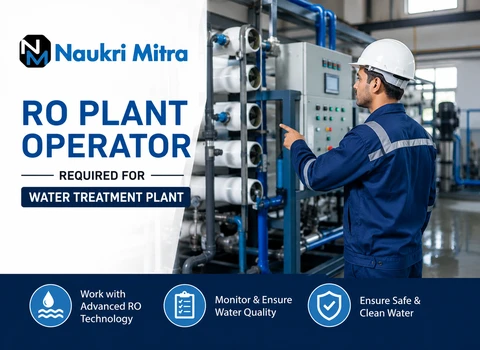
There's currently an opening for an RO Plant Operator required for a water treatment plant in Vadodara, Gujarat, India, offered on a Full-time basis. Before applying, it helps to know what the work actually looks like once you're past the interview stage.
How Reverse Osmosis Fits Into the Picture
Reverse osmosis works by forcing water through a membrane fine enough to block salts and dissolved impurities that regular filters simply let through. It's become the go-to method for producing drinking-grade or process-grade water in India, whether for a housing society, a hospital, or a manufacturing unit that can't afford inconsistent water quality.
Someone has to run that membrane system, though. Left alone, an RO plant will foul up, lose pressure, or start producing water that fails quality checks — which is exactly the gap this role fills.
Why This Position Exists in the First Place
Membranes scale over time. Pumps drift out of calibration. Dosing pumps run dry without anyone noticing unless someone physically checks on them. A plant that runs unsupervised for even a day or two can end up costing far more in repairs than a trained operator's monthly wage.
So employers look for someone who can:
- keep the plant running without long stretches of downtime
- spot fouling or scaling before it becomes a bigger repair job
- hold water quality steady, shift after shift
- react fast when pressure or flow numbers drift off normal
A Shift, Start to Finish
Most shifts start with a walk-around — checking pressure gauges, flow meters, dosing pumps, before the plant even starts producing for the day. Once it's running, the job becomes a cycle of reading numbers, writing them down, and watching for anything that looks off.
On a fairly ordinary day, this can include:
- starting or shutting down the RO unit as per the production plan
- tracking TDS, pH, and pressure at set intervals
- backwashing sand or carbon filters when they clog up
- mixing and dosing chemicals like antiscalant or chlorine
- swapping membranes or cartridges once performance drops
- logging production figures and maintenance notes
- flagging anything unusual to a supervisor before it turns into a bigger problem
Not every day looks the same. Some shifts pass quietly with routine checks; others turn into a scramble to figure out why output suddenly dropped or why a valve won't stop leaking.
Places Where This Work Happens
You'll find RO operators in more places than you'd expect:
- standalone water treatment plants that supply bulk or packaged water
- manufacturing units that need process water for their own operations
- housing societies and commercial buildings running in-house RO systems
- pharma and food processing plants where water purity is non-negotiable
- municipal or semi-government water supply setups
Gujarat's industrial spread means cities like Vadodara have no shortage of manufacturing and utility operations that need someone reliable handling their water systems.
The Equipment You'll Get Familiar With
An RO plant isn't one machine — it's several working together. Expect to spend your time around:
- multi-stage RO membranes and pressure vessels
- high-pressure feed pumps
- pre-treatment stages — sand filters, carbon filters, softeners
- dosing pumps for antiscalant, acid, or disinfectant
- TDS meters and pH test kits
- pressure gauges, flow meters
- a basic toolkit for tightening fittings, replacing seals, and other small fixes
Knowing how each of these pieces affects the water coming out the other end makes it much easier to figure out what's wrong when something goes off track, rather than just waiting for an alarm.
What Employers Are Usually Looking For
This isn't a role that demands a specific degree, but it does reward a mechanical or technical mindset. Employers may prefer candidates with relevant machining or tool room training. Depending on how complex the plant is, an ITI in Electrician, Fitter, or a similar trade, a Diploma in Mechanical or Chemical Engineering, or comparable vocational training is generally considered suitable. In practice, hands-on experience with pumps, valves, and precision measuring instruments often counts for as much as the certificate itself.
Beyond the paperwork, a few things matter more day to day:
- a working sense of water chemistry and pH balance
- being able to read gauges correctly without second-guessing
- comfort around pumps, motors, and piping
- patience for logging data accurately, shift after shift
- willingness to pick things up on the job rather than needing everything spelled out
Freshers straight out of ITI and experienced hands looking to specialize in water treatment are both considered here — much of the real training happens on the plant floor anyway, not in a classroom.
What the Job Asks of You Physically
Expect a fair bit of standing and walking throughout the day, along with occasional lifting—chemical containers, membrane cartridges, that sort of thing. Plant floors near filtration units tend to be damp, and pump rooms are rarely quiet.
Because many treatment plants run around the clock, shift work is part of the deal. Operators should be ready for rotational shifts or a fixed night schedule, depending on how the particular plant is staffed.
Staying Safe Around Chemicals and Pressure Systems
Chemical handling and pressurized equipment don't leave much room for shortcuts. Standard practice on most sites includes:
- gloves when handling dosing chemicals
- safety goggles during filter cleaning or chemical prep
- non-slip footwear, given how often floors get wet
- proper lockout steps before opening any pressure vessel
- keeping chemical storage ventilated and clearly labeled
None of this is optional in a well-run plant — it's what keeps chemical exposure, slips, and equipment injuries from becoming a regular occurrence.
Where the Work Gets Tricky
From the outside, running an RO plant looks routine. In practice, operators deal with issues such as sudden dips in incoming water quality that disrupt output, membranes that foul faster than expected, dosing that requires constant fine-tuning to avoid waste, and production targets that don't always allow for proper maintenance breaks.
The operators who do well here are usually the ones who notice small changes early — a slight drop in permeate flow, a slow rise in reject water — before those small changes turn into a shutdown.
What Actually Helps You Get Better at This
A few habits tend to separate operators who just get by from ones who become genuinely reliable:
- keeping logbook entries honest and precise, since they're often the only clue to a recurring issue
- learning the exact membrane and pump models at your own plant inside out, rather than relying on general knowledge
- keeping a small toolkit within reach for quick fixes
- speaking up the moment readings look off, instead of waiting to see if it resolves itself
- staying current on chemical handling and safety norms
Where This Can Lead Over Time
Most people start as junior operators and take on more responsibility as they build hands-on experience. With a few years behind you, moves into senior operator, shift-in-charge, or plant supervisor roles become realistic — often involving oversight of multiple units or training new recruits. Picking up additional certifications in water treatment technology alongside this experience tends to accelerate that progression.
What the Pay Looks Like
For this particular opening in Vadodara, Gujarat, India, the salary on offer is ₹28,500 per month, on a Full-time basis. Pay in this field generally varies with plant size, operator experience, and treatment system complexity.
Some employers also offer overtime pay, PF, ESI coverage, an annual bonus, uniforms, or transport and canteen facilities — though these vary by workplace and shouldn't be assumed as guaranteed.
Deciding If This Fits You
If hands-on technical work suits you, shift schedules don't put you off, and you like the idea of a job where paying attention actually matters — this line of work offers fairly steady work. It works well for ITI candidates, diploma holders, and anyone ready to build real, practical expertise in water treatment over time, rather than looking for something purely desk-based.