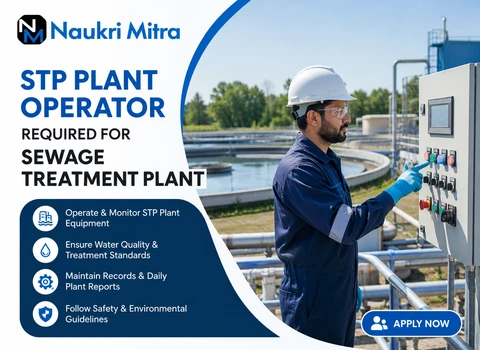
Understanding the Role of an STP Plant Operator
Every city that grows also produces wastewater that must be treated before it can be released safely into the environment or reused. This is where an STP Plant Operator comes in. Working at a Sewage Treatment Plant, this professional keeps the treatment process running smoothly, ensuring that water is cleaned to acceptable standards before disposal or reuse. For someone exploring this career for the first time, it helps to know that this is a hands-on, technical job with real environmental importance, not just routine machine minding.
Why Facilities Need Trained Operators
Sewage treatment involves biological, mechanical, and chemical processes working together. If any stage is mismanaged, the plant can produce foul-smelling, poorly treated water or even breach pollution control norms. Facilities hire dedicated operators because untreated mistakes are costly, both environmentally and legally. A trained operator understands how to read equipment behavior, adjust dosing, and respond quickly when something goes wrong.
What a Regular Work Shift Looks Like
The day usually starts with checking the previous shift's logbook and inspecting pumps, blowers, and aeration tanks. Readings are taken from flow meters and dissolved oxygen monitors; chemical dosing is verified; and any alarms or unusual sounds from machinery are investigated. Much of the shift involves walking the plant, observing tank conditions, and making small adjustments to keep the process stable.
Core Duties Handled on Site
- Operating and monitoring screening, aeration, clarifier, and filtration units
- Maintaining correct chemical dosing for coagulation and disinfection
- Recording flow rates, pH levels, and sludge quality in daily logs
- Carrying out basic maintenance on pumps, valves, and motors
- Coordinating with supervisors during breakdowns or heavy inflow periods
- Ensuring treated water meets discharge or reuse quality before release
Where This Kind of Work Is Found
Beyond municipal treatment facilities, operators are needed at residential townships, commercial complexes, hospitals, educational campuses and industrial units that run their own effluent or sewage treatment setups. As urban infrastructure expands, particularly in fast-developing regions, demand for people who can run these plants reliably continues to rise.
Equipment and Instruments You Will Handle
An operator regularly works with aeration blowers, submersible and centrifugal pumps, chemical dosing units, clarifiers, sludge dewatering equipment, and disinfection systems such as chlorinators or UV units. Measuring instruments such as pH meters, dissolved oxygen meters, turbidity meters, and flow meters are used daily to assess whether the treatment process is performing correctly.
Technical Knowledge That Matters
A good operator understands the basic biology of activated sludge, how aeration supports bacterial breakdown of waste, and how sludge settling affects final water clarity. Familiarity with electrical panels, motor controls, and basic instrumentation readings is equally useful, since much of the troubleshooting involves recognizing early warning signs before a full breakdown occurs.
Suitable Educational Background
Candidates with an ITI qualification in trades such as Electrician, Fitter, or Pump Operator often find it easier to understand plant machinery. A Diploma in Environmental, Chemical or Civil Engineering can also be helpful, especially for understanding treatment chemistry and process design. Practical exposure gained through on-the-job training at any treatment facility is valued just as much as formal certificates, since real plant behavior often differs from textbook explanations.
Physical Effort and Working Conditions
This is an active job that involves standing, walking across the plant, climbing tank stairways, and occasionally lifting equipment parts. Operators work near open tanks, moving machinery and, at times, unpleasant odors, so a reasonable level of physical fitness and tolerance for outdoor conditions is expected. Since this is a Full-time position, operators generally work fixed shifts, and rotational or night shifts may apply depending on plant operating hours.
Safety Habits That Protect the Operator
Because the environment involves moving machinery, electrical panels, and chemical handling, safety cannot be treated casually. Common protective equipment includes gloves, gumboots, safety helmets, and where required, masks or goggles when handling dosing chemicals. Operators are trained to follow lock-out procedures before servicing equipment and to avoid working alone near open tanks or deep pits.
Challenges Faced on the Job
Sudden power outages, pump failures during heavy inflow, or chemical shortages can disrupt the treatment cycle unexpectedly. Odor and weather exposure can also make certain shifts physically demanding. Operators who stay calm under pressure and know the plant's manual override procedures usually manage these situations far more effectively than those who rely solely on automated systems.
Building a Long-Term Career in Plant Operations
With experience, an operator can progress to roles such as Senior Operator, Shift In-charge, or, eventually, Plant Supervisor, taking on responsibility for larger treatment capacities or multiple units. Additional certifications in water and wastewater technology, along with hands-on exposure to advanced treatment systems such as MBR or SBR, can strengthen prospects for growth in the same field.
Salary Expectations and Common Benefits
This particular STP Plant Operator position, based in Greater Noida, Uttar Pradesh, India, offers a monthly salary of ₹29,000. Alongside the fixed salary, employees in similar roles may sometimes receive additional benefits such as overtime pay, Provident Fund (PF), ESI coverage, annual bonus, uniforms, or transport and canteen facilities, though these vary by employer and are not guaranteed. For freshers, ITI candidates, diploma holders, and experienced technicians alike, this role offers a practical entry point into the growing field of environmental and utility operations.