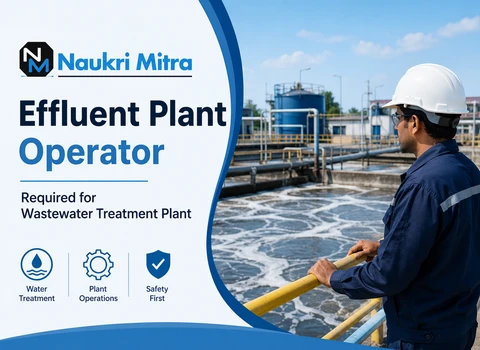
Understanding the Role of an Effluent Plant Operator
Every industrial unit that uses water in its manufacturing process must also treat the wastewater it generates before releasing it back into the environment. This is where an effluent plant operator steps in. Based in Vapi, Gujarat, this full-time position pays ₹28,000 per month and involves operating and monitoring machinery that cleans industrial wastewater to ensure it meets environmental discharge standards. For anyone researching this career path for the first time, it helps to think of the operator as the person who keeps a treatment plant's entire purification cycle running safely and efficiently, day after day.
Why Factories and Industrial Units Need This Role
Vapi is one of Gujarat's well-known industrial hubs, home to chemical, pharmaceutical, dyeing, and manufacturing units. All of these generate effluent, or used water containing chemicals, dyes, oils, or organic waste. Government pollution control norms require that this water be treated before release, which means every such unit needs trained personnel to operate its treatment systems. Companies hire dedicated operators rather than leaving this work to general staff because effluent treatment involves specific chemical dosing, machine handling, and safety knowledge that takes real practice to master.
A Typical Day on the Job
The workday usually starts with checking the plant's tanks, pumps, and dosing systems to confirm everything ran correctly during the previous shift. From there, the technician moves between several stages of the treatment process.
- Monitoring raw effluent entering the collection tank
- Operating aeration systems and checking oxygen levels
- Adding treatment chemicals such as coagulants or flocculants in measured doses
- Running filter press or sludge dewatering equipment
- Recording readings like pH, TDS, and flow rate at fixed intervals
- Reporting any abnormal readings to the shift supervisor immediately
No two days are identical, since effluent composition can change depending on what the parent factory produced that day.
Core Responsibilities Beyond Daily Monitoring
Apart from routine checks, the plant operator is expected to maintain treatment logs, accurately calculate chemical dosages, and perform minor maintenance on pumps, valves, and blowers. When equipment shows signs of wear, the operator flags it early so a breakdown does not stop the treatment cycle. Keeping the plant compliant with pollution control board norms is a shared responsibility, and the operator's accurate record-keeping directly contributes to that compliance.
Where This Work Happens
Effluent treatment plants are usually compact, semi-outdoor facilities located near the main factory. In an industrial city like Vapi, these setups are commonly found within chemical manufacturing complexes, dyeing and printing units, and pharmaceutical factories. The work area typically includes open tanks, pump houses, chemical storage rooms, and a small control room where readings are logged.
Machines, Tools and Instruments Used Daily
A working knowledge of the following equipment is central to this job:
- Aeration tanks and diffusers
- Chemical dosing pumps
- Filter press and sludge drying beds
- pH meters and TDS meters
- Flow meters and level indicators
- Clarifiers and settling tanks
Understanding how each unit functions, why it is used, and what a normal versus abnormal reading looks like separates a confident operator from someone still learning the ropes.
Skills That Make an Operator Successful
Technical grounding matters a great deal in this field. Employers usually prefer candidates with an ITI qualification in a relevant trade, or a diploma in chemical, mechanical, or environmental engineering. Basic knowledge of chemistry, especially how coagulation and biological treatment work, gives a strong advantage. Alongside formal training, practical skills such as accurately reading gauges, maintaining discipline when dosing chemicals, and troubleshooting minor pump or motor issues are equally valued. Many experienced operators say that hands-on comfort with the plant's actual equipment often matters as much as classroom knowledge.
Physical Demands and Shift Patterns
This is an active, standing job that involves walking around tanks, climbing short platforms, and occasionally lifting chemical containers. Since effluent generation does not stop when the factory closes, plants often run in shifts, and operators should be prepared for rotational shift work, including night duty when scheduled.
Working Environment and Safety Practices
The work environment includes exposure to chemical odors, damp surfaces, and occasional noise from blowers and pumps. Safety is non-negotiable in this line of work. Operators are expected to use personal protective equipment such as gloves, gumboots, safety goggles, and masks while handling chemicals or working near tanks. Following lock-out procedures before maintenance, avoiding direct contact with dosing chemicals, and reporting leaks immediately are standard safety habits that protect both the worker and the plant.
Common Challenges on the Job
New operators sometimes find it challenging to determine the correct chemical dosages when incoming effluent quality suddenly varies. Others need time to get comfortable working near strong chemical smells or adjusting to shift timings. These challenges usually ease with a few months of consistent practice and guidance from senior operators.
Building a Long-Term Career in Effluent Treatment
This role offers a genuine growth path within the same field. An operator who performs consistently and builds a strong technical understanding can progress toward a senior operator or shift-in-charge position, eventually taking on responsibilities such as plant supervision or compliance reporting. Additional certifications in environmental engineering or pollution control can further support this progression.
Salary and Employment Benefits
This full-time position in Vapi, Gujarat, India offers a monthly salary of ₹28,000. Depending on the employer, additional benefits may include overtime pay, PF and ESI coverage, annual bonus, uniforms, and transport or canteen facilities. These benefits vary by organization and should be confirmed directly with the employer.
Is This the Right Career Path for You?
For freshers with an ITI or diploma background, this role offers a practical entry point into India's growing environmental compliance and industrial sector. For experienced technicians, it offers steady, hands-on work with clear scope for advancement. Anyone considering this path should be comfortable with shift work, chemical handling, and a plant-floor environment, since these are the daily reality of the job rather than occasional exceptions.