What Does a Screen Printing Operator Actually Do?
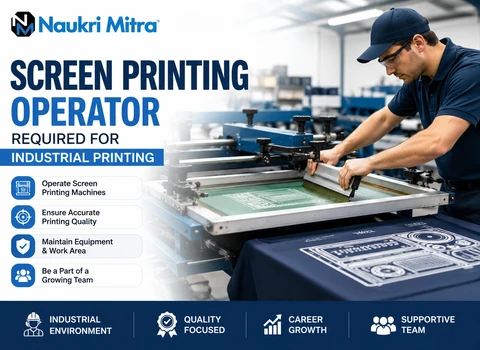
Walk into any industrial printing unit, and you'll notice the press area first — the smell of ink, the rhythmic sound of the squeegee, someone bent over a frame checking alignment against the light. That's where a Screen Printing Operator spends most of the shift. The job itself is straightforward on paper: prepare screens, mix inks, run the press, print designs or labels onto fabric, plastic, glass or metal. But getting it right, print after print, is a different matter. This is a Full-time position based in Sivakasi, Tamil Nadu, India — a city that's built a name for itself in printing and packaging for decades, so the work culture here already understands what the trade demands.
Why This Role Matters to a Factory
Nobody hires a screen printing operator just to fill a seat on the floor. Ink viscosity that's slightly off, a screen that shifts by even a millimeter — either one can wreck an entire print run, and that's money and time a factory doesn't get back. So plants would rather bring in someone who already knows how registration, exposure, and drying work, rather than training from scratch. Buyers judge a factory by the quality of what comes off the press, which is really why this job carries more weight than people assume from the outside.
How a Shift Usually Plays Out
The day starts at the job card — it tells you the design, the quantity, and what material you're printing on. From there the screen gets mounted, tension checked, a handful of test prints pulled to make sure the colour and registration are dead on before the full batch runs. Once production starts, it's mostly about watching — ink flow, screen tension, whether the print is coming out clean or starting to smudge at the edges. Small corrections along the way are what keep a batch from turning into wasted material.
Some of what fills the rest of the day:
- Setting up screens, squeegees and frames for each new job
- Matching inks against approved color samples, sometimes by eye, sometimes with a chart
- Running manual, semi-automatic or fully automatic presses depending on the unit
- Catching defects early — ghosting, bleeding, misregistration — before they multiply across a batch
- Washing down screens and equipment once a job wraps up
- Jotting down production numbers and wastage for the shift report
Where This Trade Finds Work
Textile printing units hire for this constantly, as do packaging plants, plastic and glass decoration units, and sticker or label workshops. Sivakasi's printing and packaging belt, along with the smaller allied units around it, keeps a steady demand going for people who know their way around a press — it's one of the more reliable trades to break into if you're looking at Tamil Nadu's industrial sector.
Getting Familiar With the Equipment
Flatbed and rotary screen printing machines form the core of the job, alongside exposure units for preparing screens, squeegees of different hardness for different jobs, and drying or curing ovens when the ink type calls for it. Viscosity cups, thickness gauges, and color-matching charts also come into play, mostly to keep quality consistent across a run rather than to catch problems after the fact. Depending on what's being printed, you might be working with UV-curable inks one week and plastisol or water-based inks the next.
Where Training Helps
An ITI background in a relevant trade is something most employers favor, though many operators pick up the finer points through months of hands-on work rather than in a classroom. What actually separates someone experienced from a newcomer isn't the certificate — it's whether they can read a job card without hand-holding, spot a print defect before the supervisor does, and troubleshoot on the spot instead of stopping the line to ask.
Skills That Aren't on Paper But Matter Anyway
You need a decent eye for detail — colors that look "close enough" to an untrained eye often aren't close enough for a buyer. Standing for long stretches, repeating the same hand movements hundreds of times a shift, working around ink and solvent smells without it bothering you — all of that comes with the territory. Press lines rarely run with just one person, either, so being able to coordinate with the next operator down the line matters more than people expect going in.
The Physical Side of the Job
This isn't a desk job by any stretch — expect to be on your feet for most of the shift, with a fair amount of repetitive arm movement built into the printing process. Ink odors are part of the environment in most press areas, even well-ventilated ones. Shift work is fairly common when order volumes pick up, so factories often run rotational or extended shifts, and it helps to go in expecting that rather than being surprised by it later.
Staying Safe Around Ink and Solvents
Good ventilation isn't optional in this trade, and neither is handling solvents carefully or disposing of ink waste properly. Most units expect gloves, an apron, and sometimes a mask when the inks or cleaning agents are strong-smelling. Machines are properly locked out before anyone starts cleaning or servicing them — skipping that step is where many avoidable injuries occur.
What Tends to Go Wrong
Factory lighting can play tricks with color matching, screens clog up mid-run more often than anyone would like, and keeping even pressure across a large print area takes practice more than instruction. Operators who stay disciplined about properly cleaning screens and carefully preparing ink tend to run into fewer rejected batches down the line — it's less about talent and more about not cutting corners.
Where the Trade Can Take You
Stick with it long enough, and the path usually leads to senior operator work, screen preparation specialization, or, eventually, a shift supervisor role within the same unit. There isn't a shortcut to this — it comes from having handled enough different ink types and machine setups that troubleshooting becomes second nature rather than guesswork.
What the Job Pays
This Screen Printing Operator position in Sivakasi, Tamil Nadu, India comes with a monthly salary of ₹24,000 for the Full-time role. Some employers add overtime pay, PF, ESI, bonuses, uniforms, transport, or canteen access on top of that, but none of this is guaranteed across the board — it's worth confirming directly with the employer what's actually on offer before joining.