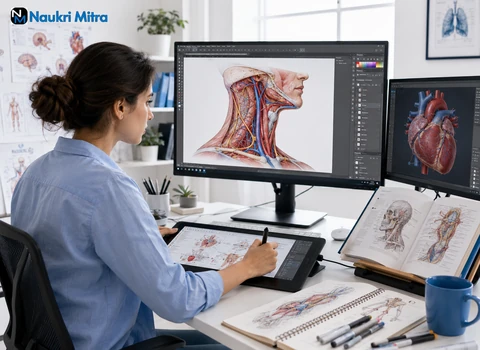
A surgeon can describe a procedure in perfect detail and still lose the room. One good diagram, and suddenly everyone's nodding. That gap between medical accuracy and human understanding is where this job lives.
The role at a glance
You'd be joining as a Remote Medical Illustrator, producing artwork that turns dense clinical material into something a physician, a researcher, or a worried patient can actually follow. Digital or print, it doesn't matter — the standard is the same either way: get the science right, then make it clear. Salary
is $89,500 per year, and the role is fully remote.
What the work looks like
Most days are split between illustration work and the conversations that shape it. You'll produce anatomical, surgical, and scientific artwork for use across publications and digital platforms, and a fair amount of your time goes to sitting with physicians and researchers to figure out what a concept actually needs to show. Some specifics:
- Build infographics and storyboards that fit the broader content strategy, not just look good on their own
- Double-check every illustration against current clinical and scientific data before it ships
- Sit in on creative planning with writers, designers, and medical reviewers
- Take revision notes from peer or expert review and actually use them
- Hold the line on brand and editorial consistency across everything you produce
Required qualifications and experience
This isn't an entry-level illustration job — you'll need real footing in both the art and the science before you start:
- Education: Bachelor's degree (medical illustration, biomedical art, or a related field)
- Experience: 2 years minimum in medical, scientific, or anatomical illustration
- Working knowledge of anatomy, biological systems, and clinical conditions — enough to catch your own mistakes
- Proficiency with industry-standard illustration and rendering software
- A portfolio where the science holds up as well as the visuals do
- Comfortable communicating with clinicians and editors who don't always speak "art"
Skills that give you an edge
None of these are dealbreakers, but they'll make you a stronger candidate:
- Experience working within HIPAA-compliant systems or handling sensitive medical content
- Comfort with 3D modeling tools such as ZBrush or Blender for anatomical rendering
- Familiarity with digital drawing hardware, like a Wacom tablet
- A track record of shifting style across formats — patient handouts read differently than academic publishing
- Time spent collaborating directly with physicians or research teams on visual output
Tools you'll work with
Adobe Creative Suite covers most illustration work — Illustrator, Photoshop, and InDesign. Secure cloud storage handles sensitive data, and coordination with the rest of the team happens through Slack, Trello, and Notion, so if you're used to async work, you'll settle in quickly. Postings for specialized creative roles like this one increasingly appear on platforms such as Naukri Mitra, where health communication teams look for illustrators with this exact mix of art and science.
Compensation and benefits
- $89,500 annual salary
- Fully remote, with scheduling flexibility across time zones
- Technology reimbursements for your home or studio setup
- Mental health days folded into standard time off — not treated as an afterthought
- Structured mentorship, plus access to skill-building workshops
How this role tends to grow
There's no single track here. Some illustrators go deep on technical specialization; others end up leading visual campaigns for larger health initiatives, or move into mentoring newer team members. Regular check-ins and shadowing opportunities with senior illustrators mean the direction is mostly up to you.
The team you'd be joining
Illustration here doesn't happen in a vacuum — you'll be in regular contact with physicians, researchers, and editors, and revisions are treated as part of getting the work right, not as a red flag. Time zones vary across the team, so scheduling bends to fit people rather than the other way around.
Ready to apply?
Anatomy textbooks, surgical explainer graphics, patient-facing visuals that made a hard diagnosis easier to sit with — if any of that sounds like your portfolio, we'd like to see it. Applications are open from the USA, Canada, the UK, EU countries, Australia, India, and other locations worldwide. Submit your materials and someone from the hiring team will follow up.