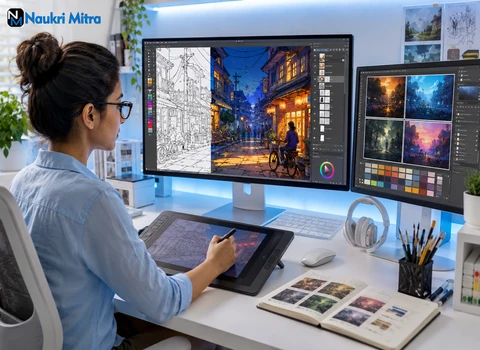
A panel comes in as clean line art — no color, no mood, just shapes waiting for a decision. Should this scene feel warm or cold? Does the light come from behind the character or in front? Those calls, made panel after panel, are basically the whole job. Title:
Remote Coloring Artist. Pay is
$128,500 a year, fully remote.
What You'd Actually Be Doing
Line work shows up, and it's on you to decide how it should feel once color hits it. A children's book page wants something different from an advocacy campaign visual, and a tense graphic novel panel wants something different again. You're not just filling in shapes — you're making the same kind of call a lighting designer makes on a film set, just frame by frame, alone at a tablet.
Day to day, that looks like:
- Coloring illustrations, comics, and animation frames across a mix of formats
- Working with artists and production leads to land on a direction everyone agrees with
- Building palettes that actually support the emotional beat of a scene, not just look nice
- Layering in shading and lighting effects that add real depth instead of flat color
- Adjusting saturation and tone depending on whether a piece needs realism, drama, or something more stylized
- Turning revisions around fast without letting quality slide under deadline pressure
- Keeping files clean — layers named properly, versions tracked, nothing left as a mystery for whoever opens it next
What Gets You Considered
A high school diploma covers the education floor here. Past that, it's 2+ years of actual professional coloring work — illustration, comics, animation — doesn't matter which, as long as it's real client or studio work. A portfolio matters more than almost anything else on this list, and it needs to show range, not just one style done well fifty times. You'd need a real handle on color theory — light-source logic, hue harmony, how a mood shifts depending on tone — and fluency with the tools the industry actually runs on. Taking feedback without getting defensive about it counts more than people expect going in.
Formal training in visual arts or animation helps, though plenty of strong colorists never had it. Experience across multiple formats — books, ads, educational content — tends to stand out, and so does prior work specifically alongside animators or layout artists.
This one's also posted on
Naukri Mitra, and applications through that channel are reviewed the same way as anywhere else.
The Setup You'd Be Working In
Photoshop and Illustrator cover the industry-standard side. Clip Studio Paint or Procreate handle more stylized work. Most people run a Wacom, Huion, or iPad Pro setup for the actual coloring. Project tracking lives in Trello, Asana, or Monday.com, files sit in Dropbox or Google Drive, and clean PSD organization matters a lot more once you're the one inheriting somebody else's messy layer stack.
How the Team Actually Runs
It's remote and mostly async — nobody's expecting you to log in at a specific hour, but deadlines are treated as real, not suggestions. Slack and Zoom keep people loosely connected. There's a monthly critique circle where people actually talk through color choices instead of just posting finished work for likes. Nobody's forced to show up, but most people do anyway because it's genuinely useful.
Pay and What's Attached to It
- Fully remote, hours built around your own creative rhythm
- Health coverage for you and your dependents
- Paid time off, kept separate from sick leave
- A stipend toward software licenses or hardware upgrades
- Credit on published work — your name actually attached to what you made
Where People Tend to Go From Here
Some artists move toward creative direction or leading color on bigger projects. Others end up working across disciplines with animators, writers, and editors, which tends to sharpen instincts a coloring portfolio alone doesn't build. Neither path is required — plenty of people stay heads-down on coloring for years, and that's fine too.
Who Actually Does Well Here
Usually someone who can glance at a scene and know instantly whether it needs to feel warmer or more distant, who doesn't take a revision note personally, and who can hit a deadline without the work getting sloppy in the rush. Technical skill gets you the interview. Judgment about mood is what actually keeps people on this team.
Applying
Send a portfolio that shows work across a few different tones or formats — range beats volume here. A short note on the kinds of projects behind the work helps too. Reviews happen as portfolios come in, not in batches, and strong ones usually lead to a brief conversation about how you'd approach a sample scene.