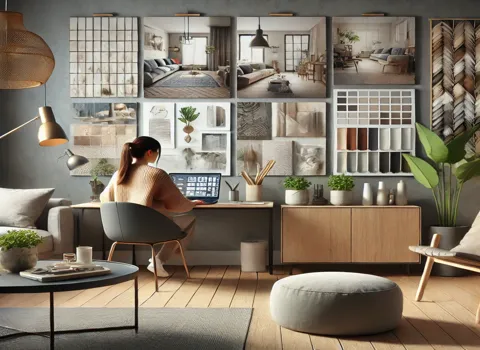
Somebody sends over photos of a living room that feels wrong to them — cluttered, dated, not really "them" anymore. A few hours later, after a mood board and a handful of small changes, they write back saying it finally feels like home. That's the job, more or less.
The Role
As a
Remote Freelance Interior Stylist, you'll help clients rethink their spaces entirely online — mood boards, virtual consultations, furniture picks, the works. No commuting to showrooms, no lugging fabric swatches across town. The role pays
$80,000 annually, and you can do it from wherever you actually like working.
What a Week Might Look Like
Some mornings you're reviewing a client's request for a brighter kitchen and already picturing lighter countertops. Other days you're deep in a tricky space-planning problem where every inch of a small apartment has to earn its place. By evening, you might be building a mood board with cold coffee next to you, still tweaking a color palette until it feels right. Not every task is glamorous — sometimes it's tracking down the right lamp online for twenty minutes — but that's part of the rhythm.
- Guiding clients through remote styling projects, from studio apartments to full homes
- Building digital mood boards and virtual room presentations
- Hosting video consultations to talk through a client's goals and budget
- Recommending furniture, layouts, and finishes that fit how someone actually lives
- Offering sustainable or budget-conscious options when that's what a client needs
- Helping clients turn vague ideas — half a Pinterest board, a color they like — into something workable
What You'll Need
Education: High school diploma or equivalent required.
Experience: At least 1 year of experience in interior styling, design, or a closely related creative field.
Past that:
- A genuine eye for what a space needs, even when the client can't quite explain it
- Comfortable communicating over video calls and written messages, not just in person
- Practical creativity — knowing when moving a chair beats buying a new one
- Patience for clients who are still figuring out what they want
- Basic comfort picking up new design or presentation tools
Good to Have
- A portfolio of past styling or design work, even informal projects
- Associate degree or certificate in interior design
- Experience with mood board or virtual staging software
- A developing niche — sustainable design, kid-friendly spaces, small-space living
The Tools of the Trade
Everything happens through a screen: mood board software for pulling a look together fast, video platforms for consultations, and whatever presentation tools help a client picture a finished room before a single item ships. You'll pick up new apps as they come along and swap tricks with other stylists along the way. Freelance creative roles like this one show up across platforms, including Naukri Mitra, largely because remote styling work doesn't require a studio to work well.
The Parts That Aren't Always Easy
Not every client walks in knowing what they want — most don't, honestly. That's where patience and a steady hand matter. Video calls sometimes freeze at the worst moments. Juggling a few projects at once can feel like a lot some weeks. None of that is unusual; it's just part of doing creative work remotely, and there's a team around to help when it gets messy.
Working With People, Not Just Rooms
You won't be doing this alone. There are other stylists to trade ideas with, a support team keeping things organized, and clients ranging from first-time renters to families reworking a home they've lived in for years. One stylist on the team put it simply: clients send before-and-after photos with the biggest smiles, and it stops feeling like just styling — it starts feeling like actually changing how someone lives day to day.
Pay and Perks
The role pays
$80,000 a year, plus:
- Flexible scheduling — start late, finish early, structure your week how it works for you
- Training and resource support as you build your styling skills
- Performance-based bonus opportunities
- Room to grow into a specialized niche or eventually run your own client base
Where This Can Go
Some stylists stay generalists and love the variety. Others carve out a niche — sustainable design, small-space living, family-friendly homes — and build a loyal client base around it. A few eventually move on to run their own styling business full-time, using what they learned here as a foundation.
Your First Week
It starts light: a video call to meet the team, then shadowing a live client consultation to see how things actually run. By the end of the week, you'll have your first small project — maybe a living room refresh or a single accent wall — with feedback coming quickly enough that the nerves don't stick around long.
Apply
If you've got an eye for spaces and you'd rather do this work from your own desk than a showroom floor, this role's built for that. Bring your style, your patience, and your willingness to work with people who don't yet know what they want. Applicants from the United States, Canada, the United Kingdom, the European Union, Australia, India, and other eligible regions are welcome to apply.