What Does a Reach Stacker Operator Actually Do?
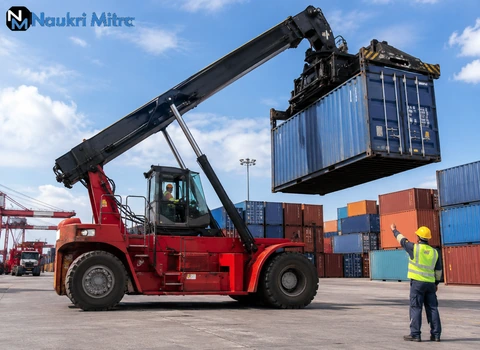
Walk into any container terminal, and you'll notice these tall, odd-looking machines picking up shipping containers like they weigh nothing. That's a reach stacker, and the person behind the controls is the reach stacker operator. Their job is to lift, move, and stack containers within a yard - sometimes off a trailer, sometimes straight from a rail wagon. Right now there's an opening for this role in Mundra, Gujarat, India, and it's a full-time position paying ₹33,000 a month.
If you've never worked around ports before, the scale can be surprising. A loaded container can weigh over 30 tonnes, and the operator has to lift it several meters in the air, swing it around, and set it down within inches of where it needs to go. There's no room for guesswork here.
Where This Job Fits Into the Bigger Picture
Terminals and container freight stations can't function without operators who know how to run this equipment properly. A ship might be sitting at berth with hundreds of containers waiting to be unloaded, and every hour of delay costs money. So when a company hires for this position, they're not just filling a seat - they're trying to keep cargo moving without bottlenecks or damage.
This is one reason the trade has stayed in steady demand along India's coastal industrial belts. Wherever export-import activity happens, someone has to physically move the boxes.
A Shift, Start to Finish
Most days start the same way - checking the machine before touching the controls. That means looking over the hydraulics, tires, brakes, and the spreader that grips onto the container's corner castings. Skip this step, and you risk a breakdown mid-shift, or worse, an accident.
Once that's done, the operator gets a list of moves for the day from the yard supervisor - which containers go where, what's loading onto which trailer, what needs to be shifted to make space. From there it's a steady rhythm of lifting, driving, positioning and setting down, hour after hour, staying in contact with ground staff and dock workers over radio the whole time.
The Work Itself
- Stacking loaded and empty containers in their assigned yard blocks
- Loading containers onto trailers and chassis, and unloading them when they arrive
- Checking container numbers and weight markings before every lift
- Running pre-shift and end-of-shift equipment inspections
- Flagging any mechanical issue to maintenance before it becomes a bigger problem
- Keeping to yard traffic rules so machines and vehicles don't collide
The Equipment and Instruments You'll Work With
The reach stacker is the main machine - a telescopic boom mounted on a heavy chassis, with a spreader at the end that locks onto the container. Beyond that, operators lean on two-way radios constantly, use weighbridge slips to confirm load weights, and in more modern yards, handheld scanners to log every container movement digitally.
Skills and Qualifications That Matter
Depth perception matters more than people expect. Judging exact height and alignment from a cabin several meters up isn't something everyone picks up quickly. A valid operating license for heavy equipment (or specifically for reach stackers) is typically non-negotiable, and most employers want at least a working understanding of container types and how weight gets distributed inside them.
On the education side, an ITI qualification in a mechanical trade or similar vocational training tends to be preferred, mainly because operators who understand how the machine works mechanically are quicker to notice when something's off - a strange sound, a delay in hydraulic response, anything that shouldn't be there.
What the Body Goes Through
It's not physically demanding in the way manual labor is, but sitting in a cabin for hours, constantly twisting to check mirrors and blind spots, takes its own toll on the neck and shoulders over time. Ports don't stop running at night, so shift work - including night shifts - is part of the deal for most operators.
Out in the Yard
This is outdoor work, full stop. Sun in summer, rain during monsoon, and constant noise from cranes, trucks, and other equipment moving around. Safety gear is standard here - helmet, high-visibility vest, safety shoes, and hearing protection given how loud the yard gets.
Speed limits inside the yard, marked exclusion zones around active lifting, and radio confirmation before any major move - these aren't just formalities; they're what keeps people from getting hurt in an environment where multiple heavy machines are operating close together.
What Tends to Go Wrong
New operators often misjudge container height before they've built up enough hours behind the controls. Monsoon season adds its own difficulty, with slippery yard surfaces and reduced visibility. Night shifts bring fatigue into the mix, and during peak vessel arrivals, the yard can get congested enough that even routine moves require extra patience and sharper judgement than usual.
Where the Role Can Lead
Operators who stick with it and build a solid track record often get considered for senior operator roles or move into yard supervisor positions over time. Some terminals also use experienced operators to train newer hires. Picking up experience on other yard equipment - forklifts or straddle carriers, for instance - tends to widen the opportunities available within the same terminal down the line.
Pay and What Else to Expect
For this particular position in Mundra, Gujarat, the monthly salary is ₹33,000, and it's offered on a full-time basis. Beyond the base pay, employers in this sector sometimes provide overtime, PF, ESI, bonuses, uniforms, transport, or canteen facilities - though these aren't guaranteed and depend entirely on the individual employer, so it's worth confirming directly during the hiring process.