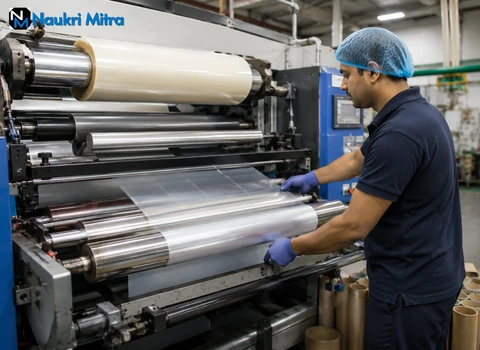
What It Means to Work as a Lamination Machine Operator in Packaging
Walk into any flexible packaging unit, and you'll usually find a lamination line running somewhere on the floor — rolls of film feeding in, heat and pressure doing their work, finished laminate winding out the other end. This is the world a Lamination Machine Operator works in. Right now, there's a Full-time opening for this role in Mumbai, Maharashtra, India, paying ₹24000 a month, and it's worth understanding what the job really looks like before applying.
Why This Role Exists in the First Place
Packaging doesn't just wrap a product — it protects it, extends its shelf life, and often carries the branding that gets it off the shelf. Lamination is the process that bonds two or more layers of film, paper, or foil together so the final packaging material can do all of that. A poorly laminated roll means bubbles, weak seals, or print that doesn't hold up, and that costs a manufacturer real money. That's exactly why factories keep dedicated operators on this machine instead of leaving it to whoever's free.
What a Shift Actually Looks Like
The day starts with checking the machine — is it clean, are the rollers fine, is the adhesive tank at the right level? Film rolls get loaded, tension and temperature settings get dialed in, and then production runs. It's not a "set it and forget it" job, though. Operators keep an eye on the laminate as it comes off the line, watching for wrinkles, air bubbles, or uneven bonding, and they'll stop the line to fix things before a whole roll gets wasted. Somewhere in between, there's paperwork — production counts, downtime reasons, material usage — that needs to be logged.
The Daily Responsibilities, in Practical Terms
- Running the lamination machine and adjusting speed, tension, and heat as the material demands
- Loading and swapping film rolls and adhesive or coating material
- Checking finished rolls for bond strength, thickness, and surface defects
- Logging production data and flagging machine issues to the supervisor
- Doing basic cleaning and preventive checks between runs
- Working alongside the quality team when a batch needs closer inspection
Where You'd Actually Be Working
This kind of role is found in flexible packaging plants, film converting units, printing-and-laminating factories, and similar industrial setups. Maharashtra has no shortage of these — Mumbai and its surrounding belt have a decent concentration of packaging and FMCG-linked manufacturing, which is part of why openings like this one come up here fairly often.
The Equipment You'll Get Familiar With
Depending on the plant, you might work on solventless or solvent-based lamination machines, along with slitting and rewinding units and adhesive coating systems. Measuring instruments come into play too — thickness gauges to check the laminate, tension meters to keep the film feed consistent, and viscosity cups to test how the adhesive is behaving before it goes on the roller.
What Employers Look For
An ITI qualification in a mechanical or machining-related trade tends to open doors here, and so does a Diploma in Mechanical Engineering. That said, plenty of operators build their skills on the floor itself. What matters more, honestly, is whether someone can read a basic engineering drawing, handle precision instruments without hesitation, and troubleshoot when a machine starts behaving oddly — that hands-on comfort often counts for as much as the certificate.
The Physical Side of the Job
You'll be on your feet for most of the shift, handling film rolls that aren't exactly light, and working close to heated rollers for extended stretches. Many plants operate on rotational shifts based on order volume, so flexibility in timing helps. It's a floor job, not a desk job — noise, heat, and standing are all part of the package.
Keeping Safe Around the Machine
Heat, moving parts, and adhesive chemicals make safety non-negotiable on a lamination line. Gloves, eye protection, and closed shoes are standard PPE. Before any maintenance work, machines get locked out properly, and adhesive handling is usually done in a ventilated section of the plant — not something to cut corners on.
The Rough Patches Operators Run Into
Material wastage from a bad run, a sudden machine breakdown mid-shift, or maintaining consistent quality hour after hour — these are the recurring headaches. Most of it gets easier with time, once you've handled enough film types and adhesive batches to know how they'll behave before something goes wrong.
Where the Job Can Lead
Operators who stick with it and build a track record often move into senior operator or shift-in-charge positions, and some transition into quality control roles within the same packaging setup. Keeping up with newer lamination technology as it comes along tends to make that progression smoother.
Pay and What Might Come With It
This particular Full-time role in Mumbai, Maharashtra, India, pays ₹24000 per month. Some employers add extras on top — overtime, PF, ESI, bonuses, uniforms, transport, or canteen access — though what's actually offered varies by company and shouldn't be assumed until confirmed.