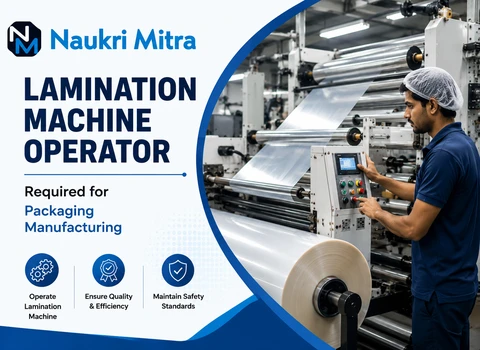
What a Lamination Machine Operator Actually Does
Packaging manufacturing runs on precision, and a lamination machine operator is one of the people keeping that precision in check. This particular position is based in Daman, Dadra and Nagar Haveli, and Daman and Diu, and it's offered on a Full-time basis. If you're looking into this line of work for the first time, here's a straightforward look at what the job really involves, day to day, and what it takes to do it well.
Lamination itself is fairly simple to understand once you see it in action. Two or more layers of film, paper, or foil get bonded together using heat, pressure, or an adhesive. The result is a stronger, more durable packaging material — the kind used in pouches, wrappers, cartons, and rolls of flexible packaging you'll find in almost any FMCG or food product on a shelf.
Why This Role Matters to Manufacturers
Here's the thing about lamination work: small mistakes get expensive fast. A thickness error or a weak bond means rejected material, and that eats into both time and raw material costs. Packaging units can't afford inconsistent output, especially when they're working against client deadlines. So an operator who knows the machine well isn't just filling a shift — they're actually preventing losses that would otherwise pile up further down the line, whether that's at slitting, printing, or pouch conversion.
Walking Through a Regular Shift
Most days start the same way. The operator checks the machine, loads the base material rolls, and sets the temperature and pressure according to the job order. From there, it's mostly monitoring — watching for air bubbles, checking alignment, tweaking speed if something looks off. Near the end of the shift, there's usually cleaning and a basic maintenance check before handing things over.
A few things tend to fall under an operator's responsibility on any given day:
- Loading and unloading film or paper rolls without damaging them
- Keeping temperature, pressure, and speed settings within range
- Catching bubbles, wrinkles, or bonding issues before they become bigger problems
- Logging output and wastage numbers, since this data matters for planning
- Doing minor troubleshooting when the machine starts behaving oddly
- Staying in touch with the shift supervisor about how targets are tracking
Where You'd Actually Work
Most operators end up in packaging plants, flexible packaging units, or printing and converting factories — the kind that supply the food, pharma, FMCG, and consumer goods sectors. Daman sits in an industrial belt that's fairly active on the western coast, so there's no shortage of manufacturing setups running these kinds of operations.
The Machines You'll End Up Knowing Well
The lamination machine is only part of the picture. Depending on where you work, you'll likely also come across slitting machines, rewinders, and adhesive coating units. Thickness gauges and tension meters are used often, too, to check that the material meets spec. Beyond that, it helps to be comfortable with control panels, temperature dials, and the roll-alignment mechanisms that keep everything running straight.
What Actually Sets a Good Operator Apart
Knowing the machine settings matters, sure. But a lot of it comes down to attentiveness — patience during those long production runs, and an eye for catching quality issues before they snowball. Knowing a bit about packaging materials, adhesives, and film types doesn't hurt either.
What Kind of Training Helps
Employers may prefer candidates with relevant machining or tool room training. Depending on the complexity of the work, an ITI in a machining-related trade, a Diploma in Mechanical or Tool and Die Engineering, or equivalent vocational training may be considered suitable. Practical experience with EDM machines, engineering drawings, and precision measuring instruments is often valued as much as formal education.
The Physical Side of the Job
Expect to be on your feet for most of the shift. There's lifting involved, too — rolls of material aren't light — and you'll be working close to machines that emit heat. Some units operate rotational or night shifts depending on production demand, so shift work is a possibility to factor in. It's also a noisy, warm environment most of the time, which is just the nature of a factory floor.
Staying Safe Around the Machine
Heated rollers and moving parts aren't something to take lightly. Heat-resistant gloves, safety goggles, and closed footwear are standard. Most operators are trained on lockout procedures before they're allowed to make adjustments on their own, and loose clothing or untied hair near moving parts is a hard no.
What Tends to Go Wrong
Wastage from incorrect settings happens more often than anyone would like. Machines break down unexpectedly. And keeping bonding quality consistent across a long run takes more focus than it sounds like it would. None of this is unusual — it's just part of the job. What matters is staying calm when it happens and flagging issues to a supervisor early rather than letting them pile up.
Where This Can Lead Over Time
Operators who stick with it tend to move into senior operator roles or shift-in-charge positions, sometimes quality-control work within the same line. Getting exposure to different lamination processes and machine types over the years is usually what opens the door to supervisory roles in this industry.
Pay and What Else Might Come With It
This role pays ₹24,500 a month. Like a lot of manufacturing jobs in India, there could be extras on top of that — overtime, PF, ESI, bonuses, uniforms, transport, or canteen access — though none of that is guaranteed, and it's worth confirming directly with whoever's hiring.
A Few Things Worth Knowing Before You Start
If you're new to this, spend some time learning the basic machine terminology and watch how experienced operators handle things before you try running the machine solo. If you've already got some experience, the real growth comes from understanding quality parameters at a deeper level — that's usually what separates someone who's just doing the job from someone who's actually good at it. For anyone based in Daman or elsewhere in Dadra and Nagar Haveli and Daman and Diu looking at packaging manufacturing as a career, getting comfortable with lamination processes hands-on is a reasonable place to start building something long-term.