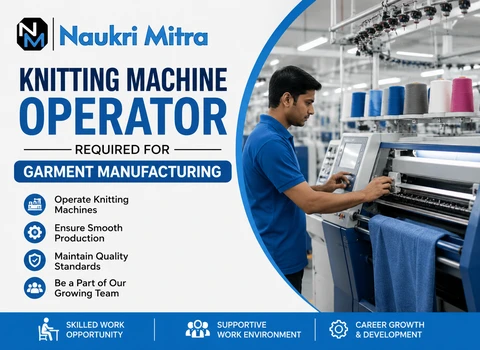
What Does a Knitting Machine Operator Actually Do?
Before a t-shirt, vest, or hosiery item ever gets cut and stitched, it starts out as plain fabric coming off a knitting machine. That's where a Knitting Machine Operator comes in. This is the person who loads the yarn, sets up the machine, and watches the fabric as it forms, catching problems before they become wasted material or rejected orders. It's not glamorous work, but it's foundational — nothing further down the production line can happen without fabric that's been knitted correctly.
This particular opening is based in Tiruppur, Tamil Nadu, one of India's busiest knitwear manufacturing centers, and it's a Full-time position paying ₹27000 a month.
Why This Job Exists in the First Place
Knitting machines can run for hours without stopping, but they're not smart enough to notice a dropped stitch or a tension problem on their own. Someone has to keep watch. That's the whole reason factories hire operators instead of just letting machines run unattended — a single unnoticed fault can ruin an entire roll of fabric, and by the time it's caught downstream, the yarn and machine time are already lost. Good operators save money simply by catching issues early.
A Rough Idea of What the Shift Looks Like
Most shifts start the same way — checking yarn stock, glancing at notes left from the previous shift, and making sure the machine is set up correctly before production even begins. After that, the pace picks up:
- Threading yarn cones and checking tension before the run starts
- Adjusting stitch length, speed, and gauge to match what the order calls for
- Keeping an eye out for holes, drop stitches, or patchy texture as fabric comes off the machine
- Shutting the machine down fast if something looks wrong, rather than letting it keep running
- Noting down output figures and any downtime, along with the reason for it
None of this is complicated on paper, but doing it consistently, shift after shift, is what separates an experienced operator from someone still learning the ropes.
Beyond Running the Machine
The job doesn't stop at operating the equipment. Operators are usually also responsible for keeping their section tidy, meeting the day's production targets, and flagging quality concerns to a supervisor rather than quietly hoping they will sort themselves out. Small maintenance jobs — cleaning needles, swapping worn parts — often fall to the operator as well, since waiting for a technician each time would slow everything down.
The Machines and Tools You'll Be Working With
Tiruppur's knitwear units mostly run circular knitting machines, flat knitting machines, and interlock machines. Alongside the machines themselves, operators regularly use a few measuring tools — yarn tension meters, GSM testers (which measure fabric weight in grams per square meter), and stitch length gauges. These aren't optional extras; they're how an operator confirms that the fabric actually meets what the buyer ordered, rather than just assuming it's fine.
Where This Work Happens
You'll find this role mostly in garment manufacturing units, hosiery mills, and knitwear processing plants. Given that Tiruppur is one of the country's major textile clusters, there's no shortage of such facilities here, with many supplying fabric for both the domestic market and export orders. The work itself usually happens in a large production hall with several machines running at once — expect some noise and a fair bit of movement around you.
Skills Employers Actually Look For
Knowing how to operate the machine is one thing. Spotting a problem before it wastes an entire batch is a different skill altogether, and it's arguably the more valuable one. Employers tend to favor candidates who can identify fabric defects at a glance, adjust settings without long delays, and adhere to standard procedures without constant reminders.
- A working understanding of different yarn types and how fabric structures form
- Being able to read production sheets and specification instructions correctly
- Sharp hand-eye coordination for catching faults quickly
- The patience to stay focused during long, repetitive monitoring stretches
- Openness to learning new machine models, since not every factory uses the same setup
Freshers, ITI candidates, and diploma holders with a background in textiles or mechanics generally fit well into this role. That said, candidates who've had hands-on exposure to knitting or textile machines, engineering drawings, or precision measuring instruments tend to settle into the work faster — though formal training still counts for a lot, especially when it comes to understanding why a machine behaves the way it does.
What the Job Asks of You Physically
Expect to be on your feet for most of the shift, walking between machines and occasionally lifting yarn cones, which aren't heavy individually but add up over a day. Factory floors tend to run warm, and the constant hum of machinery means it's rarely quiet. Reasonable stamina helps. Shift work is common in this line of work as well, since many units keep production running across two or three shifts to meet delivery timelines.
Staying Safe Around the Machines
Working close to moving parts all day means safety habits matter more than they might at first seem. A few basics go a long way:
- Avoid loose clothing or dangling accessories near moving machine parts
- Wear ear protection in sections where noise levels are high
- Keep hands well clear of the needle bed while the machine is running
- Report anything that sounds or feels off — unusual vibration, grinding noise — right away instead of waiting it out
What Trips Up Most New Operators
The biggest hurdle for anyone new to this job is speed — spotting a subtle fault quickly, especially when handling multiple machines during a busy production run. It's not something you get right immediately. Most operators say their eye for defects sharpens noticeably after the first few months, once the patterns of what "normal" fabric looks like become second nature.
A few things that genuinely help while you're still finding your feet: check machine settings at the start of every single shift rather than assuming yesterday's setup is still fine, keep your workstation uncluttered, and don't hesitate to ask a supervisor a question during the early weeks. It's far cheaper for everyone if you ask than if a batch gets ruined.
Where This Role Can Lead
Operators who perform consistently well often move up to senior operator positions, shift-in-charge roles, or quality checking responsibilities within the same production line. Experience matters a lot here — factories generally prefer promoting someone who already understands their machines and workflow over bringing in an outsider for supervisory roles.
Pay and What Else Might Come With the Job
This role pays ₹27000 per month and is offered as a Full-time position in Tiruppur, Tamil Nadu, India. Some employers also provide extras such as overtime pay, PF and ESI coverage, a festival bonus, uniforms, transport, or canteen facilities — though these vary quite a bit from one company to the next, so it's worth confirming the details directly with the employer rather than assuming they're included.