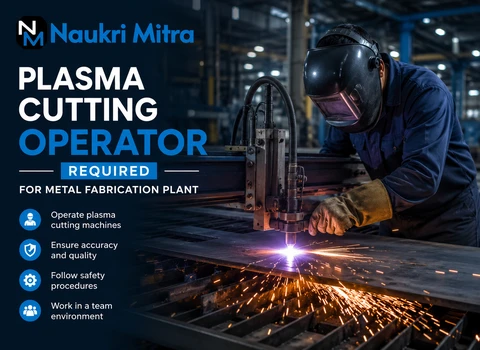
What a Plasma Cutting Operator Actually Does
Metal doesn't cut itself, and that's basically the reason this job exists. A Plasma Cutting Operator operates machines that slice through steel, aluminum, and stainless steel sheets using a jet of superheated ionized gas. Fabrication plants need this skill because most of the products they build start life as a flat sheet of metal that must be cut into a specific shape before anything else can happen to it. In Faridabad, Haryana, where small- and mid-sized fabrication units are fairly common, this kind of work keeps a steady stream of hiring.
A Day on the Cutting Floor
No two days look exactly alike, but there's a rhythm to it. Operators usually start by checking the day's job orders or drawings to determine what needs to be cut and how many pieces are required. Then comes machine setup - adjusting current settings, gas flow, and cutting speed based on the thickness of the metal being handled. Thin sheets cut differently than thick plates, and getting that wrong wastes both time and material.
Once the machine is running, the job becomes about watching closely. Sparks fly, the cut line has to stay straight, and any drift in accuracy needs to be caught early rather than after twenty pieces have already gone wrong.
Why Plasma Cutting Is Used Instead of Other Methods
People sometimes ask why plasma cutting is chosen over gas cutting or laser cutting. The honest answer is that it sits in a useful middle ground - faster than gas cutting on medium-thickness metal, and cheaper to run than laser setups for many everyday fabrication jobs. The plasma arc reaches temperatures hot enough to melt metal almost instantly, and the ionized gas blows the molten material away, leaving a reasonably clean edge behind.
Main Tasks on the Job
- Setting up and running CNC or manual plasma cutting equipment
- Reading engineering drawings and translating them into cutting layouts
- Measuring finished pieces with vernier calipers or steel scales to check tolerances
- Spotting machine issues early and reporting them before they turn into bigger problems
- Keeping wastage low by planning cuts efficiently on the sheet
- Sticking to safety procedures, shift after shift, even when things get busy
Where People With This Job Usually Work
Metal fabrication plants, sheet metal workshops, and tool rooms are the common workplaces here. Many of these units in and around Faridabad supply parts to the automotive, construction, and general engineering industries, so the work environment can shift a bit depending on which sector the plant is serving that season.
Equipment You'll Get Familiar With
Besides the plasma cutter itself, expect to work around grinding tools for cleaning up edges, welding equipment for small repairs, and material handling gear for moving heavy sheets onto the cutting table. Many newer facilities have shifted toward CNC-controlled plasma tables, which means basic computer literacy is becoming more useful than it used to be, even for a hands-on trade like this one.
What Employers Are Usually Looking For
Formal training helps, and most employers do prefer it. An ITI qualification in a machining-related trade or a Diploma in Mechanical or Tool and Die Engineering is commonly accepted, and equivalent vocational training works in many cases. That said, hands-on exposure counts for a lot here. Candidates who've spent time around EDM machines, worked with engineering drawings, or handled precision measuring instruments often get taken just as seriously as someone with a certificate alone.
Beyond the technical side, patience matters more than people expect. Cutting cycles can run long, and rushing through quality checks is how mistakes slip through.
Physical Side of the Work
This isn't a desk job. Long hours on your feet, lifting metal sheets that aren't exactly light, and working close to heat and sparks are all part of it. It's a full-time role, and depending on how busy the plant gets, shift work is fairly common in this line of work.
Staying Safe Around the Machine
Plasma arcs are bright, hot, and unforgiving if handled carelessly. Safety goggles or a face shield, heat-resistant gloves, safety shoes, and a protective apron are standard gear. Good ventilation matters too, since cutting produces fumes that shouldn't be breathed in for long stretches without proper airflow.
Where Newcomers Tend to Struggle
Getting consistent cut quality across different metal thicknesses trips up many beginners early on. It's less about talent and more about repetition - operators who spend time practicing measurements and pay attention to what experienced colleagues are doing tend to get comfortable faster than those who try to figure it all out alone.
Moving Up in This Trade
Operators who stick with the trade and build a reputation for accuracy often move into senior operator roles or take on CNC programming work over time. Some eventually step into shift supervisor positions, overseeing a team of cutters rather than running the machine themselves. Growth here tends to come from experience and reliability more than anything else.
Pay and What Else Might Come With It
This full-time position in Faridabad, Haryana, India pays ₹28,000 per month. Depending on the employer, things like overtime pay, PF, ESI, bonus, uniforms, transport, or canteen access might also be part of the package - though none of that is guaranteed and it varies from one plant to another.