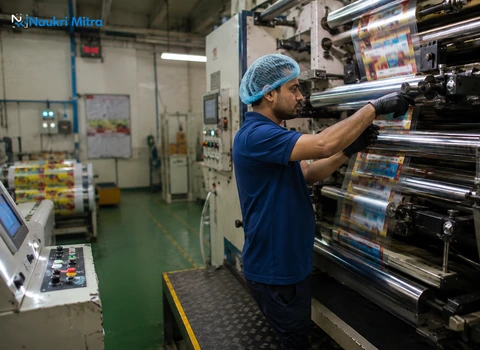
What It Actually Means to Work as a Gravure Printing Operator
Walk into any flexible packaging unit, and you'll notice the printing section is where a lot of the real action happens. This is where plain plastic film turns into the branded pouches and wrappers you see on store shelves. The
Gravure Printing Operator Required for Flexible Packaging Industry listing points to exactly this kind of work — running the machines that print those designs onto film, at speed, and getting it right every single time. If you're weighing this as a career option, it's worth understanding what the job really involves before you apply.
The Packaging Boom Behind This Job
India's flexible packaging sector has grown quickly over the last decade, driven by food, FMCG, and pharma companies that need attractive, durable pouches. Gravure printing is the technology most of them lean on because it gives sharp, repeatable prints even when the machine is running fast.
That speed and consistency don't happen on their own — someone has to watch the process closely, catch problems early, and keep the line moving without wasting film. That's where the operator comes in, and it's why factories treat this as a skilled, hands-on position rather than an entry-level filler job.
Walking Through a Shift
No two shifts look exactly alike, but the rhythm is fairly consistent. Operators start by checking the cylinders, confirming ink viscosity is where it should be, and loading the correct roll of film. Once the machine is running, most of the attention goes to watching color registration and making sure the print lines up properly across every station.
Humidity, room temperature, even small variations in ink batches can throw things off, so small corrections happen constantly rather than once in a while. By the time a roll finishes, the operator checks it for defects before it moves on to slitting or lamination.
What the Job Actually Involves Day to Day
- Setting cylinders and lining up colour stations before a run starts
- Keeping an eye on ink flow, viscosity, and drying temperature
- Adjusting tension so the film doesn't wrinkle or tear mid-run
- Spotting print faults like ghosting, streaking, or misregistration early
- Cleaning and doing basic upkeep on rollers and doctor blades
- Logging production numbers and flagging machine issues to maintenance
The Equipment You'll Be Handling
Most of the day is spent around the gravure press itself, along with tools like viscosity cups and colour density meters that help verify print quality. Engraved cylinders are the heart of the process — they carry the design and transfer ink onto the film — so understanding how they work matters more than people expect going in.
Operators also read job cards or basic drawings that specify colour sequence and design layout, and use measuring instruments to check film thickness during a run.
Where This Kind of Training Pays Off
There's a decent amount of technical know-how involved, but attention to detail matters just as much. Most employers look for candidates with an ITI in a relevant trade or a Diploma in Printing Technology, Mechanical Engineering, or something close to it.
That said, hands-on experience with machine operation, colour matching, and handling packaging film often counts for just as much as the certificate. Being quick to troubleshoot a minor fault without waiting around for a supervisor is a skill that gets noticed fast on the shop floor.
On Your Feet, On the Floor
This is full-time, physically active work. Expect to be standing for long stretches, moving film rolls, and working close to machinery that's constantly in motion. There's usually some noise, and a faint smell of inks and solvents in the air, so comfort in a typical factory setting matters.
Packaging plants tend to run in shifts because production doesn't stop, so shift work is part of the deal for most operators.
Staying Safe Around the Press
- Gloves, safety glasses, and ear protection where the job calls for them
- Proper lock-out steps before touching or cleaning any moving part
- Ventilated handling of solvents and inks — never in a closed corner
- Flagging a worn blade or damaged cylinder the moment it's noticed, not later
Where New Operators Usually Trip Up
Holding colour consistency across a long run is probably the toughest part to master early on. A lot of experienced operators will tell you the trick is watching the first few metres of a fresh roll closely rather than assuming everything's fine because the last one printed well.
Getting familiar with how different film substrates behave under ink also saves a lot of rework down the line.
Moving Up From Here
Operators who stick with the trade and build a track record can move into senior operator roles, take on shift supervision, or shift toward print quality control work — all within the same line of work, without needing to start over somewhere else.
Pay and What Comes With It
This is a full-time position based in Hyderabad, Telangana, India, and the monthly salary on offer is ₹27,000. Some employers add extras on top of base pay — things like overtime, PF, ESI, bonuses, uniforms, or transport support — though these vary from one company to another and shouldn't be assumed.