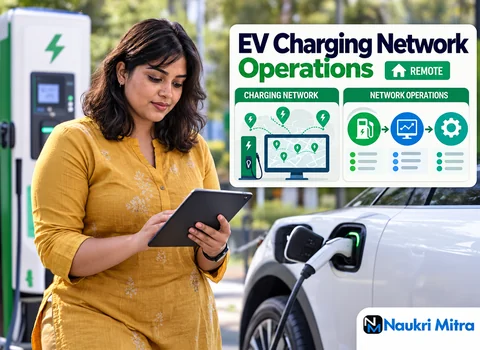
Public charging used to be measured by how many chargers an operator had installed. Drivers stopped caring about that count a while ago. Now they judge whether the charger in front of them starts, delivers power, and bills them correctly, and that shift in what counts as success is why this seat exists. Among remote EV charging network operations engineer jobs, this one is a clean example. It is full-time; the EV charging network operations engineer salary is $95,000 USD per year, and engineers in any country can apply, since the work happens on dashboards, logs, and tickets rather than in a car park.
In short, you watch uptime and failed sessions, work out why stations fail, get field repairs done, and use reliability data so the same failures recur less often.
Advertisement
What OCPP 2.0.1 actually carries between a charger and the back office
Most of your evidence arrives over OCPP, the Open Charge Point Protocol, version 2.0.1, and you read its traffic the way a network engineer reads packet captures. The protocol carries:
- Boot and heartbeat messages, which tell the back office a station is alive, which firmware it runs, and when it last checked in.
- Status notifications per connector: available, occupied, faulted, unavailable.
- Authorization and transaction events, covering the card tap or app start, the meter values during charging, and the stop reason at the end.
- Device model data, the 2.0.1 structure for reporting a charger's components and variables, which makes remote diagnosis more precise than 1.6 allowed.
- Remote commands going the other way: reset, release a stuck connector, change availability, update firmware, pull diagnostics logs.
- Security profiles and certificates, which matter when a station refuses to connect after one expires.
Stop reasons EVDisconnected and PowerLoss tell different stories. Much of the job is knowing which story you are looking at before anyone sends a van.
Driivz and AMPECO, the two consoles you will live in
The charge station management system (CSMS) turns OCPP messages into something a person can act on. This role expects deep experience with Driivz and AMPECO, the two platforms operators use to run charger fleets, manage driver accounts, set tariffs, and handle alarms.
On either one, you will filter stations by fault state, read the raw message log for a single session, push configuration changes, schedule firmware rollouts in waves, and set alert rules so a dead station is noticed within minutes instead of after the third driver complaint. The skill that separates a good operator from an adequate one is distrust: the console summary says Available, but the last heartbeat was forty minutes ago, so it is not available at all.
Sorting faults into firmware, connectivity, hardware, and payment
Every incident in a charging NOC ends up in one of four buckets, and the bucket decides who fixes it.
Firmware
Boot loops after an update, a connector stuck before charging, meter values that freeze mid-session. Often fixed remotely by rollback, and often traceable to one firmware version across a model family.
Connectivity
Modem drops, SIM data limits, carrier outages, an unplugged site router. The charger may work locally yet look dead to the back office, or charge without reporting the session for billing.
Hardware
Damaged cables, failed contactors, DC cooling faults, cracked screens, power modules that derate under heat. None of it resets from a laptop.
Payment and authorization
Card reader failures, roaming rejections, expired tokens, unsynced pricing. The hardware is fine, and the driver still drives away, which shows up in session success rates even when uptime looks healthy.
Getting the right technician to the right charger with the right part
When a fault needs hands, you write the work order, and a vague work order costs a second visit. Good ones state the station and connector, the fault codes with timestamps, what you already tried remotely, what you suspect, and the likely parts. You chase the field team on response times, confirm the fix from the back office, and close the ticket only when sessions complete again. Keeping site hosts informed is part of this too.
Reliability analysis that actually reduces downtime
Restoring single chargers keeps the lights on. The bigger task is finding why groups keep failing. You track uptime per station and per model, but uptime alone flatters a network, so you also track session success: of all attempts drivers started, how many delivered energy and ended normally.
A typical piece of work: you notice one charger model fails more often at sites with a particular modem, pull the session data, show the pattern, and recommend a hardware swap or a carrier change. SQL against the session database and scripting in something like Python make this far quicker, which is why both count in your favor here. Hardware and field leads will question your data, so check it first.
How the NOC works when your desk is at home
Network operations for chargers is screen work, so it travels well. You need a dependable connection, a second screen for the CSMS and the ticket queue, and a quiet place to take calls with technicians standing at a broken unit. Because a charging network runs all day and night, teams spread across regions often split coverage by time zone, and you should expect some on-call duty or rotating hours. Most EV charging network operations engineer work-from-home jobs depend on clear written handovers, since the next shift cannot lean over and ask what you meant.
The background behind remote EV charging network operations engineer jobs like this one
The EV charging network operations engineer job description here asks for a degree in electrical engineering or a related field and four or more years in EV charging, energy, or network operations. Deep OCPP 2.0.1 knowledge and hands-on time with Driivz and AMPECO are expected. EVITP, a widely recognized EV charging network operations engineer certification for hardware knowledge, counts in your favor, as do SQL and scripting.
The core EV charging network operations engineer skills, put simply: reading protocol logs, structured troubleshooting, writing tickets other people can act on, basic electrical knowledge of AC and DC charging, and enough data work to argue from evidence. Your resume should name the platforms you have used, the size of the fleet you looked after in rough terms, and one or two reliability problems you traced to a root cause.
Field service: same codes, different working days
The two roles share fault codes and nothing much else in the daily routine. A field service engineer travels to sites, opens cabinets, and replaces modules under electrical safety procedures. You work from the data side: deciding whether a visit is needed, preparing the technician, and confirming the fix remotely. Field engineers see one charger very deeply. Network operations sees the whole fleet and the patterns across it. Many good NOC engineers started in the field, because knowing what is inside the cabinet makes the logs easier to read.
Breaking into charging network operations
For anyone asking how to become an EV charging network operations engineer, the answer is that there's no standard route. Telecom and IT NOC staff bring monitoring and incident habits but must learn OCPP and charger hardware. Electricians and field technicians bring hardware sense, and need to learn the back office. Energy and utility engineers bring grid and power knowledge. People searching for entry-level openings, or for EV charging network operations engineer jobs with no experience, will mostly find support or monitoring roles; those are a sensible first step, though this listing wants four years behind you.
For learning, read the OCPP 2.0.1 specification from the Open Charge Alliance, run an open-source OCPP simulator against a test back office, and practice SQL on any session-style dataset. A short EV charging network operations course on charging hardware can fill gaps, but nothing replaces diagnosing real faults.
Why charging operators keep needing this skill set
Networks such as Electrify America, along with many regional operators, fleet depots, and charge point manufacturers, run back offices that need someone to watch and fix them. As more chargers age past their warranty and drivers grow less patient with broken ones, reliability work becomes a standing function rather than a project. Nobody can promise where a career goes, but people who tie protocol data to physical faults have options across operators, CSMS vendors, and hardware makers.