What Does a Diesel Generator Operator Actually Do?
Ask ten people what a DG Operator does, and most will guess "something with generators" and stop there. There's more to it. A Diesel Generator Operator runs, monitors, and keeps diesel generator sets in working order — the machines that kick in when grid power fails or when continuous power backup is simply non-negotiable. This particular opening is in Pune, Maharashtra, India, a Full-time position paying ₹31,000 a month. If you're weighing this as a career, it helps to know what the job looks like once you're past the interview and actually standing in front of a running generator.
Why This Job Exists in the First Place
No factory manager wants their production line to stop because the state grid tripped. Hospitals can't afford even a few minutes without power in an ICU. Data centers, malls, gated societies, construction sites — all of them lean on diesel gensets as insurance against outages. But a generator left unattended is a liability, not an asset. Fuel goes stale, batteries die quietly, coolant leaks go unnoticed until the engine overheats. That's the gap a DG operator fills. Someone has to actually watch the gauges, not just trust that the machine will start when called upon.
A Day on the Job
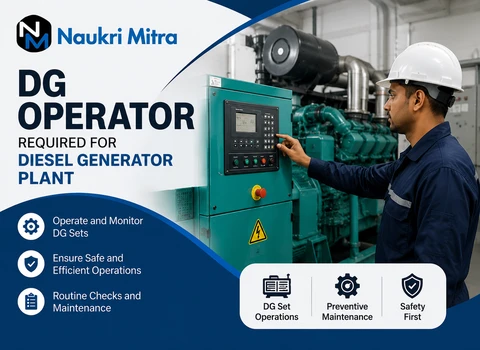
No two shifts look identical, but there's a rhythm to it. Early on, you'd check fuel and oil levels, look over the coolant, and give the battery terminals a glance before anything gets switched on. Once the generator is running, most of the work is watching — voltage, frequency, load, exhaust temperature. Some days that's uneventful. Other days a bearing starts humming at a pitch it shouldn't, and you're the one who has to notice.
Typical tasks through the shift include:
- Starting and shutting down DG sets based on power demand
- Reading voltage, frequency and load values off the control panel
- Logging running hours, fuel usage and any faults
- Catching early warning signs — odd noise, vibration, smoke, heat
- Calling in an electrician or senior technician when something's beyond routine fixing
Power doesn't fail on a schedule, so this is a Full-time role that often includes rotational shifts — and yes, that sometimes means night duty, depending on how the site is staffed.
Where the Real Work Happens Beyond Monitoring
Watching gauges is only half of it. Operators also get their hands dirty with basic upkeep — changing engine oil and filters on schedule, cleaning air filters, checking the battery isn't losing charge, making sure the exhaust and cooling systems aren't choked up. None of this is glamorous, but skip it for a few months, and you'll see the difference in how the engine performs. Fuel consumption records and run-hour logs matter too; that paperwork lets management plan the next service rather than react to a breakdown.
The Equipment You'll Be Working Around
The diesel engine and alternator are the heart of the setup, but the control panel is where most of an operator's attention goes — especially the AMF (automatic mains failure) panel, which senses grid failure and starts the generator automatically in many modern installations. Larger sites may also have synchronizing panels for running multiple gensets together. Beyond that, expect to use a multimeter fairly often, along with basic spanners, a grease gun, and any hand tools included in the maintenance kit. Reading an oil pressure gauge or a temperature dial correctly — and knowing when a number is "off" — is honestly more useful day-to-day than most theoretical knowledge.
Skills That Actually Matter Here
A working knowledge of diesel engines and basic electrical systems is expected, but the operators who last in this field develop something harder to teach — a feel for the machine. They notice a slightly different sound before the gauge shows anything wrong. That comes with time, not from a textbook. Formally, an ITI in Electrician or Diesel Mechanic (or a similar trade) is what most employers look for, particularly for freshers. That said, candidates without a certificate but with real hands-on genset experience are often considered just as seriously — practical exposure tends to carry weight here.
What the Body Goes Through
This isn't a desk job. Expect long stretches on your feet, occasional lifting of tools or spare parts, and time spent close to machinery that's genuinely loud and warm. Generator rooms aren't air-conditioned offices — they run hot from engine heat, and the noise means you'll likely need ear protection for extended periods. If standing for hours in a warm, noisy room sounds difficult, it's worth factoring that in before applying.
Staying Safe Around Running Machinery
Safety isn't optional in a generator room, and most employers expect operators to wear ear protection, safety shoes, gloves, and occasionally a face shield when handling fuel or performing repair work. Lockout-tagout practices during maintenance aren't just a formality — they're what stops someone from getting hurt when a machine unexpectedly restarts. Keeping fire extinguishers within reach near fuel storage is another basic that gets overlooked until it's needed.
What Makes This Job Hard, Honestly
Breakdowns rarely happen at a convenient time — usually right when demand peaks and everyone's counting on the backup working. That's when quick thinking under some pressure matters more than textbook knowledge. Night shifts wear on people too; staying sharp at 3 a.m. while monitoring a quiet, steady hum takes discipline. Operators who build strong troubleshooting instincts early and stay consistent with routine maintenance, rather than skipping it when things seem fine, tend to find the job gets easier over time rather than harder.
Where This Role Can Lead
Start as an operator, and with a few years of solid experience, the next step is often shift in-charge or senior operator — someone overseeing a team rather than just one generator. From there, some move into maintenance supervisor roles, managing multiple DG units across a facility. Exposure to different generator capacities and different control systems along the way tends to be what separates someone who stays an operator from someone who moves up.
What This Position Pays
This Full-time DG Operator role in Pune, Maharashtra, India, offers a monthly salary of ₹31,000. As with most technical trades, pay in this field tends to shift with experience, the size of the installation being managed, and whether night or rotational shifts are involved.
Other Things Employers Sometimes Offer
Depending on the company, you might also find overtime pay, PF and ESI coverage, bonuses tied to festivals or performance, uniforms, and sometimes transport or canteen facilities. None of these are guaranteed — they vary from one employer to the next — but they're common enough in this line of work to be worth asking about during an interview.