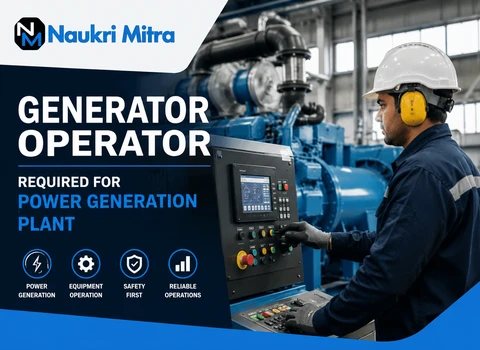
Understanding the Role of a Generator Operator in a Power Plant
A Generator Operator plays a key role in keeping electricity flowing from a power generation plant to homes, factories, and businesses. This role involves monitoring, controlling, and maintaining generator units to ensure power output remains steady and safe. If you are researching a career as a Generator Operator, this guide walks you through the daily work, required skills, working conditions and long-term career possibilities in this field, based on a current opening in Singrauli, Madhya Pradesh, India.
Why Power Plants Need Skilled Operators
Power generation is a continuous process. Plants cannot afford sudden shutdowns, unstable voltage, or unnoticed equipment faults. That is why companies hire trained operators who can watch instruments, respond to warning signs and keep generating units running within safe limits. A skilled operator helps prevent breakdowns, protects expensive machinery and supports uninterrupted power supply to the grid.
What a Typical Shift Looks Like
Most of the work happens in the control room and on the generation floor. An operator usually starts a shift by checking logbooks from the previous shift, inspecting gauges and panel readings, and confirming that all systems are within normal range. Throughout the shift, the operator patrols the plant area, records readings, listens for unusual sounds, and reports anything abnormal to the shift supervisor.
Main Responsibilities on the Job
- Starting, stopping and monitoring generator sets as per instructions
- Reading and recording voltage, frequency, temperature and pressure values
- Checking lubrication, cooling and fuel systems regularly
- Identifying unusual vibration, noise or overheating early
- Carrying out basic preventive maintenance tasks
- Coordinating with the maintenance team for repairs
- Following standard operating procedures during startup and shutdown
Industries and Sites Where This Role Exists
This kind of position is common in thermal power plants, captive power units, industrial generation facilities, and backup power stations. Since Singrauli is known for its concentration of power generation activity, opportunities for a plant operator role are closely tied to this local industrial base in Madhya Pradesh, India.
Machines and Instruments You Will Work With
An equipment operator in this field typically works with diesel or gas generator sets, control panels, synchronizing equipment, ammeters, voltmeters, frequency meters and temperature gauges. Understanding how these instruments work helps detect problems before they become major faults and forms a core part of daily monitoring duties.
Skills and Background That Help
Employers usually prefer candidates with an ITI qualification in Electrical, Mechanical or a related trade, though diploma holders and experienced technicians are also considered. Basic knowledge of electrical circuits, mechanical systems and reading technical gauges is valuable. Freshers with strong technical training and a willingness to learn on the job can also find opportunities in this field.
Physical Demands and Shift Pattern
This is a full-time role that often involves rotational shifts, since power plants run around the clock. The work requires standing, walking around the plant floor, and occasionally lifting tools or components. Alertness and the ability to stay focused during long shifts are important, especially during night duty.
Working Environment and Safety Practices
The working environment includes exposure to machine noise, heat, and moving equipment, so safety awareness is essential. Operators are generally expected to use PPE such as safety shoes, helmets, ear protection and gloves. Following lockout-tagout procedures and reporting hazards immediately are standard safety habits in this profession.
Common Challenges on the Job
New operators often find it challenging to quickly interpret instrument readings in the early months. Working through night shifts and staying alert during quiet hours can also be demanding. Building familiarity with the specific generator models used at a plant usually takes a few weeks of hands-on exposure.
Tips to Succeed in This Career
Keeping a personal log of readings and observations helps build pattern recognition over time. Asking senior technicians questions during handovers and staying up to date on basic electrical and mechanical concepts can speed up learning. Punctuality and discipline during shift changes are highly valued in this profession.
Career Growth in Power Plant Operations
With experience, a Generator Operator can grow into roles such as senior operator, shift-in-charge, or maintenance technician within the same plant or industry. Consistent performance, safety compliance, and willingness to learn new equipment often support this progression over the years.
Salary and Benefits
This Generator Operator position in Singrauli, Madhya Pradesh, India offers a monthly salary of ₹35,000 on a full-time basis. Depending on company policy, employees may also be eligible for benefits such as overtime pay, PF, ESI, bonus, uniforms, transport or canteen facilities, though these vary by employer and are not guaranteed.