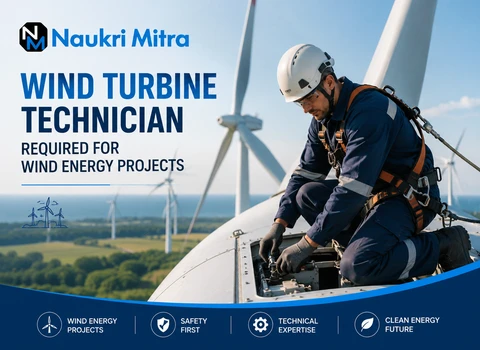
What It Actually Means to Work as a Wind Turbine Technician
Drive through parts of Kutch in Gujarat, and you'll see rows of tall white turbines turning slowly against the horizon. Someone has to keep those machines running, and that's where a Wind Turbine Technician comes in. This is a Full-time position based in Kutch, paying ₹ 38,000 per month. It's not a desk job. You climb, you inspect, you fix things, and you spend a good part of your day away from the ground.
Why This Role Exists in the First Place
A wind turbine has a lot going on inside it that people don't notice from below — gearboxes, generators, hydraulic brakes, dozens of sensors. All of that wears down over time or breaks unexpectedly. When a turbine stops spinning, the company loses money for every hour it's idle. So wind farms hire technicians whose whole job is to catch problems early, or fix them fast when they show up anyway. It sounds straightforward on paper, but the actual work takes patience, mechanical sense, and a fair bit of courage when it comes to heights.
How a Normal Day Unfolds
Most mornings start with a briefing at the site office. The team checks which turbines are due for scheduled maintenance and which ones triggered an alarm overnight through the monitoring system. From there, technicians head out across the wind farm, sometimes in a shared vehicle, sometimes on foot if the towers are close together. Once at a turbine, the real work begins — climbing the tower with a harness on, then working inside the nacelle, which is the housing at the top where most of the machinery sits.
What the Job Actually Involves
- Climbing towers that can run 80 to 100 meters high, always with certified fall-protection gear
- Checking gearboxes, bearings, brake pads and yaw systems for wear or oil leaks
- Looking over the blades for cracks, erosion, or lightning damage
- Testing electrical panels and generator connections with basic instruments
- Writing down readings and updating maintenance logs, usually on a tablet
- Dropping everything to respond when a turbine trips an alarm, and figuring out why
The Kind of Place You'd Be Working In
This isn't factory floor work. Wind farms sit on open land, often coastal or semi-rural, chosen specifically because the wind is strong and steady there. Kutch fits that description well, which is part of why so many turbines are installed there. On any given day you might be at the site office in the morning, at the base of a tower by mid-morning, and inside a cramped nacelle by noon. The environment keeps changing, and so does the weather — heat, dust, wind gusts, sometimes all three at once.
Tools You'll Actually Have Your Hands On
Torque wrenches for bolts, multimeters and megger testers for electrical checks, vibration analyzers to catch bearing problems before they get worse, thermal cameras to spot overheating parts, grease guns for lubrication. None of this is exotic equipment, but knowing how to use it properly matters a lot more than owning it. And since so much of the work happens at height, harnesses, rescue kits, and a working radio aren't optional extras — they're part of the daily kit.
What Employers Are Actually Looking For
An ITI in Electrician, Fitter, or a related mechanical trade opens the door here. A Diploma in Electrical or Mechanical Engineering works just as well, sometimes better. What matters beyond the certificate is whether you understand basic hydraulics and control panels, and whether you can follow safety procedures such as lockout/tagout without cutting corners. Physical fitness counts too — not gym-level fitness, but enough stamina to climb repeatedly and work in tight spaces without tiring out halfway through the job.
The Physical Side Nobody Talks About Enough
Climbing ladders several times a day adds up. So does working inside a nacelle that's barely big enough to stand in comfortably. A fear of heights simply doesn't work in this line of work, and most companies will run a medical fitness check before letting anyone start. Because this is Full-time work with round-the-clock monitoring needs, shift rotations are common, especially when wind speeds pick up during certain seasons, and turbines need closer attention.
Safety Isn't Something You Learn Once
Every climb starts with a pre-climb check and a radio call to the control room confirming where you're headed. Helmets, safety harnesses, safety shoes, gloves, and high-visibility jackets are standard gear, not suggestions. When lightning risk goes up or wind speeds cross a certain threshold, work stops — no exceptions. This kind of discipline takes a while to build as a habit, but experienced technicians will tell you it's the difference between a long career and a short one.
What Makes This Job Genuinely Hard
Kutch summers get brutal, and working at height in that heat tests your endurance. Sites tend to be far from towns, so the isolation gets to some people faster than the physical work does. Emergency call-outs at odd hours happen too — a turbine doesn't wait for a convenient time to trip. New technicians usually need a few months before these things stop feeling overwhelming.
Where This Can Lead Over Time
Technicians who stick with it and build a solid track record often move from routine maintenance into handling bigger jobs on their own — gearbox replacements, blade repairs, major overhauls. After a few years of consistent, safe work, some get considered for senior technician or team lead positions within the same wind farm operation. It's not a fast climb, but it's a real one.
What the Pay Looks Like
This Full-time role in Kutch, Gujarat, pays ₹38000 per month. Beyond the fixed salary, some employers offer overtime pay for extended shifts, PF and ESI coverage, uniforms, transport to remote sites, and canteen facilities — though these vary by company and shouldn't be assumed as guaranteed.
If You're Just Starting Out
Freshers and ITI candidates do well to pick up some basic knowledge of electrical circuits, hydraulic systems, and working at height safety before applying. If you're coming from another mechanical or electrical maintenance background, your skills will likely transfer, but expect to complete climbing and rescue certification before you're allowed on a live turbine in Gujarat.