📚 Table of Contents
- Understanding Cross-Cultural Skills in the Workplace
- The Rise of Global Remote Work
- Why Cross-Cultural Skills Are Essential in Remote Careers
- Better Communication Across Global Teams
- Stronger Team Collaboration
- Improved Problem-Solving and Creativity
- Higher Career Growth Opportunities
- Common Cross-Cultural Challenges in Remote Work
- Language and Communication Barriers
- Different Time Zone Expectations
- Varying Work Styles
- Misunderstandings in Feedback and Conflict
- Real-Life Example of Cross-Cultural Success in Remote Teams
- How to Develop Cross-Cultural Skills for Remote Careers
- Practice Active Listening
- Learn About Different Cultures
- Improve Digital Communication Skills
- Build Emotional Intelligence
- Stay Open-Minded and Adaptable
- The Role of Cross-Cultural Skills in Leadership
- Why Employers Value Cross-Cultural Competence
- The Future of Remote Work and Cultural Intelligence
- FAQs
- What are cross-cultural skills in remote work?
- Why are cross-cultural communication skills important for remote teams?
- How can I improve my cultural intelligence for remote jobs?
- Do employers value cross-cultural competence?
- Can cross-cultural skills help career growth?
- Conclusion
Why Cross-Cultural Skills Matter in Remote Careers
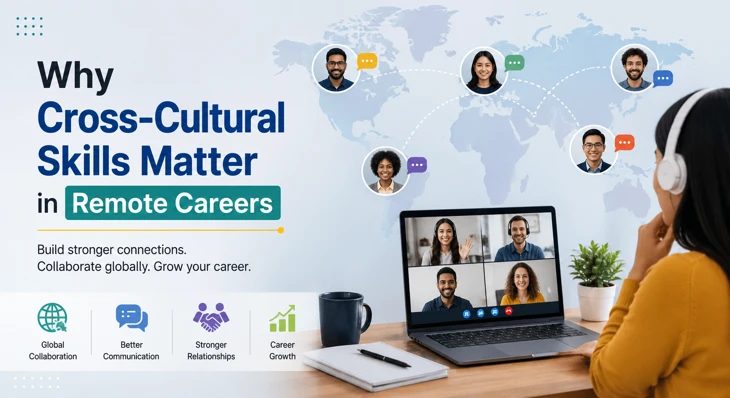
Remote work has changed the way people build careers, connect with teams, and grow professionally. A few years ago, most employees worked with colleagues from the same city or country. Today, professionals regularly collaborate with people from different cultures, languages, and time zones. A marketing manager in India may coordinate with designers in Europe, developers in South America, and clients in the United States — all in a single day. This shift has made cross-cultural skills one of the most valuable strengths in the modern workplace. Companies are no longer hiring only for technical expertise. They also look for professionals who can communicate effectively, respect cultural differences, and work smoothly in global teams. In remote careers, success depends on more than meeting deadlines or completing tasks. It depends on how well people understand each other, solve misunderstandings, and build trust across cultures. Professionals who can adapt to different communication styles and work environments often stand out in international teams. This article explores why cross-cultural skills matter in remote careers, how they improve professional growth, and what employees can do to strengthen these abilities in a global workplace.Understanding Cross-Cultural Skills in the Workplace
Cross-cultural skills refer to the ability to interact, communicate, and collaborate effectively with people from different cultural backgrounds. These skills help professionals navigate differences in language, communication style, values, traditions, and work expectations. In remote teams, cultural differences become more visible because employees rely heavily on digital communication. Without face-to-face interaction, small misunderstandings can quickly create confusion. Professionals with strong cross-cultural communication skills can avoid these problems by responding thoughtfully and respectfully. Some of the most important cross-cultural workplace skills include:- Active listening
- Adaptability
- Emotional intelligence
- Clear communication
- Respect for different perspectives
- Patience and empathy
- Conflict resolution
- Open-minded collaboration
The Rise of Global Remote Work
The growth of remote work has opened opportunities for companies to hire talent from anywhere in the world. Businesses are no longer limited to local candidates. Instead, they build international teams to access specialized skills, reduce operational costs, and support global customers. As a result, multicultural collaboration has become part of daily work life. For example, a software company may have:- Product managers in Canada
- Developers in India
- Customer support teams in the Philippines
- Marketing specialists in the UK
- Designers in Brazil
Why Cross-Cultural Skills Are Essential in Remote Careers
Better Communication Across Global Teams
Communication is the foundation of remote work. Since most remote employees interact through video calls, emails, chat platforms, and project management tools, clear communication becomes essential. Cross-cultural communication skills help professionals understand tone, context, and communication preferences. They learn how to explain ideas clearly without creating confusion or sounding disrespectful. For instance, some cultures value direct feedback because it saves time. Others may consider direct criticism uncomfortable or rude. A culturally aware employee understands how to adjust communication depending on the audience. This flexibility helps teams avoid unnecessary tension and maintain smoother workflows.Stronger Team Collaboration
Remote teams rely heavily on collaboration. Employees often work together on projects despite being separated by thousands of miles. Cross-cultural skills improve collaboration because they encourage:- Respect for diverse opinions
- Better listening habits
- Inclusive discussions
- Shared problem-solving
- Stronger trust between team members
Improved Problem-Solving and Creativity
Diverse teams bring different perspectives to the table. People from different cultures may approach challenges in unique ways based on their experiences and backgrounds. Professionals with cross-cultural competence can work effectively with these varied perspectives instead of resisting them. Imagine a remote product team brainstorming ideas for a global audience. Team members from different regions may identify user behaviors, preferences, or market trends that others might overlook. This diversity often leads to:- More creative solutions
- Better customer understanding
- Improved innovation
- Stronger decision-making
Higher Career Growth Opportunities
Cross-cultural skills are highly attractive to employers. Businesses want employees who can represent the company professionally in global settings. Professionals who communicate well with international clients and teammates often gain:- Leadership opportunities
- Promotions
- International project roles
- Client-facing responsibilities
- Better networking opportunities
Common Cross-Cultural Challenges in Remote Work
Even experienced professionals face challenges when working across cultures. Understanding these issues is the first step toward improving collaboration.Language and Communication Barriers
Not everyone in a remote team speaks English as a first language. Differences in accents, vocabulary, or phrasing can sometimes create misunderstandings. Idioms, slang, or humor may also confuse international teammates. For example, casual phrases commonly used in one country may not make sense to employees from another region. Professionals with cross-cultural awareness usually communicate more clearly by:- Using simple language
- Avoiding slang
- Confirming understanding
- Writing concise messages
- Speaking at a comfortable pace during meetings
Different Time Zone Expectations
Remote teams often work across multiple time zones. Scheduling meetings or responding quickly can become difficult. Some cultures may expect instant responses, while others value work-life balance and flexible schedules. Employees who understand these differences are more likely to:- Set realistic expectations
- Respect availability hours
- Plan meetings thoughtfully
- Communicate deadlines clearly
Varying Work Styles
Workplace culture differs around the world. Some professionals prefer structured processes and detailed planning. Others may focus more on flexibility and quick execution. Decision-making styles can also vary. In some cultures, leaders make fast decisions independently. In others, teams prefer group discussions before finalizing actions. Cross-cultural adaptability helps professionals adjust to these differences without creating conflict.Misunderstandings in Feedback and Conflict
Feedback is another area where cultural differences are particularly pronounced. In certain cultures, direct feedback is normal and appreciated. In others, feedback may be delivered more gently to maintain harmony. Without cultural awareness, people may misinterpret feedback as rude, passive, or unclear. Remote workers who understand cultural sensitivity can handle disagreements professionally while maintaining positive relationships.Real-Life Example of Cross-Cultural Success in Remote Teams
Consider a global digital marketing agency with employees across Asia, Europe, and North America. Initially, the team struggled with communication delays and misunderstandings during client projects. Team members interpreted feedback differently, and meetings often became unproductive. The company decided to invest in cross-cultural communication training. Employees learned about cultural communication styles, listening techniques, and collaborative practices. Within a few months, the agency noticed significant improvements:- Faster project completion
- Better client satisfaction
- Reduced team conflicts
- Stronger collaboration
- Higher employee engagement
How to Develop Cross-Cultural Skills for Remote Careers
Cross-cultural skills can be learned and strengthened over time. Professionals who actively improve these abilities often perform better in international work environments.Practice Active Listening
Listening carefully is one of the most valuable remote work skills. Instead of making assumptions, focus on understanding the speaker’s message, tone, and perspective. Ask thoughtful questions if something is unclear. Active listening helps reduce misunderstandings and shows respect for others.Learn About Different Cultures
Professionals do not need to become experts in every culture. However, basic awareness can make communication much smoother. Learning about:- Business etiquette
- Communication styles
- Holidays and traditions
- Workplace expectations
Improve Digital Communication Skills
Remote work depends heavily on written communication. Employees should practice writing messages that are:- Clear
- Respectful
- Organized
- Easy to understand
Build Emotional Intelligence
Emotional intelligence helps professionals understand both their own emotions and the feelings of others. In remote work settings, emotional intelligence supports:- Better teamwork
- Stronger leadership
- Professional conflict management
- More respectful conversations
Stay Open-Minded and Adaptable
Successful remote professionals understand that there is rarely only one “correct” way to work. Being open to different perspectives allows employees to collaborate more effectively and grow professionally. Adaptability is one of the most important skills in international remote teams.The Role of Cross-Cultural Skills in Leadership
Cross-cultural competence becomes even more important in leadership roles. Remote managers often supervise employees from multiple countries. Leaders who lack cultural awareness may unintentionally create communication gaps or lower team morale. Strong global leaders know how to:- Encourage inclusive discussions
- Respect cultural differences
- Adjust communication styles
- Create equal opportunities for all employees
- Build trust within diverse teams
Why Employers Value Cross-Cultural Competence
Businesses increasingly operate in global markets. They need employees who can interact professionally with international clients, partners, and colleagues. Cross-cultural skills support business success by helping companies:- Improve customer relationships
- Expand into international markets
- Build stronger remote teams
- Reduce workplace misunderstandings
- Increase employee retention
- Encourage innovation through diversity
The Future of Remote Work and Cultural Intelligence
Remote work is expected to remain a long-term part of modern business. As companies continue hiring globally, cross-cultural communication will become even more important. Future workplaces will likely depend on professionals who can:- Work effectively across cultures
- Collaborate in virtual environments
- Manage diverse teams
- Communicate with global audiences
- Adapt quickly to changing work environments