📚 Table of Contents
- Introduction: A New Era of Global Work
- Understanding Remote International Policy Careers
- Key Areas in Remote Policy Work
- Why Organizations Are Going Remote
- The Evolution of NGO Careers in a Remote World
- Types of Remote NGO Roles
- The Digital Transformation of NGOs
- Skills Required for Remote International Careers
- Essential Skills
- Technical Tools and Platforms
- How Remote Work is Expanding Access to Global Opportunities
- Opportunities for Emerging Professionals
- Real-Life Example
- Challenges in Remote NGO and Policy Careers
- Communication Gaps
- Limited Field Exposure
- Digital Dependency
- Maintaining Collaboration
- Future Trends in International Remote Work
- Rise of Hybrid Global Teams
- AI and Data-Driven Policy Work
- Increased Demand for Global Freelancers
- Greater Emphasis on Climate and Sustainability Roles
- How to Start a Career in Remote International Policy or NGO Work
- Step 1: Build a Relevant Educational Background
- Step 2: Gain Practical Experience
- Step 3: Develop Writing and Analytical Skills
- Step 4: Network in Global Development Circles
- Step 5: Apply for Remote-Friendly Organizations
- The Human Impact of Remote NGO Work
- FAQs
- 1. Are remote international policy jobs legitimate and stable?
- 2. Do I need international travel experience to work in NGOs remotely?
- 3. What qualifications are needed for remote NGO careers?
- 4. Can I work for global organizations from any country?
- 5. What are the most in-demand remote roles in this field?
- Conclusion: A Borderless Future of Impactful Work
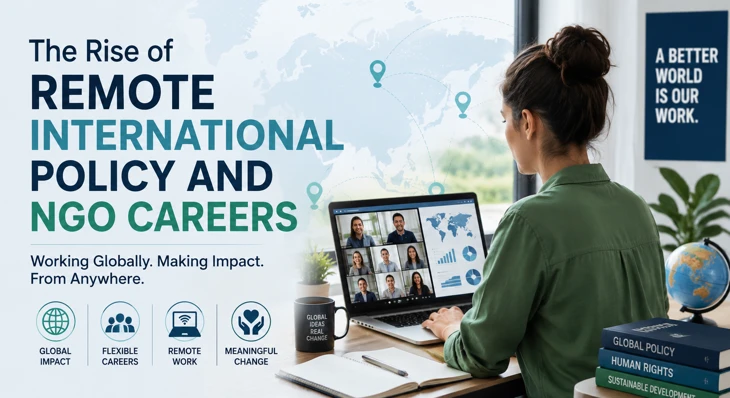
The Rise of Remote International Policy and NGO Careers
Introduction: A New Era of Global Work
The world of international policy and NGO careers has changed dramatically over the past decade. What was once a field defined by relocation, field postings, and in-person diplomacy has now evolved into a more flexible and digital-first ecosystem. Remote work is no longer limited to tech companies or freelance roles. It has steadily expanded into global development, humanitarian work, policy research, and nonprofit management. Today, professionals can contribute to international organizations, advocacy groups, and policy think tanks from virtually anywhere. Whether it’s climate policy research, human rights advocacy, global health coordination, or economic development analysis, remote opportunities are becoming more common and more impactful. This shift is not just a trend—it is a structural transformation in how global work gets done.Understanding Remote International Policy Careers
International policy careers traditionally involved working with governments, multilateral institutions, or research organizations in physical offices located in major global hubs like Geneva, New York, or Brussels. However, digital communication tools and global collaboration platforms have redefined this structure. Now, professionals can work on policy design, research, and analysis without being physically present in those cities.Key Areas in Remote Policy Work
Remote international policy roles span across several important sectors:- Global governance and diplomacy research
- Climate change and environmental policy
- Economic development and trade analysis
- Migration and refugee policy
- Digital governance and cybersecurity policy
Why Organizations Are Going Remote
International organizations and NGOs are increasingly embracing remote setups for several reasons:- Access to a wider global talent pool
- Reduced operational costs
- Improved diversity in teams
- Flexibility in crisis response situations
- Faster collaboration through digital tools
The Evolution of NGO Careers in a Remote World
Non-governmental organizations have always played a vital role in addressing global challenges such as poverty, education, healthcare, and human rights. However, the way these organizations operate is changing rapidly. Remote NGO careers are now more common than ever before.Types of Remote NGO Roles
Modern NGOs offer a wide range of remote positions, including:- Program coordination and management
- Grant writing and fundraising strategy
- Monitoring and evaluation (M&E) roles
- Communications and advocacy specialists
- Research and data analysis positions
The Digital Transformation of NGOs
NGOs are increasingly using digital platforms to:- Manage international projects
- Conduct virtual training sessions
- Track impact metrics in real time
- Engage with global stakeholders
Skills Required for Remote International Careers
To succeed in remote international policy and NGO roles, professionals need a combination of technical, analytical, and communication skills.Essential Skills
Some of the most important skills include:- Strong written communication for reports and policy briefs
- Data analysis and research capabilities
- Cross-cultural communication skills
- Familiarity with global issues and development frameworks
- Ability to work independently and manage time effectively
Technical Tools and Platforms
Remote professionals often rely on tools such as:- Project management platforms like Asana or Trello
- Communication tools like Zoom and Microsoft Teams
- Data visualization tools such as Tableau or Power BI
- Collaboration platforms like Google Workspace
How Remote Work is Expanding Access to Global Opportunities
One of the most significant impacts of remote work in international policy and NGOs is accessibility. Previously, many talented professionals were excluded from global careers due to geographic or financial constraints. Now, the barriers are gradually disappearing.Opportunities for Emerging Professionals
Remote roles are opening doors for:- Graduates from developing countries
- Mid-career professionals transitioning into global development
- Researchers who prefer flexible work environments
- Individuals balancing personal responsibilities with global careers
Real-Life Example
A policy researcher based in Nairobi can now collaborate with a climate think tank in London while contributing to reports on carbon emissions policy in Africa. Similarly, a program officer in South Asia can manage education initiatives for an NGO headquartered in Europe without ever relocating.Challenges in Remote NGO and Policy Careers
While remote opportunities are expanding, they also come with unique challenges.Communication Gaps
Working across time zones can sometimes lead to delayed communication and slower decision-making processes.Limited Field Exposure
Some roles still require on-ground presence for accurate assessments, especially in humanitarian and crisis response work.Digital Dependency
Reliable internet access and digital infrastructure are essential, which may not always be available in every region.Maintaining Collaboration
Building trust and teamwork in remote environments requires consistent communication and a strong organizational culture.Future Trends in International Remote Work
The future of international policy and NGO careers is expected to become even more hybrid and digital-first.Rise of Hybrid Global Teams
Organizations are likely to adopt hybrid models that combine remote work with occasional field visits or in-person meetings.AI and Data-Driven Policy Work
Artificial intelligence and big data analytics will play a major role in shaping policy decisions, making technical literacy even more important.Increased Demand for Global Freelancers
Short-term contracts and freelance policy consulting roles are becoming more common, allowing experts to contribute to multiple projects simultaneously.Greater Emphasis on Climate and Sustainability Roles
With global focus shifting toward climate action, sustainability-related policy roles are expected to grow significantly in remote formats.How to Start a Career in Remote International Policy or NGO Work
Breaking into this field requires a combination of education, experience, and strategic positioning.Step 1: Build a Relevant Educational Background
Degrees in international relations, political science, economics, public policy, or development studies are commonly preferred.Step 2: Gain Practical Experience
Internships, volunteer work, and research assistant roles in NGOs or think tanks can provide valuable exposure.Step 3: Develop Writing and Analytical Skills
Strong writing skills are essential for policy briefs, reports, and funding proposals.Step 4: Network in Global Development Circles
Joining professional networks, attending webinars, and participating in online forums can help build connections.Step 5: Apply for Remote-Friendly Organizations
Many NGOs and policy institutions now explicitly list remote or hybrid roles on their career pages and global job boards.The Human Impact of Remote NGO Work
Beyond convenience and flexibility, remote NGO and policy careers have a real-world impact on communities worldwide. They help:- Improve access to education in underserved regions
- Strengthen healthcare systems in developing countries
- Support climate adaptation strategies
- Promote human rights and social justice initiatives