A keynote speaker's screen freezes mid-sentence. Five hundred people are watching. Somebody has about ten seconds to fix it before the audience notices — and that somebody is the
Virtual Event Logistics Coordinator. We're hiring for that seat.
Remote position, $60,209 a year. You'll be the one holding the run sheet together behind a digital summit or a virtual trade show, quietly making sure the parts nobody sees actually hold up.
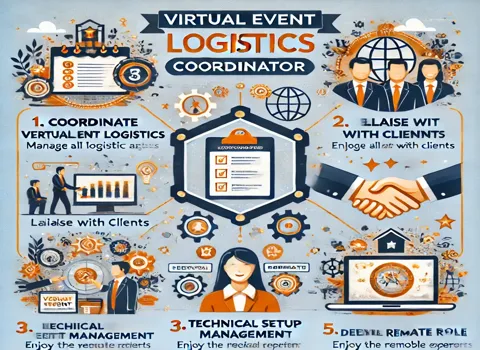
What You're Actually Doing Most Days
Weeks don't repeat themselves much here, but the basic shape stays consistent — people, platforms, and timing all need to line up, and that's on you.
- Get event platforms set up so attendees can log in without a fight
- Line up speaker and panelist schedules and make sure everyone's briefed before they go live
- Build run sheets and agendas with the team, then check them twice
- Help marketing keep registration numbers moving in the right direction
- Be the calm voice during a live session when something breaks
- Pull together feedback after each event and use it to fix the next one
What Usually Makes Someone Good at This
Nobody needs to match this list perfectly. But most of it should feel familiar.
You're organized without being rigid about it — three schedules shifting at once doesn't throw you off. You've probably used Zoom, Teams, or Hopin before, though we'll train you on our specific setup either way. You talk to people across time zones directly, not vaguely, and you stay level-headed when a mic dies or a speaker runs ten minutes long. When something breaks, your instinct is to find the workaround, not freeze.
Used Asana or Trello before? Helped run a multi-day conference? Neither is required, but both help.
Qualifications
A bachelor's degree is required. So, at least 1 year of experience in event coordination, logistics, or something similar.
You Won't Be Doing This Alone
There's a production team handling the technical backend, a marketing team driving registrations, and program planners mapping out how multi-day events actually flow. If a breakout room glitches or a speaker gets nervous thirty seconds before going live, someone else is already stepping in — you're not scrambling by yourself. Naukri Mitra shared this listing with people specifically looking for that kind of backup, and honestly, it's an accurate description of how the team runs.
How the Week Tends to Go
Monday's usually about locking down agendas and confirming speaker times. Somewhere mid-week you're reviewing a run sheet, catching setup problems before they turn into live problems. Then there's event day — timing, troubleshooting, keeping speakers steady when things wobble. After that comes a debrief, some feedback to sort through, and reports before the week wraps.
The Parts That Are Genuinely Hard
Internet drops. Mics cut out at the worst moment. Screens freeze. There's a backup plan for a lot of it, but not everything, and that's just the nature of live events. Time zones stretch the day in both directions — early mornings, late nights sometimes — so schedules rotate to keep that fair across the team. Speakers cancel last minute. Sessions run long. None of it is rare. The job is built around handling these things calmly, not being caught off guard by them every single time.
Pay and What Comes With It
$60,209 annually. Along with that: a fully remote setup with no commute cutting into your day, a real path toward broader event operations or production roles down the line, and a team where backup during live events isn't an afterthought — it's just how things run.
What the Team Actually Feels Like
Remote work gets isolating fast if nobody tries to stop that. So we do — weekly huddles aren't just status updates; people actually swap stories and laugh about the mic-died-mid-sentence moments. Small wins get noticed. It's not forced cheerfulness; it just makes the hard live-event days easier when the people around you feel like a real team instead of a Slack channel.
Who Tends to Thrive Here
People who catch details without getting buried in them. People who'd rather work behind the curtain making someone else look good on camera than be the one on it. If a shifting schedule sounds more like an interesting puzzle than a headache, you'll probably like this more than you expect.
Where You Can Apply From
Candidates based in the United States, Canada, the United Kingdom, the European Union, Australia, India, and other eligible regions are welcome. What matters most is whether you can work reliably across time zones and stay steady when an event doesn't go according to plan — which, at some point, it won't.
Applying
Send your resume, plus a short note on the kind of events you've supported and how you usually handle things when they go off script. Applications get read as they come in, and candidates who look like a strong fit hear back directly — not through a form letter three weeks later.