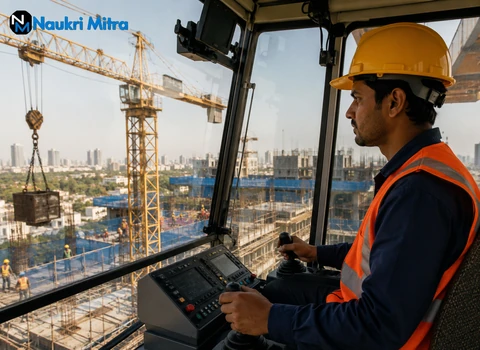
Tower Crane Operator Required for Construction Site
Look up at any half-built tower in Mumbai, and you'll usually spot a tall crane standing above the structure, moving steel and concrete to whichever floor needs it that day. The person sitting in the small cabin near the top, controlling that whole operation, is the Tower Crane Operator. It's one of those jobs most people never think about until they're stuck watching one work from a traffic signal below.
The Job Nobody Notices Until Something Goes Wrong
A tower crane doesn't roll around a site like a mobile crane. It stays bolted in one spot, sometimes for the entire length of a project, while its long arm swings loads from the ground to whichever floor is under construction. The operator controls this from a cabin that can sit thirty, forty, even sixty meters up. Get it right, and nobody notices. Get it wrong, and it's front-page news. That's the weight this role carries.
Why Builders Can't Skip This Position
You can't build a fifteen-story tower with manpower and a pulley. Steel reinforcement, concrete buckets, shuttering material, even bags of cement — all of it has to travel up efficiently and land exactly where the mason or fitter needs it. A skilled operator keeps this flow moving without holding up other trades on site, and just as importantly, without dropping anything on the people below. Project timelines in Mumbai's construction sector often depend more on crane scheduling than people realize.
A Shift, Start to Finish
Before touching the controls, the operator walks through a checklist — wire ropes, hook condition, brakes, the slewing gear, wind readings. Only after this does actual lifting begin. Throughout the shift, communication runs constantly between the cabin and the ground crew, usually over radio, sometimes via hand signals when radios fail or when noise gets too loud. Loads go up slow, get checked for sway, and come down only once the rigger below gives the clear signal.
What The Work Actually Involves
- Running the crane's hoist, trolley, and slewing controls to move material where it's needed
- Checking load charts before every lift so the crane isn't pushed past its rated capacity
- Talking constantly with signal men and riggers on the ground
- Doing daily mechanical checks — cables, hooks, brake response, anything that sounds or feels off
- Flagging problems immediately instead of waiting for the next scheduled inspection
- Keeping a logbook of lifts, hours, and any incidents
Sites Where You'll Find This Role
High-rise residential blocks, commercial towers, metro corridor construction — anywhere a building goes up rather than out. Mumbai's land constraints mean vertical construction is the norm, not the exception, which keeps demand for tower crane operators fairly steady across the city and surrounding parts of Maharashtra. Developers, EPC contractors, and infrastructure companies all run their own crane crews or hire experienced operators for specific project phases.
Getting Familiar With the Equipment
The crane itself is built from a mast, a jib and counter-jib, a trolley that runs along the jib, and the hook block that actually carries the load. Inside the cabin, operators read load charts, keep an eye on an anemometer for wind speed, and on newer cranes, watch a digital load-monitoring screen that warns before a lift gets risky. None of this is difficult to learn, but it takes time before judging load and distance from height becomes second nature.
What Employers Actually Look For
A valid crane operator license from the local authority is close to mandatory. Beyond that, ITI training in a mechanical or electrical trade helps, and so does prior rigging experience or basic exposure to load charts. What matters just as much on site — depth perception, steady nerves, and the discipline to follow procedure even when a supervisor is pushing for speed.
Skills That Come From Doing the Job, Not a Classroom
- Judging how a load will swing or settle before it's even off the ground
- Staying sharp through repetitive lifts, hour after hour
- Refusing to cut corners on safety checks, no matter the deadline pressure
- Handling wind gusts or poor visibility without panicking
The Physical Side of Sitting in a Cabin All Day
This is a Full-time role, and it isn't as sedentary as it sounds. Getting to the cabin usually means climbing a ladder or riding a small hoist to height, then sitting in a fairly confined space for hours. Operators need to be fit, free of vertigo, and comfortable working outdoors in Mumbai's heat and monsoon swings. Larger projects often run in shifts to keep construction moving on schedule.
Safety Isn't Optional Here
Helmet, harness while climbing, safety shoes, high-visibility vest — standard gear for this job. Lifting stops when wind speeds cross safe limits or during storms, no exceptions. Every shift starts with a check of the crane's condition, and maintenance work follows strict lock-out procedures. The one rule that never bends: never exceed the rated load, even if a supervisor insists it'll be fine.
What Makes This Job Hard
Hours at height add up, and fatigue creeps in during long shifts. Monsoon months bring visibility problems that make every lift feel riskier than usual. Ground crew communication isn't always perfect, especially on noisy or crowded sites. Operators who last in this field learn early that rushing a lift to save five minutes almost never pays off.
Where This Can Lead
Most operators start as helpers, learning under someone experienced before they're trusted with the controls alone. Years in, some move to bigger or more advanced crane models, others shift into supervisory roles managing an entire site's lifting operations, and a few move toward safety officer positions focused specifically on cranes and rigging. Staying current with newer crane systems and updated safety norms tends to keep operators in demand longer.
Pay and What Might Come With It
This particular position, based in Mumbai, Maharashtra, India, pays ₹38,000 a month. Depending on the employer, that could come with overtime pay, PF, ESI coverage, a festival or performance bonus, uniforms, and sometimes transport or canteen access at the site. None of these extras are guaranteed — they differ from one contractor to the next, so it's worth confirming directly during hiring.
Starting Out: What Actually Helps
If you're new to this line of work, get the crane operator license sorted first, then spend real time watching an experienced operator work before you touch the controls yourself. ITI or diploma training in mechanical or electrical trades gives you a head start in understanding how machines actually work. Beyond that, it comes down to habit — thorough checks before every shift, clear communication with the ground team, and patience with a process that rewards care over speed.