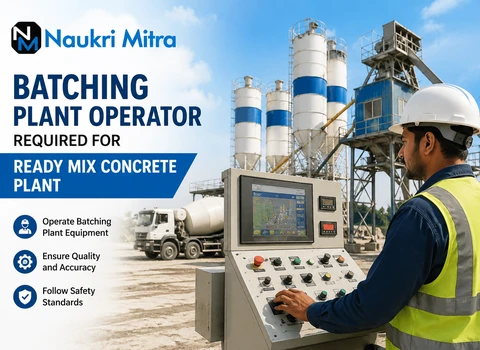
Understanding Life Behind the Console of a Concrete Batching Plant
A Ready Mix Concrete plant runs on precision. Every batch of concrete that leaves the site has to match an exact recipe, and the person responsible for getting that recipe right, every single time, is the batching plant operator. This role sits at the center of the production process, turning raw materials like cement, sand, aggregate, water and admixtures into consistent, construction-ready concrete. For anyone exploring a technical career in the construction materials industry, this is a role worth understanding closely, especially with an opening currently available in Pune, Maharashtra, India.
Why Ready Mix Concrete Companies Need Skilled Operators
Concrete quality directly affects the strength and safety of buildings, roads, and bridges. A small error in proportioning materials can weaken a structure or delay a project. This is why companies running batching plants prefer trained operators who understand both the machinery and the science behind concrete mixing. The demand for this profession has grown steadily alongside India's construction and infrastructure boom, particularly in fast-developing urban centres.
What a Typical Day Looks Like
The working day usually begins with checking the plant's control panel, silos, conveyor belts and weighing systems before production starts. An operator reviews the day's concrete orders, each with its own mix design based on the project requirement, whether for a residential building, a flyover, or an industrial shed.
- Loading raw materials into hoppers and silos
- Entering mix design specifications into the batching computer
- Monitoring the weighing and mixing process for accuracy
- Coordinating with transit mixer drivers for timely dispatch
- Recording batch details and maintaining production logs
Core Responsibilities on the Ground
Beyond running the control system, the operator is expected to regularly inspect equipment, troubleshoot minor faults, and communicate with the quality control team if a mix appears inconsistent. Close coordination with site engineers and lab technicians is common, since concrete strength testing often depends on accurate batching records.
Machines and Instruments Used in the Plant
Operators work closely with batching plant control systems, load cells, aggregate bins, cement silos, screw conveyors and water metering units. Many modern plants use computerized batching software that displays real-time weights on a screen, allowing the operator to adjust proportions instantly if a reading looks off. Understanding how these instruments function is central to producing reliable concrete batches.
Skills That Make an Operator Stand Out
Technical understanding of mix ratios, basic computer literacy for operating batching software, and familiarity with mechanical and electrical systems are valuable. Equally important are practical skills such as attention to detail, quick decision-making during equipment alerts, and the ability to work under time pressure since concrete has a limited workable window once mixed.
Educational Background That Employers Look For
Candidates with an ITI qualification in electrical, mechanical or a related trade are often preferred. A diploma in mechanical or civil engineering can also be an advantage, though hands-on experience with batching plants, weighing systems or similar industrial machinery is frequently valued just as much as formal education.
Where This Work Happens
This is largely an outdoor, semi-industrial work environment. Batching plants are typically set up near construction zones, ready-mix concrete units, or material yards, where dust, noise, and machine movement are part of the daily surroundings. Operators should be comfortable working near heavy vehicles, cranes and moving conveyor systems.
Safety Practices and Protective Gear
Safety is taken seriously in this line of work because of the machinery and material handling involved. Operators are generally expected to use helmets, safety shoes, gloves, high-visibility jackets, and ear protection where noise levels are high. Following lockout procedures during maintenance and staying alert around moving equipment significantly reduce the risk of accidents.
Physical Demands and Shift Patterns
The job can involve standing for long hours, occasional lifting, and exposure to dust and outdoor temperatures. Since construction projects often run on tight schedules, shift work is common in this Full-time position, and flexibility with working hours can be an asset.
Common Challenges Faced on the Job
Equipment breakdowns, sudden material shortages, and pressure to meet dispatch deadlines are everyday realities. Successful operators learn to stay calm under pressure, keep spare parts and backup plans ready, and communicate clearly with the production team when issues arise.
Growing Within the Profession
With experience, a batching plant operator can progress toward senior operator roles, shift-in-charge positions, or plant supervisor responsibilities, eventually overseeing larger production units or multiple plants. Continuous learning about new batching technologies and quality control practices supports this growth.
Salary Expectations and Possible Benefits
This particular position in Pune, Maharashtra offers a monthly salary of ₹30,000. Depending on the employer, additional benefits such as overtime pay, Provident Fund, ESI coverage, bonuses, uniforms, transport facilities, or canteen access may also be provided, though these vary by company policy.