
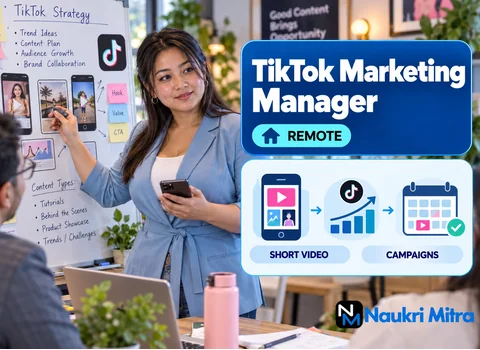
A quarter's TikTok money arrives as a single figure, and your job is to cut it three ways. One slice pays for organic production: the weekly posts your own team shoots and edits. Another goes to creator partnerships, where someone else's audience carries your product. The last funds paid campaigns that put spend behind whatever is already working. Then a finance lead asks why creators got more than ads this time, and you need an answer that holds up in a spreadsheet. That conversation sits at the centre of this listing for remote tiktok marketing manager jobs. It is a full-time position paying $60,000 per year in USD, done fully remotely, with applicants welcome from any country.
This TikTok marketing manager job description centres on ownership: of the plan, the budget and the creator relationships. Part-time promotion specialists may post and boost; the manager decides where the money goes and answers for what it returns.
A TikTok plan starts with what the brand can say repeatedly without boring anyone. Most managers settle on a few organic content pillars, such as product in use, customer questions answered on camera, and a recurring series with a familiar host. Pillars keep the calendar steady when trends go quiet.
Trends are the second layer. You watch sounds, formats and hashtags in your category through the Creative Center and your own For You feed, and you decide fast which ones fit. A trend that waits days for approval is usually gone by launch, so name in advance who can green-light a reactive post the same day.
Paid support is the third layer, and it should follow the organic evidence. Posts that hold attention and pull comments are the ones worth boosting or rebuilding as ads.
Daily paid work happens in TikTok Ads Manager. You pick the objective that matches the real goal: reach for awareness, traffic, video views or community interaction for consideration, and website conversions or product sales when the pixel and events are set up properly. Choosing awareness and then judging the campaign on sales is a classic way to waste budget.
Audience work covers custom audiences built from site visitors and video viewers, lookalikes, and interest and behaviour targeting, alongside broad targeting where the algorithm does more of the finding. Creative testing is where most of the gains sit. Change one variable at a time, such as the opening hook, the on-screen text or the call to action, and let each test run long enough to mean something. Spark Ads, which run an existing organic or creator post as an ad once the account owner shares an authorisation code, often belong in the mix.
Creator partnerships are the line item finance asks about most, because the costs are easy to see and the returns take longer to arrive. You will find and vet creators through Creator Marketplace, checking audience location, engagement quality and whether past brand posts felt natural. TikTok has been moving these tools into TikTok One.
A good creator brief is short. It states the product, the single message, two or three things that must appear, the things that must not, and the deadline. Execution stays with the creator; that voice is why you hired them. Negotiation covers the fee, the number of drafts, posting dates and, critically, usage rights: whether you may run the video as a Spark Ad or re-cut it, for how long and on which channels. Get usage terms in writing before money moves.
Disclosure is non-negotiable. Paid partnerships must be labelled with TikTok's branded content toggle and meet the advertising rules in each market where the post runs. Those rules differ by country and get revised, so review platform policy and local guidance before every campaign rather than relying on last year's checklist.
A manager at this level does not edit every clip, but you should be able to open a CapCut project and fix a caption, swap a sound or tighten a cut without waiting for an editor. Most of the work is setting standards: templates for recurring series, safe zones so text clears the interface, a caption style, and file naming that makes the approved version easy to find. Business accounts can only use sounds from TikTok's Commercial Music Library. If a commercial music licence or a stock asset is involved, confirm it covers ad use under the tool's current terms and your plan level.
A workable content approval workflow has as few steps as the brand can tolerate. A typical chain runs from script or concept, to rough cut, to final with captions, to a single sign-off from you or a named deputy. Legal review is kept for claims, regulated products and creator contracts. Keep comments in one place, log who approved what, and give reactive trend posts a faster lane with tighter rules on what they may say.
Every week you send one report, and it should take a busy reader two minutes. Lead with the three numbers this role answers for: views and watch time on organic and creator content, cost per result on paid campaigns, and sales or conversions you can attribute with reasonable confidence. Then add what you changed, what the creative tests showed, and what shifts next week. Be honest about attribution. TikTok often drives searches and purchases that show up elsewhere, so pair platform data with site analytics and note where the picture is incomplete.
Because the role is remote and open worldwide, it usually means working with editors, creators and stakeholders spread across several time zones. Expect a few fixed overlap hours for approvals and calls, with the rest of the day planned around posting windows in your main markets. Clear handoffs beat long meetings: a shared calendar, a status board for every piece of content, and written briefs anyone can pick up.
This seat carries a $60,000 annual salary in USD, full-time. Roles like this exist at consumer brands selling directly online, at app and e-commerce companies, and at marketing and social agencies that run TikTok accounts for several clients at once. Agency work tends to mean more accounts and faster cycles; in-house work means deeper ownership of one brand's numbers. Any TikTok marketing manager salary elsewhere varies widely by market and company.
The requirements are specific. You need a bachelor's degree in marketing or a related field and at least three years in TikTok or social media marketing. Hands-on experience with TikTok Ads Manager, Creator Marketplace and CapCut is expected, along with budgeting and analytics skills. A TikTok Academy certification counts in your favour, though it is not mandatory. A portfolio of campaign results is required: show the objective, the budget range in general terms, what you tested and what happened, and prepare to discuss a campaign that underperformed.
On how to become a TikTok marketing manager: this is not an entry-level post. The usual route runs through a coordinator or social media role, then a small paid budget, then creator deals.
A social media manager typically spreads attention across several platforms, with community management and brand voice at the core. This role goes deep on one platform and carries a commercial target. You manage paid media, negotiate creator contracts and report sales, which puts the work closer to performance marketing than to community care.
Natural next steps include head of social, paid social lead, creator or influencer marketing lead, and broader growth marketing roles. There is also a risk that you should weigh honestly. TikTok has faced regulatory uncertainty in some countries, and policy decisions outside any marketer's control can change access to the platform. The sensible response is to keep transferable skills sharp: short-form video strategy that works on other platforms, paid social buying in other ad tools, creator contract management, and measurement that does not depend on one dashboard.