Understanding the Role of a Slitting Machine Operator in Packaging Manufacturing
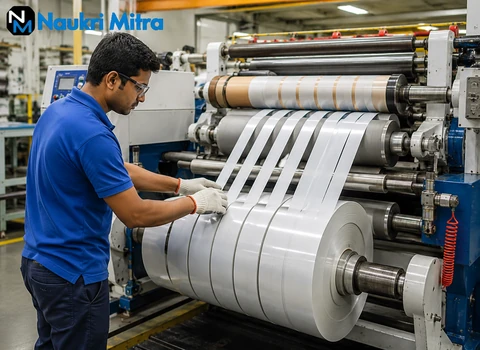
A Slitting Machine Operator is a skilled production professional who works with large rolls of raw materials such as film, paper, foil, or laminate, cutting them into narrower rolls of precise width for packaging. This role sits at the heart of packaging manufacturing, where accuracy and consistency directly affect the quality of the final product. Companies in Daman, a well-established industrial hub in the union territory of Dadra and Nagar Haveli and Daman and Diu, regularly look for operators who can handle this equipment with care and precision.
Why Packaging Units Depend on This Role
Packaging materials rarely arrive ready to use. They are produced in wide master rolls that must be converted into smaller, usable widths before they can be printed, laminated, or turned into pouches, labels, or wrapping film. Without a trained operator managing this conversion process, packaging lines further down the production chain would come to a halt. This makes the role essential rather than optional in any packaging facility.
A Typical Day on the Production Floor
Work usually begins with checking the machine, loading the master roll, and setting the required slit widths according to a job order or work ticket. Through the shift, the operator monitors tension, alignment, and cutting quality, replaces blades when needed, and rewinds finished rolls for packing or dispatch. Since this is a full-time position, the schedule generally follows fixed daily working hours, with the flexibility to work shifts based on production demand.
Core Responsibilities on the Slitting Line
- Loading and unloading master rolls safely using lifting equipment or manual handling techniques
- Setting slitting knives or blades to the correct width as per production specifications
- Adjusting web tension so the material does not wrinkle, stretch or tear
- Inspecting slit rolls for edge quality, thickness consistency and core alignment
- Recording production output, wastage and downtime in daily logs
- Coordinating with supervisors when material defects or machine faults are noticed
Machines, Tools and Instruments Commonly Used
The main equipment is the slitter rewinder, which unwinds the master roll, guides it through a set of rotary or razor blades, and rewinds it into smaller rolls at controlled tension. Operators also work with core cutters, tension control units, thickness gauges, and width measuring scales. Basic hand tools such as spanners and blade-changing kits are used for routine adjustments, while some units may use digital counters to track meter length and roll count.
How the Slitting Process Works
The master roll is mounted on an unwind shaft, and the material passes over guide rollers before reaching the cutting section. Blades divide the web into narrower strips, which are then wound onto separate cores. Correct blade positioning and tension balance are what determine whether the final rolls are usable or rejected, which is why this process demands a steady and attentive operator.
Skills That Set Good Operators Apart
Technical understanding of machine settings is important, but so is patience and attention to detail. An operator who notices a slight change in roll edge quality before it becomes a major defect saves the company material and time. Basic mechanical aptitude, comfort working with moving machinery, and the ability to read simple work orders or specification sheets are commonly expected.
Education and Training Background
Employers may prefer candidates with relevant machining or tool room training. Depending on the complexity of the work, an ITI in a machining-related trade, a Diploma in Mechanical or Tool and Die Engineering, or equivalent vocational training may be considered suitable. Practical experience with EDM machines, engineering drawings, and precision measuring instruments is often valued as much as formal education, and freshers with strong practical exposure during training are frequently given a fair chance.
Physical Demands and Working Environment
This is an active, floor-based job that involves standing for long periods, handling roll weights, and staying alert around fast-moving machinery. The working environment inside a packaging manufacturing unit generally involves moderate noise levels, machine vibration, and the need to stay focused during continuous production runs. Good physical stamina and comfort working indoors near mechanical equipment are helpful for long-term success in this role.
Workplace Safety and Protective Practices
Because slitting blades are extremely sharp and rolls can be heavy, safety awareness is non-negotiable. Operators are generally expected to use personal protective equipment, such as cut-resistant gloves, safety shoes, and eye protection, when working near blades or lifting equipment. Following lockout procedures before changing blades and keeping the work area free of loose material are common safety habits that reduce accidents on the floor.
Challenges Operators Often Face
Material inconsistency, blade wear, and tension imbalance are recurring challenges that can affect output quality. New operators sometimes find it difficult to judge tension settings correctly, which can lead to wrinkled or misaligned rolls. Building this judgment takes hands-on practice, and experienced operators often develop a feel for the machine that helps them catch problems early.
Building a Long-Term Career in This Field
With consistent performance, an operator can progress to handling more advanced or high-speed slitting lines, take on quality inspection duties, or move into a shift supervisor role overseeing a small team. Over time, hands-on experience with different materials and machine types adds real value, making experienced operators well-regarded within the packaging manufacturing sector.
Salary Expectations and Common Benefits
For this Full-time position based in Daman, Dadra and Nagar Haveli and Daman and Diu, India, the monthly salary is ₹24,000. Depending on the employer, additional benefits may possibly include overtime pay, Provident Fund (PF), Employee State Insurance (ESI), bonus, uniforms, transport facilities or canteen access, though these vary from one company to another and are not guaranteed.