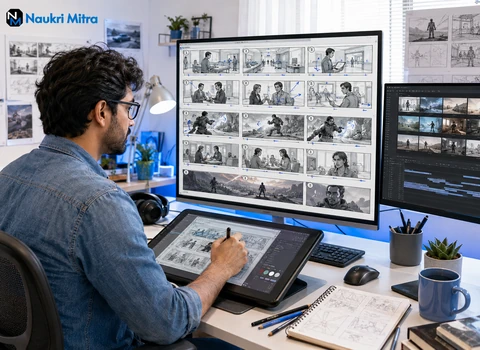
Before an animator touches a single frame, before an ad even gets filmed, someone has to draw the whole thing out first — the pacing, the emotional beats, the exact moment a character's expression shifts. That's the job. We're looking for a
Remote Storyboard Illustrator to build those visual blueprints for projects across healthcare, tech, gaming, advertising, and entertainment.
The Basics
This is a fully remote role paying
$86,500 per year, with hiring open across the US, Canada, the UK, the EU, Australia, India, and other international regions. You'll work closely with writers, directors, and content strategists to shape how a story actually reads on screen — not just illustrate what's already been written.
What You'd Actually Be Doing
Projects usually start rough — a script, a rough concept, a vague sense of tone — and it's your job to turn that into something an animator or editor can actually work from. That means sitting in on early concept conversations, sketching scene plans, and pushing back when a story beat needs more visual weight than the script provides.
- Help map out visual storytelling strategy alongside writers and directors during early planning.
- Build sequential storyboard panels that show camera angles, movement, and character expressions.
- Sketch motion arcs and transitions that give animators and editors something concrete to work from.
- Keep scenes visually consistent so a project doesn't feel disjointed from panel to panel.
- Sit in on story meetings and critique sessions, and take feedback without losing the core of an idea.
- Clean up rough drafts into production-ready boards with timing notes and camera cues attached.
- Organize and label files clearly enough that motion designers and producers aren't left guessing.
Experience and Education
You'll need a
Bachelor's degree at minimum and at least
3 years of experience in storyboard illustration, concept art, or visual development. Remote work experience is helpful but not required.
What Actually Matters Here
A strong portfolio carries more weight than a perfectly worded resume. We want to see sequential storytelling that holds together — framing, pacing, and mood handled with intention, not just individually strong drawings. You should be comfortable moving between cinematic and animation-style boards depending on what a project needs, and able to turn a script into visual metaphor without losing the writer's original intent.
Also Worth Having
- Comfort working across genres, not just one visual style you default to.
- Experience juggling a few projects at once without any of them slipping.
- A track record of explaining creative choices clearly during feedback, not just defending them.
- Willingness to pick up new tools if a project calls for something outside your usual kit.
Software You'll Be Using
- Digital illustration tools such as Procreate, Adobe Photoshop, Clip Studio Paint, or Storyboard Pro.
- Team platforms including Google Workspace, Frame.io, Slack, and Zoom.
- Project tracking through Monday.com, Trello, or Asana, depending on the team.
- Adobe After Effects or Premiere Pro come in handy for light animatics, though it's not a strict requirement.
If you haven't touched one of these tools before, that's not a dealbreaker — training is available for the right candidate.
How This Team Operates
The team is genuinely varied — different cultural backgrounds, different creative styles, different life experiences — and that mix shows up in the work itself. You'll have real control over your schedule, but that doesn't mean working in a vacuum; expect regular story meetings, critique sessions, and open conversation about what's working and what isn't. Anyone who came across this posting through
Naukri Mitra should know the collaborative culture here isn't just a line in the listing — feedback is direct, but it's also kind.
Benefits
- Fully flexible schedule with real autonomy over how you structure your day.
- Paid time off and standard health coverage.
- Budget for monthly art talks, workshops, and ongoing skill development.
- Mentorship from senior creative leads, with the option to mentor others as you grow.
Where This Can Lead
People here tend to stick around and grow into bigger creative roles rather than move on quickly. You'll get chances to pitch concepts for larger campaigns, take on leadership within art direction or production, and shape how future storyboard work gets approached on the team.
Apply
Send a portfolio that shows range — different genres, different tones, boards that show how you think through a scene rather than just how well you can draw one panel. If your work fits what we're building, you'll hear back directly.