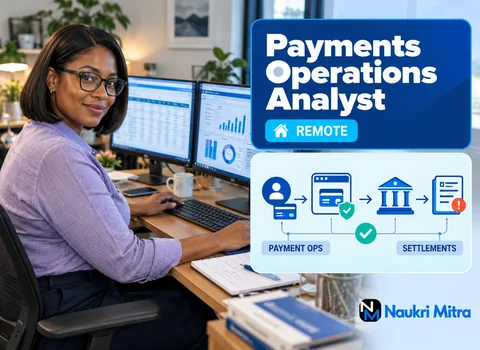
Picture an afternoon like this one, sketched for illustration: it is 4:31 pm Eastern, the last same-day ACH window is closing, and a batch file has come back rejected because the entry count in the batch control record is wrong. Moments like that are why remote payments operations analyst jobs suit people who stay calm and keep one eye on the clock. The opening is a full-time, work-from-home analyst post: you fix ACH returns, wire exceptions, and failed payments before cut-off, reconcile the day in Excel, and write down what broke so it breaks less next week.
In that example, the cause is a dropped addenda record. You regenerate the file, re-check the totals and hash, and resubmit.
Hour by hour in remote payments operations analyst jobs
So what does the analyst actually do? This payments operations analyst job description in one line: make sure money that should move did move, and fix or explain anything stuck before the bank's deadlines. Here is one illustrative day; actual hours and windows depend on the employer and its bank partners.
Morning: reconciliation and file checks
7:45 am, matching yesterday to the bank
You pull the prior day's settlement report and the internal ledger export into Excel, then match them on amount, effective date, and trace number. The few that don't tie out go on a list: a credit posted twice, a debit the bank shows but the platform never sent, a wire that settled at a slightly different amount after fees. Each one gets an owner early in the day.
9:15 am, NACHA file checks before the first upload
Before the morning ACH file goes out, you open it and read it. Mainly the parts that fail most often: the file header; the batch headers with the right company ID and SEC code (PPD for consumer payroll, CCD for business); entry counts; totals; and the hash in each batch control. A file with a debit batch marked as credits-only will be rejected, and catching that in the morning is far easier than catching it near the final cut-off.
Midday: wire releases, returns and R-codes
11:00 am, the wire release window
Wires are less forgiving than ACH because they settle fast and are hard to pull back. Your part is checking that each outgoing wire has complete beneficiary details, that the amount matches the approved instruction, and that dual approval actually happened. If a wire sits in repair because a routing number won't validate, you get the right details from the requester instead of guessing.
1:00 pm, ACH returns and what the R-codes are telling you
The return file lands and you sort it by reason. R01 (insufficient funds) usually means a retry rule applies. R02 or R03 (account closed, or no account found) means the customer needs to update details, so no retry. R10 (customer says the debit was not authorized) is the one that gets attention, because a cluster of them can point to an upstream problem. You post each return, trigger the right message or ticket, and watch return rates.
Afternoon: exceptions queue and end-of-day sign-off
2:30 pm, working the exceptions queue
Most of the ACH and wire exception handling happens here. The queue holds payments that failed validation, notifications of change (NOCs) that need updated account details, duplicate submissions, and questions from support and partner banks. You answer what you can, escalate what needs a decision, and record the root cause on anything you keep seeing.
4:15 pm, the last file and the sign-off
The final same-day file goes out with a second check against the cut-off. Then you close the day: confirm acknowledgments, update the reconciliation sheet, list open items with owners, and send a handover note. A good sign-off note is short and factual.
Cut-off times and coverage hours for a work-from-home desk
Payments work runs on the bank's clock. Applicants from any country can apply, since this sits among payments operations analyst jobs remote worldwide, but the listing does not state working hours. For US-facing teams, ACH windows and wire deadlines fall in US business time, so ask early which hours you would be expected to cover.
Degree, back-office years and the AAP
A bachelor's degree is preferred. One to two years in bank operations or payments support can stand in for it, and in practice it often counts for more. You should already have working knowledge of ACH and wire processing, NACHA file formats, and return codes. The AAP (Accredited ACH Professional) credential from NACHA is nice to have; nobody will screen you out for lacking it. Beyond that, the listing asks for someone careful, deadline-driven, and comfortable working against cut-off times.
Entry-level remote payments operations analyst jobs do exist, and this one sits close to that end: the experience requirement is light. What about payments operations analyst jobs with no experience at all? With zero exposure to payments, it is hard. With a finance or accounting degree, a project where you parsed a sample NACHA file, and solid Excel, you have a real case. People from bank back-office work or card disputes tend to move across well.
The SQL and Excel you will use
Excel carries most of the reconciliation work. You should be at ease with XLOOKUP or INDEX/MATCH, pivot tables, conditional formatting to flag breaks, and SUMIFS for totals by effective date.
The listing asks for some SQL. A typical query joins a payments table to a returns table on trace number and filters for a date range, for example, pulling every R10 in the last 30 days grouped by originator. You won't build pipelines, but you should answer your own questions without waiting for an engineer.
Other payments operations analyst skills: reading a NACHA file in a text editor, writing a clear incident note, and spotting when a one-off is really a pattern.
Salary: one monthly figure
Pay sits at USD 4,000 per month under full-time, remote terms, given as one figure with no range. If you compare payments operations analyst salary per month figures elsewhere, remember that pay varies by employer and region.
How this compares with treasury operations, and where it leads
Payments operations sits close to the transactions: individual entries, files, returns, and exceptions. Treasury operations sits a level up, managing cash positions, funding accounts ahead of payment runs and forecasting liquidity.
Career growth in fintech usually follows a few paths. Some analysts become senior or lead analysts who own a payment rail end to end, while others move into payments product, bank partnership management, or risk and controls. The AAP and stronger SQL help on any of those routes.
Evidence for your resume and the interview
On a payments operations analyst resume, specifics beat adjectives. "Reconciled about 2,000 daily ACH entries in Excel and cut unexplained breaks by half" tells a hiring manager more than "detail-oriented team player". Name the rails, return codes, and tools you have handled. That number is an illustration; use your own.
The route into payments operations is to learn the rules first, then practice. No single payments operations analyst course is required. Nacha's published rules are the core reference, and the closest thing to a standard payments operations analyst certification is the AAP. Free SQL and Excel tutorials fill the rest, and building a small sample ACH file teaches a lot.
Typical payments operations analyst interview questions: walk me through the records in a NACHA file; what would you do with an R10 versus an R01; a wire is stuck in repair 20 minutes before cut-off, what are your steps; how do you reconcile a ledger to a bank statement when the totals differ by a small amount.
Final step for this payments operations role
The role is full-time and open worldwide. Payments operations analyst work-from-home jobs reward a steady routine, and this one is no exception. Send a resume through this page that shows your payments or bank operations work, and say which time zone you work from. Nobody should charge you to apply; if someone asks for a fee, stop and report it.
Frequently Asked Questions
Payment processors, neobanks, payroll and earned-wage platforms, lending apps and banking-as-a-service providers all keep analysts on ACH and wire queues. People sometimes mention firms like Astra when they search, but no employer is named in this post, and nothing here says any one company is recruiting for it.
No. The listing calls the Accredited ACH Professional credential a plus. It shows you know the ACH rules in depth, which helps with return codes and exception decisions, but working knowledge of ACH, wires and NACHA formats plus solid Excel and some SQL is the actual requirement.
One number, with no band around it: USD 4,000 per month, full-time. Weigh other offers month against month, and ask the employer directly about payment schedule and any currency questions if you live outside the United States.
Yes. The degree is preferred rather than compulsory, and one to two years in bank operations or payments support is accepted in its place. If that is your background, put it first on your resume and describe the payment types, files and return codes you have actually handled.
The listing does not state working hours. Payments desks generally work to their banks' deadlines, which for US rails fall in US business time around the ACH and wire cut-offs. Ask which hours you would be expected to cover before accepting, since those deadlines stay fixed wherever you live.
The listing does not describe onboarding, so ask the employer. On many payments desks a new analyst starts by shadowing the daily reconciliation, reading live NACHA files and learning the escalation rules for returns and wire repairs, then handles simple exceptions with someone reviewing the work.
Not yet, if there is nothing to point to. The role expects working knowledge of ACH, wires and return codes. Study the Nacha rules, build a sample ACH file, practise reconciliations in Excel and learn basic SQL joins. That preparation gives you something concrete to discuss in an interview.
A return sends the entry back unpaid with an R-code explaining why, such as insufficient funds or a closed account. A notification of change means the payment went through, but the receiving bank is telling you to correct details like the account number before the next entry is sent.