
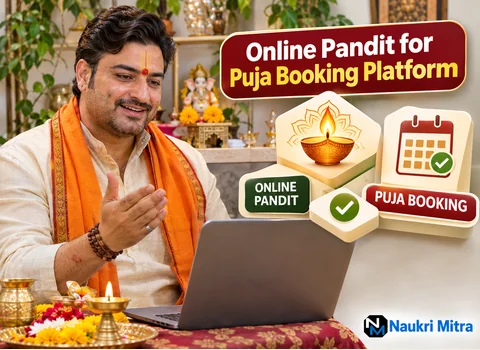
Before the first mantra of any video puja, ask the family to prop the phone a little above the kalash, tilted so the deity, the lamp and the havan kund all sit inside the frame. A son in Toronto or a grandmother in Pune cannot lean closer to see whether the coconut is placed correctly, so that small adjustment is how they take part instead of just listening. This listing is for online pandit for puja booking platform jobs: you conduct household rituals live over video for devotees who book through the platform, paid at $12 per hour (USD), part-time, fully remote and open to pandits anywhere in the world.
The plain pandit for puja booking platform job description is this: you conduct e-pujas, griha pravesh, havan and other rituals live over video for families who have booked a slot. You guide them on samagri and on each step they must perform with their own hands, chant clearly so the sankalp and mantras carry over a phone speaker, explain why each part of the ritual is done, and start on time as the platform schedules.
A temple priest serves whoever walks in. Here the family has chosen a date, a puja and often a specific tradition in advance, and you arrive on their screen prepared for that household.
Vedic pathshala or gurukul training is required, along with sound knowledge of puja vidhi and mantras and experience conducting household rituals. Fluency in Hindi or Sanskrit is essential.
No separate pandit for puja booking platform certification is demanded beyond your traditional training, though a letter from your pathshala or a senior acharya you have assisted helps the platform verify you. Young priests who have finished their studies and served at rituals alongside a guru can treat this as a starting point; pandit for puja booking platform jobs for freshers to online work are realistic when the ritual grounding is already solid.
Online, your voice does most of the work. Recite at a steady pace, pause where the family must offer flowers, rice or water, and announce the next step before it arrives. The pandit for puja booking platform skills that matter most are clear pronunciation, the ability to compress or extend a vidhi within the booked time without dropping essential steps, and patience when a family member is slow to find the roli or the diya.
Explain the significance briefly as you go. A line on why Ganesh is invoked first keeps younger members attentive.
Basic Zoom and smartphone skills are needed: joining a meeting, unmuting the family for the sankalp and rejoining quickly if the call drops. Your own space should be a clean puja corner with good, even lighting falling on your face and altar, a phone or laptop on a stand, and reliable internet with a mobile hotspot ready as backup.
Suppose a couple have bought a flat in Melbourne and book a griha pravesh for a Sunday morning their time. Three days before, you send a samagri list through the platform chat: kalash, mango leaves, coconut, haldi, kumkum, rice, a ghee diya and a small havan kund if their building permits fire. You ask which deity they keep at home and whether their family follows a North or South Indian practice. On the day, you join ten minutes early, check that the kalash sits clearly in view, and walk them through Ganesh puja, kalash sthapana, navagraha pujan, a short havan and the entry into each room with the lamp. You close with aarti while the parents in India watch on the same link.
Families share names, gotra, birth details and addresses for the sankalp. Treat all of this as confidential, keep it inside the platform and never save it to your personal phone contacts or groups.
Follow the family's tradition, not your own preference. A Marwari, a Tamil Iyer and a Bengali household will each expect different steps and offerings. Ask before the session, and if a request falls outside what you have been trained to perform, say so honestly so the platform can assign another pandit. Conduct the explanation in the language the family is most comfortable with, while keeping the mantras in their proper form.
Work as a part time pandit for puja booking platform jobs tends to bunch around auspicious dates, festivals and weekends, with quieter weekdays. A typical week might include two or three short pujas such as Satyanarayan katha or a birthday puja, perhaps one longer griha pravesh or havan, the preparation messages before each, and a short follow-up for questions. Hours are not fixed or promised; they depend on bookings and your availability.
Several pandits take this up as freelance pandit for puja booking platform jobs alongside temple or community duties, and pandit for puja booking platform work from home suits those with a quiet, dedicated puja room.
The pandit for puja booking platform salary per hour on this post is $12 (USD), part-time, and it reaches you through the platform. Families see the dakshina before they book, and nothing is collected later in cash, by UPI to your personal number or as an extra offering requested mid-puja. Incentives, should there be any, come at the employer's discretion; none is promised.
People often ask how this compares with temple service. A temple post may give steady daily duties and a community around you; online bookings give flexibility and reach families you would never meet otherwise, while income rises and falls with demand. Earnings per puja on other apps differ by platform and ritual, so read their terms directly.
Never suggest that a family will face misfortune unless they add a costlier puja or remedy. Recommend only what their occasion calls for, and let them decide.
A havan on a video call happens in someone else's flat, often with smoke alarms, curtains and children nearby. Before the session, confirm that the building allows a small fire, that the havan kund stands on a metal tray or tiles away from cloth, with water or sand within reach and a window open. Keep samidha and ghee small. If fire is not permitted, guide the family through a lamp-based alternative that their tradition accepts.
SmartPuja, 99Pandit and Sri Mandir are well-known examples of puja booking services in the market; each enrols pandits in its own way and has no connection with this listing.
Common pandit for puja booking platform interview questions include: which rituals you can conduct without a book, how you would shorten a vidhi to fit an hour, how you would handle a family whose tradition differs from yours and what you would do if the call drops during the havan. A pandit for puja booking platform resume should list your pathshala or gurukul, your guru, years of assisting or leading rituals, languages and a link to a sample recitation. Over time, reliable pandits can move into weddings and sanskaras or mentor newer priests.
Apply only through genuine channels. Stay away from a contact who:
The rule runs both ways: a pandit on the platform accepts no money off it and never sells gemstones, yantras or add-on pujas privately to a family.
Applying is free. Send your training details, the rituals you perform, your languages and a short recitation clip through naukrimitra.in, and note the hours and time zones you can usually offer. If the fit is right, the next step is a conversation and a short demonstration call.