
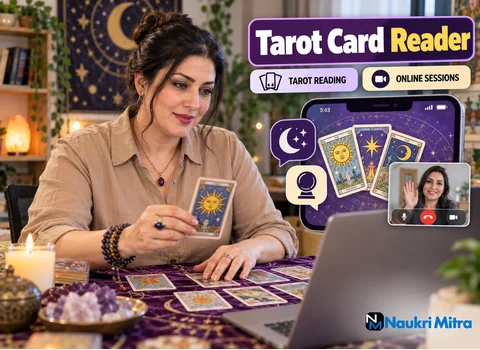
A message arrives at 11.40 at night: "My boyfriend has stopped replying. Is it over?" The client asks for one card, you shuffle, and the Ten of Swords turns up: a figure lying face down under ten blades, a dark sky, and a thin line of yellow light along the horizon. The client sees the image on screen and types "I knew it" before you have written a word. This moment is the real test in online tarot card reader jobs. A calm reader does not say "this is a terrible card" and does not suggest a paid ritual to undo it. The card is about a painful chapter reaching its lowest point, and about the fact that the lowest point is also where it stops. You might write: "That sounds really painful, and I'm sorry you're going through it. This card often shows up when someone is exhausted by a situation. It doesn't predict anything fixed. It asks what you need to put down so you can rest. Look at the light at the edge of the card. What does tonight feel like for you?" No fear and no remedy pitch. If the replies suggest real despair, stop the reading and share Tele-MANAS (14416).
The role is to draw and interpret tarot spreads for love, career and life questions over chat or call on a consultation app, and to explain the cards in simple language. Clients come for reflection, comfort or entertainment. Your job is to offer constructive guidance, keep every reading confidential and keep your availability and ratings healthy on the app. This is tarot card reader work from home: you log in, mark yourself available, and sessions come to you. Hours are not fixed or promised.
Most consultation apps expect fluency with the Rider-Waite deck, the 78-card deck of 22 Major Arcana and 56 Minor Arcana in four suits: Wands, Cups, Swords and Pentacles. Its illustrated pip cards make it easy to explain a card to someone who has never seen tarot before, because you can point to what is actually in the image. Keep a physical deck for live draws on call and know your reversals, if you use them. Some readers use digital tarot apps for references or on-screen draws; either way, tell the client honestly how cards are drawn.
On chat, short spreads work best because the client is reading on a small screen. A three-card spread (situation, challenge, advice) is a reliable default. On call, you have room for a five-card relationship spread or a Celtic Cross, but only if the client has the time.
A worked example, invented: a client in her late twenties asks whether to accept a job offer in another city. She draws the Eight of Pentacles, the Five of Cups and the Page of Wands. You might explain that the Eight shows steady skill-building, the Five of Cups points to grief over what she would leave behind, and the Page suggests curiosity about something new. You do not tell her to take the job. You ask which part of the move frightens her, and what the Page might mean if she stopped looking at the spilled cups. She ends the session with her own decision.
Clients often ask for certainty: "Will he come back?" "Will I get the visa?" Tarot does not guarantee outcomes, and a reader should never claim it does. Swap "this will happen" for "this card suggests" or "the energy here leans towards". Avoid words like curse, doom or bad luck. Never tell a client a card means they need a remedy, puja or paid follow-up to stay safe. Fear-based upselling is how vulnerable people get hurt, and responsible apps can remove readers who do it.
Some questions are not for the cards. Health worries, pregnancy, medication, court cases, investments, loans and whether to sign a contract all go to doctors, lawyers or financial advisers. A short, kind line works: "That is a question for a doctor, and I'd encourage you to see one. I can help you think about how you're feeling while you wait." Also decline readings about a third party's private life, death timing, or anything that asks you to judge another person's guilt.
You need clear, compassionate communication in English or Hindi. Some clients switch between both in one sentence, and it helps to follow their lead. Avoid jargon and check that the client has understood before moving on.
Now and then a client is not asking about love or work at all. They are in crisis. If someone mentions self-harm, hopelessness or being unsafe, stop the reading. Stay warm, take them seriously, and point them to real help: in India, Tele-MANAS on 14416 offers free mental health support, and in an emergency they should contact local emergency services or someone they trust nearby. Follow the app's escalation process and do not try to counsel beyond your role.
On tarot card reader salary per hour: the rate here is $12 per hour (USD) for part-time sessions, done from home, with readers welcome from any country. Many apps quote earnings per minute instead, and those rates differ by platform and by reader rating. Bonuses tied to ratings or repeat querents are set by whichever app engages you, so treat them as possible, never as promised. A typical week of part time tarot card reader jobs might mean a few evening blocks, a weekend afternoon and occasional short chats between them, with your status updated so clients are not left waiting.
Setup is simple but must be reliable: a smartphone with good internet, a charger nearby, earphones with a decent microphone for calls, and quiet surroundings without interruptions. Client details and readings are confidential and stay inside the app. Do not screenshot chats, share them or contact clients outside the platform.
A tarot reading certificate or solid self-taught practice with Rider-Waite cards is expected. No degree is needed. A beginner-level tarot card reader course helps structure your learning, and a tarot card reader certification can strengthen an application, though quality varies, so judge a course by its practice readings. The core tarot card reader skills are card knowledge, careful listening, plain writing and steady boundaries.
Tarot card reader jobs for freshers are possible if your practice is real. To start with no experience, do around fifty free practice readings for friends who give honest feedback and keep notes on how you handled hard cards. Signup on market apps such as Astrotalk, InstaAstro or Astroyogi usually involves an online profile, a test reading and a call interview; this listing is separate from them. Common tarot card reader interview questions include how you would read the Death card for a scared client and what you would say to a medical question. Your tarot card reader resume should list your deck, languages, practice hours and two short sample readings.
Tarot reads the present question through drawn cards, while astrology needs birth date, time and place to build a chart. Which earns more online depends on the app, your rating and repeat clients, not the discipline itself. Growth can mean taking freelance tarot card reader jobs on more than one platform where contracts allow, training new app readers, writing card guides or adding a second skill such as numerology.
Scams often target new readers. Step back from any reading app or so-called "HR" that wants money for a deck kit or sign-up, sets an unpaid trial that turns into whole evenings of live readings, asks for the one-time password from your bank or your UPI PIN, or will only speak on WhatsApp and never names a registered company. Genuine practitioners never take payments from clients outside the platform, and you should refuse if a client offers.
Applying is free. Send a short note covering your deck, languages and practice background, plus one written sample reading on an invented question. Show how you would handle a difficult card with care.