
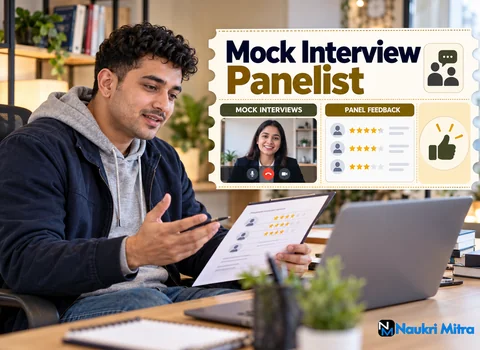
A practice interview is only as useful as the notes a candidate takes away from it. Consider someone who starts typing before asking whether the array could be empty or contain duplicates. A scorecard line that reads problem solving: 2 of 4 stings and teaches nothing. Written up properly, it becomes a plan: next time, restate the problem, confirm two edge cases and sketch an approach out loud before touching the editor. Turning a score into that kind of fix is the core of mock interview panelist online part time jobs. The post here is part-time and remote: you run practice technical and HR interviews for candidates in any country, paid at $15 per hour (USD). Several years of industry experience in a technical or HR role is required.
You will conduct mock technical and HR interviews over Zoom, with CoderPad used for the live coding parts of technical rounds. The two feel different from the candidate's chair, and they should feel different from yours too.
Summed up, the mock interview panelist online job description is this: run the round, ask role-relevant questions, score the candidate on a structured scorecard and give actionable feedback on their answers, coding approach and communication.
A generic question list wastes everyone's time. A candidate preparing for a junior backend role needs different problems from someone aiming at a data analyst seat, and an HR round for a fresh graduate should not sound like one for a team lead. Before each session, read what the candidate is targeting and pick questions a real panel for that role would plausibly ask.
Good panelists also hold a follow-up in reserve. If the first answer is strong, push one level deeper: what happens at scale, what would you change with more time, what did your manager say afterwards. That second question can be where the useful feedback comes from.
CoderPad is a browser-based collaborative code editor. Interviewer and candidate see the same code as it is typed, and the candidate can run it in the chosen language to check output. For you, that means watching the process live: whether they test with small inputs, how they react to an error, whether they name variables so another person could follow.
Resist the urge to rescue. Give a hint only when the candidate is genuinely stuck, note that you gave it, and factor it into the score.
Join a few minutes early, test your audio, and greet the candidate by name. Explain the format at the start: how long the round runs, whether it is technical, HR or both, and when they will get feedback. Keep your camera on and mute notifications.
Recording is useful for review, but only with the candidate's clear consent. Ask before you press record, follow the platform's policy on storing recordings, and never share a session with anyone outside the agreed purpose. If a candidate says no, the round goes ahead unrecorded and your notes do the work.
A structured scorecard is what separates a panel from a chat. Each area, for example problem solving, code quality, communication, or for HR rounds clarity and specifics in examples, gets a score on a defined scale with a short description of what each level looks like. You score every candidate against the same descriptions.
Write one line of evidence next to every score, just like the problem-solving note described at the start. A number without a reason is a guess; a number with one is something the candidate can learn from.
Actionable feedback names the behaviour, explains why it matters to an interviewer, and suggests one concrete change. Cover the three areas this listing names: the content of their answers, their coding approach, and how they communicated.
Start with what went well, keep the tone direct, and finish with the two or three changes that matter most.
Interview formats change. Some employers lean on take-home assignments, others on pair programming, system design discussions or structured behavioural questions built around their own values. You are expected to know current interview formats so the practice you offer looks like what candidates will actually face.
Reading employers' published interview guides and talking with recent interviewees are simple ways to stay current. No particular mock interview panelist online course or mock interview panelist online certification is required by this listing; current, firsthand knowledge counts for more.
Fairness is part of the job, not an extra. Candidates come from different countries, schools and backgrounds, and some may be interviewing in a second language. Score against the rubric, not against how closely someone resembles people you have hired before.
This listing requires several years of industry experience in a technical or HR role, enough to judge candidates credibly. Credibility is the point. A candidate will take a hard score seriously from someone who has written production code, run hiring loops or screened applicants for real roles, and will shrug it off from someone who has only read about interviews.
That is also the honest answer for anyone searching for mock interview panelist online jobs no experience: this is not an entry-level role. The realistic route for anyone wondering how to become a mock interview panelist online is to build industry experience first, sitting on real panels where they can, and then offering practice rounds. The mock interview panelist online skills that matter most are judgement, clear writing, calm questioning and a working comfort with Zoom and CoderPad.
Panel hours are paid at $15 per hour (USD), with the work part-time, remote and open to any country. No per-interview rate or other payment is mentioned, so budget around the hourly number. For illustration only, a week with six hours of sessions would total $90 before tax, and your real figure tracks the hours you actually give.
Because sessions are booked in time slots, mock interview panelist online work from home suits people who can offer predictable evening or weekend windows alongside a day job. Your setup matters as much as your calendar:
Interviewer roles attract scams because they sound respectable. A genuine panelist opening pays you for your time; it does not charge a registration fee, a mandatory course fee, a "panel onboarding kit" or a deposit before you get interview slots. Be wary of anyone who asks for bank passwords or ID documents before any conversation about the actual work. If the sender cannot explain how sessions are booked or scored, step back.