
Hearing "not this month" is an ordinary part of donor calling, and the reply that follows decides whether a supporter stays. Take a regular donor, Mrs. Kapoor, who has backed a girls' education programme every month for some time. When the caller reaches her, she sounds tired and a little embarrassed: money is tight and she cannot give. The respectful answer is not a second pitch. It is something like, "Thank you for telling me, and thank you for everything you have already given. Would you like us to pause this month and call you again next month, or would you prefer we leave it for now?" She picks next month, and the relationship survives. That small moment shows the standard expected in remote NGO fundraising telecaller jobs, and it is the one this full-time listing asks you to hold.
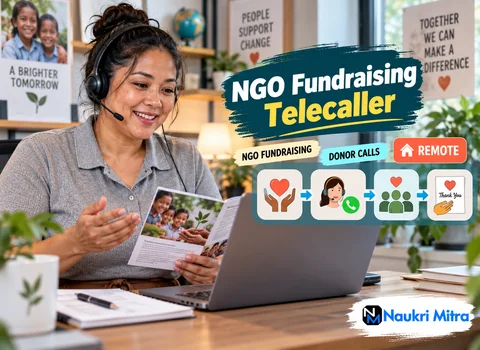
You phone two kinds of people. Prospective donors may have shown interest through a form, an event or a campaign, and they want to know what the NGO does before they commit to anything. Existing donors already give, and your calls thank them, update them and sometimes ask whether they would like to continue or add a monthly gift. On each call you explain the organisation's work, ask for monthly giving or a pledge, follow the donor script, answer questions honestly, record what happened in the CRM dialer and set up any follow-up the donor agrees to.
NGOs hire for this directly, and so do fundraising agencies that run phone teams for charities. Either way, the donor should leave the call feeling respected, gift or no gift.
A monthly gift is a regular donation the donor sets up once, usually through an automatic payment method the NGO offers, so the same amount goes out each month until they change or stop it. A pledge is a promise to give, either a one-time amount or a commitment to start giving, which the donor completes later through the organisation's official payment channel.
Your job is to explain both clearly. Say how the gift would be taken, that the donor chooses the amount, and that a monthly gift can be changed, paused or cancelled.
You will work from donor scripts. They give you the right introduction, a clear description of the programmes and approved wording for the ask. Learn it well enough to sound like yourself, then listen.
Donors ask fair questions, and they deserve straight answers:
Never exaggerate impact, invent stories about beneficiaries or suggest an emergency that does not exist. A false claim may win one gift and lose a donor for good.
The CRM dialer places your calls and holds each donor's record: past gifts, earlier conversations, preferences and any notes from colleagues. After every call you record the outcome. Outcomes range from a new monthly gift or pledge to a call-back request, no answer, or a request not to be called again.
Accurate notes protect donors. If Mrs. Kapoor asked for a pause and nobody wrote it down, the next caller might ask her for money again a week later. Keep notes short and factual.
Some conversations end with "Call me later." Scheduling that follow-up properly is part of the role. Book it in the CRM for the day and time slot the donor named, note why you are calling back and what they wanted to think over, and then keep the appointment. A donor who hears from you exactly when promised starts to trust the organisation behind you.
This listing says you will be expected to meet daily targets. Those are set by the organisation and explained during onboarding, and you should ask how they are measured before you start. What the targets do not change is how you treat people. You do not repeat the ask after a clear no, you do not use guilt or fear, and you do not hint that a child or family will suffer if this donor hangs up.
That is the real difference between a fundraising caller and a sales telecaller. A sales caller is selling a product in exchange for money. You are asking someone to give with nothing in return except the knowledge that it helps. That makes trust the whole job.
When someone says "please do not call me again", you thank them, confirm you will pass it on and mark the record so it is respected. No argument, no last appeal.
Donor information stays inside the CRM. Do not copy numbers onto your personal phone, do not share donor details with anyone outside the team, and do not discuss donors in public places or chat groups. Never ask a donor to read out a card number, PIN or OTP on the call. Payments go through the organisation's own secure methods.
Every donor should receive a proper receipt from the organisation for what they give. If a donor asks when it will arrive or how, give them the process the NGO has shared with you.
Tax questions can come up. Section 80G of the Income Tax Act allows deductions for donations to organisations that hold valid 80G approval, but whether a particular donor can claim it depends on the organisation's registration, the way the donation is made and the donor's own tax situation, including which tax regime they choose. Confirm only what the NGO has authorised you to say about its status, and suggest that donors check their personal case with a tax adviser. Never promise a tax benefit you cannot confirm.
Freshers can apply. You need twelfth pass or a graduation, plus confident spoken Hindi or English. The other expectations are a persuasive yet empathetic phone manner, comfort with a CRM dialer and donor scripts, and willingness to work toward daily targets.
This listing names no course or certificate as a requirement. To prepare, practise explaining a cause you care about in a few sentences and get used to typing notes while you talk. On your resume, include anything that shows you can speak with strangers kindly: volunteering, college events, tuition, shop work or customer service. Interview questions may ask how you would respond to a donor who says no, or how you would answer a question you do not know.
That makes entry level remote NGO fundraising telecaller jobs a realistic first step for someone who is patient, clear and genuinely interested in social causes.
Full-time calling on this desk earns $300 per month (USD). Commission, incentives and add-ons are absent from this listing, so the monthly sum is the full stated pay. As with other NGO fundraising telecaller work from home jobs, location is open worldwide.
A headset of your own and an internet connection that stays up are needed; a quiet room also helps donors hear you.
Fake charities exist, and some recruit callers through job offers without saying where the money really goes. Be careful if an employer asks you to collect donations into your own bank account, share a personal UPI ID with donors, or forward money to someone's private account. A genuine NGO takes every donation through its own official accounts and issues receipts in its own name. Be equally wary of anyone charging you a registration, training or ID fee to start. Before accepting an offer, look up the organisation's official website and registration details, and check that the contact who recruited you can be reached through those official channels.