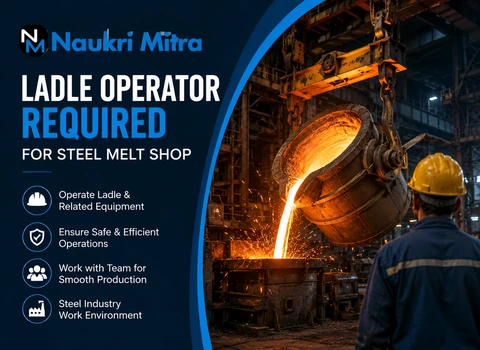
What Happens at the Ladle Station in a Melt Shop
Molten steel doesn't stay still for long. Once it leaves the furnace, someone has to move it, control its temperature, and pour it into the next stage of production without wasting a second. That's the job of a Ladle Operator. This opening is based in Salem, Tamil Nadu, India, and it's a Full-time position paying ₹ 37,200 per month.
If you're new to steel manufacturing and trying to figure out what the work actually involves day to day, here's a straightforward look.
The Reason Melt Shops Hire for This Role Specifically
You can't hand a ladle full of liquid steel to just anyone. A small mistake in timing or temperature can ruin an entire batch, damage equipment, or hurt someone. So plants keep this as a dedicated position rather than folding it into general helper duties. The person in this seat needs to understand how metal behaves as it heats and cools and work closely with crane operators every single shift.
How a Shift Usually Goes
Most shifts start with a quick update on furnace timing so the operator knows when the next tap is due. From there, the work tends to include:
- Checking the ladle lining for cracks or wear before it goes into service
- Preheating the ladle so it doesn't shock the metal on contact
- Guiding the crane operator to line the ladle up under the tap hole
- Watching the pour closely and stepping in if slag starts mixing with the metal
- Logging temperatures and pour times
- Cleaning the ladle out and getting it ready for the next heat
None of this happens on a loose schedule. Furnace tapping runs on its own clock, and the ladle has to be ready when it's ready.
What the Role Covers Beyond Pouring Metal
Pouring is the visible part of the job, but there's more underneath it. Operators keep an eye on slag buildup, sometimes handle additive dosing, and stay in constant contact with the casting and furnace teams. If the ladle isn't ready on time, the whole line backs up, so the responsibility here extends beyond a single task.
Where You'll Find This Kind of Work
Integrated steel plants, mini steel mills, induction furnace units, and electric arc furnace facilities all need operators for this station. Tamil Nadu has a fair number of steel and alloy manufacturing units, and Salem, in particular, has been a steel and stainless-steel hub for years, making it a natural location for this kind of hiring.
Equipment You'll Actually Get Your Hands On
Expect to work with overhead cranes for moving the ladle, preheating burners, refractory lining tools, temperature lances, pyrometers, oxygen lancing gear where the plant uses it, and slag removal tools. Knowing why refractory lining needs preheating, and what happens to it under repeated thermal shock, is the kind of practical knowledge that separates someone who's just following steps from someone who actually understands the process.
Skills That Actually Matter on the Floor
Book knowledge about metal temperature only gets you partway. The operators who do well here usually have good hand-eye coordination for crane signaling, can spot a change in metal color that signals a temperature shift before it becomes a problem, understand furnace and casting mechanics at a basic level, and can stay steady when it's loud and hot and things move fast.
Most employers look for an ITI qualification in a related trade, or a Diploma in Metallurgy or Mechanical Engineering. That said, plenty of good operators have built their skills over years on the shop floor rather than in a classroom, and that experience counts for a lot here.
The Physical Side of the Job
This isn't desk work. You're on your feet for long stretches, near intense heat, wearing heavy protective gear. Melt shops don't shut down at night, so shift work is standard, and that usually includes rotating through night shifts.
Staying Safe Around Molten Metal
Splashes and burns are real risks in this kind of work, so safety rules aren't optional. Operators typically wear aluminized heat-resistant suits, face shields, helmets, gloves, and heat-resistant footwear. Keeping a safe distance during pours, checking the ladle before every use, and following crane lockout procedures properly are all part of the daily routine, not just training-day talk.
New operators are usually eased in slowly, watching experienced hands work before they're given a ladle of their own. That judgment about when to slow down or step back only comes with time on the job.
What Makes This Job Hard on Certain Days
Heat and noise wear people down over a shift, and staying alert the whole time takes real discipline. Refractory linings don't always wear evenly, and furnace delays can shrink the window you have to get a ladle ready. Handling that pressure without cutting corners on safety is what tends to separate the operators who last in this field from those who don't.
Where This Can Lead Over Time
Operators who stick with this line of work and perform consistently often move into senior operator roles, shift-in-charge positions, or supervisory roles within the melt shop over the years. Getting exposure to different furnace types and casting setups along the way tends to strengthen those prospects further.
Pay and What Else Might Come With It
This Full-time role in Salem, Tamil Nadu, India pays ₹ 37,200 per month. Depending on the employer, you might also see overtime pay, PF, ESI coverage, an annual bonus, uniforms, or transport and canteen facilities, though these vary from one company to another and are worth confirming directly with whoever is hiring.