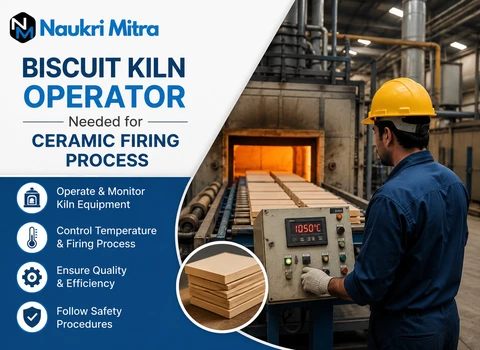
What a Biscuit Kiln Operator Actually Does
Before a tile gets its glaze and pattern, it has to survive its first trip through fire. That first firing is called the biscuit stage, and it's where a Biscuit Kiln Operator earns their keep. The tile enters the kiln raw and fragile. It comes out hardened, ready for the next stage of production. This Full-time role is based in Morbi, Gujarat, India, home to one of the country's largest ceramic tile clusters, so the demand for this kind of work is fairly steady here.
If you're new to this field, think of the kiln operator as a gatekeeper. Nothing moves forward to glazing or printing until the biscuit firing is done right.
Why Factories Won't Skip This Position
Get the firing wrong, and the damage shows up later, sometimes only after glazing, when it's too costly to fix. Warped edges. Cracked cores. Uneven strength that shows up in breakage during packing or transport. That's the real reason factories keep a dedicated operator on the kiln section instead of leaving it to whoever's free. Someone has to watch the temperature zones, track how fast the conveyor is moving, and catch problems while they're still small.
A Shift, Start to Finish
Most shifts begin the same way: check what the last shift left behind. Are the zones stable? Any flagged issues? From there, the operator settles into a rhythm — watching the burners, logging temperature readings at set intervals, and keeping an eye on how the tiles look as they exit the kiln. When the tile body or thickness changes, so does the firing requirement, and adjustments to gas flow, air pressure, or belt speed follow. By the end of the shift, there's a handover report, because the kiln never really stops.
Daily Responsibilities
- Watching kiln temperature zones and making adjustments when readings drift
- Spotting defects — cracks, black core, warping, uneven color — before tiles move ahead
- Logging production numbers and firing curve data
- Staying in sync with the loading and unloading crew
- Flagging burner trouble, belt slippage, or gas issues right away
- Sticking to the firing schedule the supervisor sets
Where This Work Happens
Ceramic tile plants and sanitaryware units are the usual setting. Morbi's ceramic sector is large enough that this kind of hiring happens regularly, and most of the work is confined to one area — the kiln section, right next to the firing line and its conveyor system. It's not a job that involves much movement between departments; the kiln is where your day plays out.
The Machines and Instruments You'll Work With
A biscuit kiln is essentially a long tunnel furnace. Tiles ride on rollers through it, moving through zones where the heat climbs and eventually drops before the tile exits. Operators rely on pyrometers, temperature control panels, burner controls, and conveyor speed regulators to keep things on track. A lot of the fine-tuning still comes down to hand tools and a trained eye — instrument readings only tell part of the story. Reading a control panel display or a firing chart quickly becomes second nature.
What Training Actually Helps
You don't always need a formal qualification to get started, but it helps. An ITI certificate in a relevant trade is commonly preferred, and some plants look for basic technical training tied to machine operation. How much depth is expected really depends on the unit and how complex its kiln system is — some employers want operators who've already handled industrial furnaces or similar temperature-control equipment. Being able to read an engineering drawing or a firing schedule without help is a real advantage, and so is a comfort with numbers, since the job runs on readings.
Skills That Separate Good Operators From Average Ones
Technical knowledge only gets you halfway. What actually matters day to day is attentiveness. An operator who notices a slight shift in tile color or surface texture early can save an entire batch from being scrapped. Add to that some patience — long stretches of monitoring aren't for everyone — plus the ability to stay calm while working near constant heat, and you have most of what makes someone reliable at this job.
The Physical Side of the Job
This isn't a desk job. Expect long hours on your feet, proximity to high heat, and some noise and dust from surrounding machinery. Since ceramic production usually runs around the clock, shift work is part of the deal, and rotational timings are common for this Full-time position.
Staying Safe Around the Kiln
Heat and moving parts don't leave much room for carelessness. Most plants expect operators to wear heat-resistant gloves, safety shoes, and eye protection as standard practice. Lockout procedures before maintenance, keeping a safe distance from hot surfaces, and reporting anything unusual — a gas smell, a strange sound — without delay are treated as non-negotiable across the industry.
What Trips Up New Operators
Judging firing quality by sight alone takes time to learn, and most beginners struggle with it at first. Heat fatigue over a full shift is real too. And then there's the occasional equipment fault during a busy production run, which tests how well you can stay level-headed while coordinating with maintenance staff under pressure.
Building a Reputation on the Floor
Learn how different tile types behave in the kiln. Keep your shift records detailed, not just adequate. Get into the habit of double-checking readings even when things seem fine. None of this is glamorous advice, but operators who go beyond just pressing buttons — who actually understand what's happening inside the kiln — tend to be the ones handed more responsibility over time.
Where the Role Can Lead
Experience opens doors toward senior kiln operator positions, shift-in-charge roles, or even firing process supervision within the same plant. Morbi's ceramic industry is well established, so operators who build a solid track record in kiln handling and quality control tend to find steady opportunities here rather than needing to look elsewhere.
Pay and What Else Comes With the Job
The salary for this position is ₹34,800 per month for the Full-time role in Morbi, Gujarat, India. Beyond the fixed pay, ceramic manufacturing units sometimes offer overtime, PF, ESI coverage, an annual bonus, uniforms, and occasionally transport or canteen facilities. None of these extras are guaranteed — they vary from employer to employer — but they're common enough across the sector to be worth asking about.