What Actually Happens Behind a Tub of Ice Cream
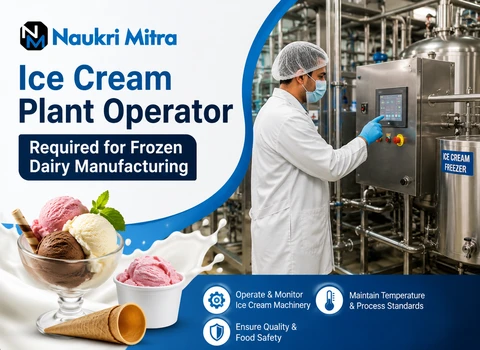
Most people scoop ice cream out of a freezer without thinking about how it got there. Before it reaches that stage, the mix passes through pasteurizers, homogenizers, aging tanks, and continuous freezers, with someone watching every one of those steps closely. That someone is the Ice Cream Plant Operator, and the job is much more technical than the title suggests.
Frozen dairy manufacturing has been expanding across Tamil Nadu for a few years now, driven by rising demand for packaged desserts and organized retail. Plants in this space need people on the floor who won't let a batch go wrong because a temperature reading was ignored or a machine wasn't checked properly.
Why This Role Exists in the First Place
Ice cream production isn't forgiving. Get the pasteurization temperature slightly off, rush the aging period, or let the freezer run at the wrong pressure, and the whole batch can come out grainy or fail quality checks entirely. That's expensive for a manufacturer, so plants would rather train and retain a dependable machine operator than leave equipment running with minimal oversight.
There's also the food safety side of things. Dairy spoils fast if hygiene slips even a little, so operators end up being the first line of defense against contamination, not just machine caretakers.
A Shift on the Floor, Roughly Speaking
No two shifts look identical, but a production worker in this field is usually doing some version of the following:
- Inspecting machines and checking cleanliness before production starts
- Loading milk, cream, sugar, and flavoring into the mixing tank
- Watching pasteurization temperatures and homogenizer pressure closely
- Running the continuous freezer where the liquid mix turns semi-solid
- Overseeing filling and molding before the product heads into the hardening tunnel
- Logging batch numbers, temperatures, and anything that looked off
- Cleaning down the line at the end of the day using CIP (Clean-in-Place) procedures
Flavor changeovers, seasonal order spikes, and routine maintenance all shift the pace week to week.
The Machines You'll Actually Touch
An equipment operator here works around pasteurizers, homogenizers, aging vats, freezers, filling machines, and hardening tunnels. Measuring instruments matter just as much — thermometers, pressure gauges, and Brix meters that check sugar concentration in the mix. Knowing how to read these properly is often what separates someone who catches a problem early from someone who finds out after the batch is ruined.
What Employers Are Actually Looking For
You don't need an engineering degree to get into this, but a few things help a lot:
- Some familiarity with running machinery and basic troubleshooting
- Awareness of hygiene practices, even at a basic HACCP level
- Willingness to work in cold conditions for hours at a stretch
- Comfort reading dials, gauges, and digital control panels
- Enough physical stamina for standing, lifting, and moving around all shift
Freshers get hired into this role fairly often, especially if they're willing to learn on the job. That said, an ITI background in Mechanical, Electrical, or Food Processing tends to make the machinery side click faster. A Diploma in Dairy Technology, Food Technology, or Mechanical Engineering isn't mandatory either, but it doesn't hurt.
Standing in the Cold, Literally
This job asks a lot of the body. Operators move between warmer processing zones and hardening or cold storage areas that can sit well below zero. There's a lot of standing, some lifting of raw-material containers, and repetitive motion throughout the shift. Dressing in layers and wearing footwear you can actually stand in for hours makes a real difference here.
Shift work is common too. Since cold chain logistics and order volumes don't stick to a nine-to-five pattern, plants often run early morning, day, and night shifts depending on demand.
Staying Safe on a Dairy Production Floor
Hygiene and safety aren't optional extras in this industry — they're built into how the plant runs. Operators are generally expected to:
- Wear hairnets, gloves, and clean uniforms before stepping onto the floor
- Use insulated jackets and gloves near freezing or hardening sections
- Follow lockout steps before adjusting or cleaning any machine
- Flag leaks, strange noises, or temperature swings right away
- Wash hands and sanitize surfaces regularly through the shift
Floors are often washed in these units, so slip-resistant footwear isn't just a suggestion.
What Trips Up Newcomers
People often underestimate how tiring the cold sections can be over a full shift. Moving between temperature zones repeatedly, staying alert during repetitive tasks, and adjusting to standing for long stretches all take some getting used to. Machine breakdowns during a busy production run add another layer of pressure, since fixing things fast without cutting corners on hygiene isn't always simple.
Most operators say the first couple of months are the hardest, and it gets easier once the routine becomes familiar.
A Few Things That Help
Operators who do well tend to trust the gauge over their gut — checking temperature readings instead of assuming the machine is fine. Keeping the workstation organized reduces the risk of contamination more than people expect. And when something's unfamiliar, asking a senior technician beats guessing, every time. In food manufacturing, following the standard procedure closely usually matters more than working fast.
Where This Role Can Lead
With time on the floor, operators often move up to senior machine operator, shift supervisor, or quality control assistant positions within the same plant. Some who build a strong grasp of the equipment shift toward maintenance-support work eventually. Growth here tends to come from a mix of hands-on experience, staying open to learning new machines, and a track record of not cutting corners on safety.
Pay and What Else Might Come With It
This is a Full-time position based in Namakkal, Tamil Nadu, India, paying ₹32,600 a month. That figure falls within the typical range for entry- to mid-level machine operator roles in frozen dairy manufacturing in this part of the country.
Some employers may also offer overtime pay, PF and ESI coverage, festival or performance bonuses, uniforms, or transport and canteen facilities. None of this is guaranteed — it depends entirely on the individual company — but these are common enough additions in manufacturing setups.
Should You Go For It?
If you don't mind physical work in a cold, structured environment, this role can be a solid way into food manufacturing. Freshers get a genuine entry point, and ITI or diploma holders get to put their technical training to use right away. Stick with it, build up your machine-handling skills, and an Ice Cream Plant Operator role in frozen dairy manufacturing can turn into a fairly stable, long-term career within Tamil Nadu's growing food processing sector.