Working with Molds, Clay Slip and Kilns: A Look Inside Ceramic Casting Work
Ceramic manufacturing is one of the oldest industrial crafts, having evolved into a modern, machine-supported production process. A Ceramic Casting Operator is the person responsible for shaping raw ceramic material into finished or semi-finished products using casting molds, slip mixtures, and controlled drying methods. This role is currently open on a Full-time basis at a ceramic manufacturing plant in Guwahati, Assam, India, and offers a practical entry point into the industrial ceramics sector for freshers and experienced workers alike.
Why Ceramic Manufacturers Need Skilled Casting Operators
Ceramic products such as sanitaryware, tiles, tableware, and industrial ceramic parts all begin as a liquid clay mixture known as slip. Getting this slip into the correct shape without cracks, air bubbles, or uneven thickness requires a trained hand and a good understanding of material behavior. Companies hire dedicated casting operators because even small errors at this stage can lead to product rejection later in the firing process. A skilled operator reduces wastage and keeps production moving smoothly.
A Typical Day on the Production Floor
The daily work of a casting operator generally follows a set rhythm, though the exact sequence can vary by product type.
- Preparing and checking the consistency of the ceramic slip before pouring
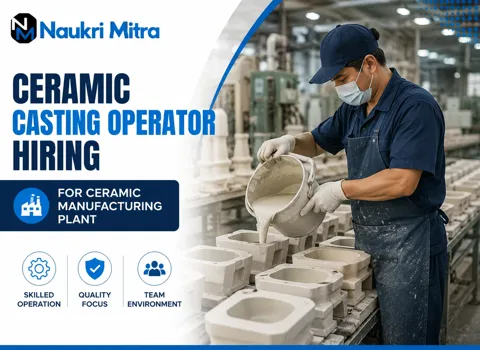
- Filling plaster or resin molds with slip using manual or semi-automatic casting equipment
- Monitoring the setting time so the mold forms a proper wall thickness
- Draining excess slip and carefully de-molding the semi-hardened piece
- Trimming rough edges and inspecting the shape before it moves to drying or firing
This cycle repeats throughout the shift, and consistency is just as important as speed.
Core Responsibilities on the Job
Beyond the casting cycle itself, an operator is expected to maintain the equipment and work area, report any mold damage or material defects to a supervisor, and follow standard operating procedures for each product line. Recording production quantities and basic quality checks are also common parts of the role.
Where This Work Happens
Casting operators are typically employed in ceramic manufacturing plants, tile and sanitaryware factories, and pottery production units. Depending on the facility's scale, the work may take place in a dedicated casting shop within a larger plant or in a smaller, standalone production unit. Ceramic manufacturing has an established presence in several industrial belts across India, and this particular position is based in Guwahati, Assam.
Machines, Tools and Measuring Instruments Used
An operator generally works with plaster or resin molds, slip pumps or pouring machines, mixing tanks, and basic hand tools for trimming and finishing. Measuring instruments such as a hydrometer for checking slip density, thickness gauges, and simple weighing scales are commonly used to maintain product consistency. In more mechanized plants, semi-automatic casting lines with timers and pressure controls may also be part of daily operations.
Skills That Make a Strong Candidate
Technical understanding of clay behavior, mold handling, and drying time is essential, along with basic mechanical aptitude to operate casting machinery safely. Employers may prefer candidates with relevant machining or tool room training. Depending on the complexity of the work, an ITI in a machining-related trade, a Diploma in Mechanical or Tool and Die Engineering, or equivalent vocational training may be considered suitable. Practical experience with EDM machines, engineering drawings, and precision measuring instruments is often valued as much as formal education, since much of the real learning happens on the shop floor.
Practical Workplace Skills That Matter
Patience and attention to detail matter more in this trade than raw physical strength. A production worker who can spot a hairline crack early, or notice slip that has not mixed properly, saves the plant significant rework later.
Physical Demands and Shift Patterns
The job involves standing for extended periods, lifting molds, and repetitive hand movements, so reasonable physical fitness is expected. As a Full-time position, it may include rotational shifts depending on plant production schedules, and workers should be prepared for a factory environment that can be warm near drying and firing areas.
Safety Practices and Protective Equipment
Ceramic plants involve exposure to dust, wet clay surfaces, and machinery, so safety awareness is non-negotiable. Common practices include keeping walkways clear of slip spills, following lockout procedures before machine maintenance, and using proper lifting techniques. Personal protective equipment such as gloves, dust masks, aprons, and safety footwear is typically provided and should be worn consistently.
Common Challenges and How Operators Manage Them
Humidity and temperature changes can affect slip consistency, and an experienced technician learns to adjust casting time accordingly rather than following a fixed clock. Mold wear is another recurring challenge, and reporting worn molds early prevents defective batches.
Growing Within the Trade
With experience, a casting operator can progress toward a senior operator role, take on quality inspection duties, or move into mold-making and maintenance responsibilities within the same plant. Long-term growth in this field usually comes from mastering multiple stages of the ceramic production process rather than changing trades altogether.
Salary and Benefits Overview
This Ceramic Casting Operator position offers a monthly salary of ₹31,100 for the Full-time role based in Guwahati, Assam, India. Depending on the employer, additional benefits commonly available in manufacturing roles may include Provident Fund (PF), Employee State Insurance (ESI), overtime pay, uniforms, and canteen or transport facilities, where applicable.