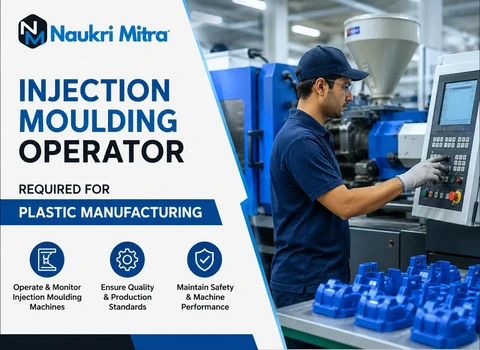
What It Actually Means to Work as an Injection Molding Operator
Plastic parts don't just appear out of nowhere. Someone has to feed the machine, monitor the cycle, check the output, and catch problems before they become wasted material. That's what an Injection Molding Operator does. In Silvassa, part of the union territory of Dadra and Nagar Haveli and Daman and Diu, this kind of work is common because the area has a solid cluster of plastic and component manufacturing units. Factories here need people who can keep a molding machine running through a full shift without letting quality slip.
How a Shift Usually Plays Out
Most days start the same way — check the machine, make sure the hopper has the right material loaded, and confirm that the temperature and pressure settings match what the job card says. After that, it's mostly watching. The machine does the melting and injecting on its own, but someone still needs to catch a short shot, a bit of flash, or a warped part before it gets packed with the good ones. Operators also jot down output numbers, clean molds during production breaks, and flag anything odd to a supervisor rather than trying to fix it themselves.
What the Job Actually Involves, Day to Day
- Running the injection molding machine through its cycles
- Loading resin or granules according to spec
- Pulling defective parts before they move down the line
- Making small adjustments when told to, not on a whim
- Filling out production logs by hand or on a tablet
- Keeping the station tidy — spilled material is a slip hazard
Where This Kind of Work Happens
Plastic component units, packaging factories, automotive part suppliers, and consumer goods manufacturers all hire for this role. Silvassa's industrial areas have a reasonable spread of such plants, so someone looking for full-time work in this trade doesn't need to travel far to find openings.
The Machines and Tools You'll Actually Touch
The core equipment is the injection molding machine itself — plastic pellets go in, get melted, and are forced into a mould under pressure until the part cools and holds its shape. Around that, operators use vernier calipers, thickness gauges, and trimming tools to check parts against spec. As you spend more time on the floor, you pick up the basics of changing molds and reading hydraulic pressure gauges too.
Skills That Actually Make a Difference
Knowing why a machine's temperature or cooling time matters helps more than people expect. It reduces waste and rework. Reading a basic engineering drawing, understanding what a tolerance range means, and spotting the difference between a minor defect and a serious one — these are the things that separate someone who's just "running the machine" from someone the supervisor trusts with less oversight.
Skills Nobody Puts on the Job Card
Punctuality matters more here than in a lot of other jobs, since machines don't wait for latecomers. Beyond that, quick hands and sharp eyes help when you're checking parts at speed, and a bit of common sense goes a long way when a machine starts sounding different than usual.
What Kind of Background Helps
Freshers with an ITI in a machining-related trade are often preferred, but plenty of experienced hands without formal papers get hired purely on the strength of their skills. A Diploma in Mechanical or Tool and Die Engineering isn't required to get started, though it does help later if you're aiming for mold-setting work or a supervisor's chair.
The Physical Side of It
Expect to be on your feet most of the shift. There's some lifting, and you'll be working close to machinery that runs hot. Factories in this line usually operate multiple shifts, so night duty comes up now and then — it's worth asking about the rotation before joining.
Safety on the Floor
The shop floor tends to be loud and warm, which is normal for this kind of production. Safety shoes, gloves, and safety glasses are standard, and for good reason — hot mould surfaces and moving parts don't forgive carelessness. Lifting properly and staying alert around the machine matters more than any rulebook can really capture.
The Problems That Come Up Most Often
Small stoppages happen more than anyone likes — a jam, a sensor glitch, a material feed issue. Staying alert through long stretches of repetitive work is its own challenge too. Operators who stay in this field tend to report small issues early rather than waiting until they become bigger, and they stick to standard procedures rather than improvising fixes.
Pay, Growth, and What Comes Next
This is a full-time role based in Silvassa, Dadra and Nagar Haveli, and Daman and Diu, India, with a monthly salary of ₹25,000. Operators who stick with it can move into senior operator positions, shift-in-charge roles, or mold-setting work over time. Some employers also offer things like overtime pay, PF, ESI, bonus, uniforms, transport, or canteen access — though what's actually on offer varies from one company to the next, so it's worth checking directly with the employer.