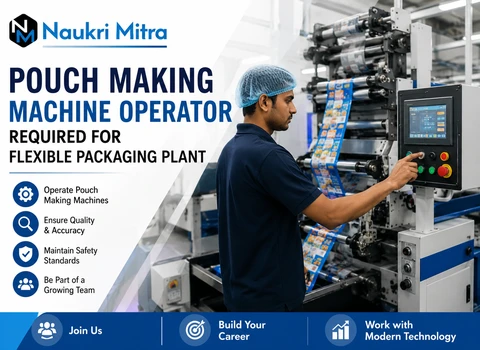
What a Pouch Making Machine Operator Actually Does
Walk into any flexible packaging unit, and you'll hear it before you see it — the steady hum of film unwinding, the click of sealing jaws closing, rolls of plastic turning into stacks of finished pouches. Someone has to run that machine, watch it closely, and catch problems before they turn into wasted material. That's the job of a Pouch Making Machine Operator.
This particular opening is for a Flexible Packaging Plant in Daman, Dadra and Nagar Haveli, and Daman and Diu, India. It's a Full-time position, paying ₹29,000 a month.
Why This Role Exists on the Shop Floor
Pouches look simple once they're done, but getting there is not. Film has to be sealed at the right temperature, cut to the right size, and printed in the correct alignment — miss any of that and the batch gets rejected. Plants hire operators specifically to prevent this. A good operator saves a company money simply by not letting bad pouches pile up.
How the Shift Usually Goes
No two days are identical, but there's a rough pattern most operators fall into:
- Inspect the machine and film rolls before starting
- Load the film and set the correct tension
- Set sealing temperature based on the material being run
- Keep an eye on seal quality, pouch size, and print alignment while it's running
- Log output numbers and rejects
- Clean up and hand over the machine for the next shift
Operators who skip the setup checks to save time almost always pay for it later — with more rejects, not less.
Beyond Just Pressing Buttons
Running the machine is only part of it. You're also expected to spot quality issues early — wrinkled film, uneven seals, print that's slightly off — and flag them before hundreds of pouches come out wrong. Small mechanical adjustments fall under this role, too, and knowing when to call a supervisor rather than trying to fix something yourself matters just as much as technical skill.
Where Operators Like This Work
You'll find this job in flexible packaging plants, laminating and printing units, and converting facilities that supply pouches to food, pharma, cosmetics, and chemical companies. Most of these plants run their lines in sequence — extrusion, printing, lamination, then pouch forming — so an operator usually works as one link in a longer chain rather than in isolation.
The Machines and Tools Involved
The core equipment here is the pouch-making or bag-making machine itself, built around heat sealing bars, a cutting unit (rotary or reciprocating, depending on the model), and a film unwinding station. Some plants also use rewinding and slitting machines alongside it. For checking work, operators rely on thickness gauges, tape measures, and seal strength testers. None of this works without understanding how heat, pressure, and dwell time interact — get one of those wrong and the seal fails.
Skills That Actually Matter Here
Knowing your film types and sealing settings helps, but plenty of the job comes down to practical habits:
- Reading job cards and production instructions correctly
- Adjusting settings when film thickness changes
- Catching visual defects fast, before they multiply
- Basic troubleshooting when something jams or misaligns
- Keeping the work area clean to avoid contamination
Freshers can get into this line, and so can ITI candidates from mechanical or electrical trades, or diploma holders in mechanical or plastics technology. If you've operated other machines before, the transition into pouch making usually isn't difficult — most plants will train you on the specifics.
What the Body Goes Through
Expect to be on your feet for most of the shift. Lifting film rolls is routine, and staying sharp during long runs takes some getting used to. Packaging plants often run multiple shifts to keep up with orders, so operators should be ready for rotating schedules, including nights when required.
Safety on the Floor
It gets warm near the sealing units, and there's constant machine noise in the background. Keep hands away from rollers and sealing jaws while they're moving. Follow lockout steps properly during maintenance — this isn't optional. Safety shoes, gloves, and hearing protection are standard where required by the plant. A clean floor, free of film scraps, also reduces slip risk more than people expect.
Where New Operators Usually Struggle
Getting consistent seals across different film materials is the first real challenge — each material behaves differently under heat, and it takes time to build a feel for it. Film jams and sensor misalignment that cause downtime are other common frustrations, and honestly, this only gets easier with hours on the machine, not with theory.
Growing Within This Line of Work
Stick with it, and the path forward usually looks like this: senior operator, then shift-in-charge, then possibly a machine setting specialist role, all within the same plant. Operators who get comfortable with multiple machine types often end up training new staff or handling trickier production orders — that's usually how seniority is recognized on the floor.
Pay and What Might Come With It
The role pays ₹29,000 a month, Full-time, based in Daman. Some employers add overtime pay, PF, ESI, festival bonus, uniforms, or canteen and transport facilities on top of the base salary — none of this is guaranteed across the board, so it's worth confirming directly with whoever's hiring.