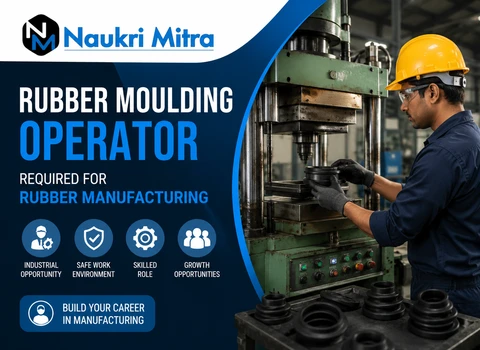
What Rubber Molding Work Actually Involves
Walk into any rubber manufacturing unit, and you'll notice the same thing running the show: heat, pressure, and timing. That's essentially what a Rubber Molding Operator manages all day. Raw rubber compound goes in, gets shaped and cured inside a mould, and comes out as a finished part — a seal, a gasket, a bushing, whatever the unit produces. It sounds simple written out like that, but getting the timing wrong by even a minute can ruin a whole batch.
This role is based in Kottayam, Kerala, India, offered as a Full-time position with a monthly salary of ₹24000. It's a reasonable starting point for freshers, ITI-trained candidates, or anyone with some factory-floor experience who wants steady, skill-based work rather than purely manual work.
Why This Job Exists in the First Place
Rubber doesn't forgive careless handling. A batch left in the press too long comes out over-cured and brittle. Too short, and it stays soft and unusable. So units need someone to watch the process closely — not just press a button and walk away. That's really the reason companies hire for this role: consistent output depends on a person who knows what a proper cure looks like and can catch problems before they become wasted material.
A Rough Idea of the Daily Routine
Shifts vary a bit depending on the unit and the product line, but most days include some version of the following:
- Inspecting the machine and mould before the first cycle
- Weighing and loading compound according to the batch sheet
- Watching temperature and pressure gauges through the curing cycle
- Pulling finished parts and checking them by eye and by hand
- Trimming the flash off molded pieces
- Noting down output numbers and flagging anything odd to the supervisor
Some days move fast with back-to-back cycles; other days involve more waiting between batches, especially if the mould needs cleaning or a die change is happening.
What the Job Expects Beyond Running the Press
An operator isn't just there to load and unload the machine. The compound behaves differently depending on humidity, batch age, and even storage conditions, so settings often need small adjustments on the fly. Molds accumulate residue over repeated cycles and need regular cleaning; otherwise, defects start showing up in the output. And when a machine starts sounding different — a knock, a hiss, slower cycle times — that's usually the operator's job to notice first and report before it turns into a bigger repair job.
Where This Kind of Work Happens
Rubber molding operators aren't limited to one type of factory. You'll find the role in:
- Automotive component units making gaskets, seals, bushings
- Industrial rubber goods manufacturers producing O-rings, hoses, mats
- Footwear and general consumer rubber product plants
- Smaller rubber processing workshops handling custom orders
Kerala has a natural connection to this trade — it's one of India's major rubber-producing states — so a Kottayam-based unit sits fairly close to the raw material supply chain, which is worth knowing if you're trying to understand where this career fits into the bigger industry picture.
The Machines and Tools You'll Actually Touch
Depending on the unit, work might involve compression molding presses, injection molding machines, or transfer molding setups. Alongside the main press, operators use mold-cleaning kits, trimming knives for flash removal, weighing scales for compound batches, and basic measuring tools such as thickness gauges or calipers to verify that finished parts meet spec.
Skills That Actually Matter Here
Technical know-how helps, but a lot of this job comes down to attention and patience. Being able to read a batch sheet, recognize a curing chart, and spot defects like porosity or under-curing by sight are the basics. Rushing a cycle to save time almost always backfires — it's one of the first things experienced operators warn newcomers about.
Employers may prefer candidates with relevant machining or tool room training. Depending on the complexity of the work, an ITI in a machining-related trade, a Diploma in Mechanical or Tool and Die Engineering, or equivalent vocational training may be considered suitable. Practical experience with EDM machines, engineering drawings, and precision measuring instruments is often valued as much as formal education — sometimes more, honestly, since a lot of this is learned on the floor rather than in a classroom.
Physical Side of the Job
This isn't a desk job by any stretch. Long hours standing near hot presses, lifting molds and compound, working in a factory that runs warmer than usual because of the curing equipment — that's the reality of it. Shift work is common in rubber units to maintain continuous production, so some flexibility in timing is generally expected.
Keeping Safe Around Hot Presses
High heat and pressure aren't things to take lightly. Standard precautions on the floor usually include:
- Heat-resistant gloves for handling molds fresh out of the press
- Safety goggles against compound splashes
- Steel-toe shoes
- Aprons or similar protective clothing near the machines
Lockout procedures before any maintenance work, and never bypassing a safety guard just to save a few seconds — these are habits worth building early rather than learning the hard way.
What Tends to Trip Up New Operators
Getting the curing time right takes a while, and spotting subtle defects doesn't click overnight either. Standing for long stretches near heat can wear people down, especially in the first few weeks. Most experienced workers will tell you the same thing: stay hydrated, take breaks when you can, and ask before guessing when something seems off.
Where This Can Lead Over Time
Operators who stick with it and perform consistently often move up to senior operator roles or line-in-charge positions. From there, some move into quality inspection or maintenance technician work within the same industry. Getting familiar with different mould types and machine configurations over the years tends to be what opens these doors — it's less about formal promotions and more about building trust on the floor.
Pay and What Else Might Come With It
This position pays ₹24000 a month, Full-time, based in Kottayam, Kerala, India. Across rubber manufacturing roles in India, pay generally reflects experience and the complexity of the machinery handled. Some employers also offer extras like overtime pay, PF, ESI coverage, festival bonus, uniforms, or transport and canteen facilities — though these vary widely by company and shouldn't be assumed to be guaranteed.
If you're looking for steady, hands-on work with a clear routine and room to grow into more senior floor positions over time, this kind of role is a reasonably solid entry point into India's manufacturing sector.