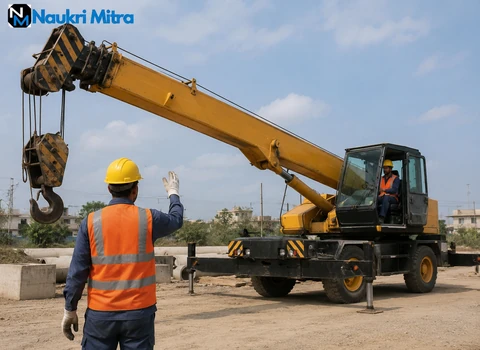
Understanding the Role of a Hydra Crane Operator
Lifting and moving heavy loads safely is one of the most critical tasks on any construction site, in a warehouse, or in an industrial yard. A Hydra Crane Operator is the professional trained to handle this responsibility using a hydraulic mobile crane, commonly known as a "Hydra" in Indian construction and logistics circles. This role is currently open in Faridabad, Haryana, India, offering full-time employment with a monthly salary of ₹30,000.
What Does This Machine Actually Do?
A Hydra crane is a wheel-mounted hydraulic lifting machine used to pick up, shift, and place heavy materials such as steel beams, machinery, construction blocks, pipes, or containers. It uses hydraulic pressure to extend a telescopic boom, allowing the operator to lift loads at different heights and angles. Because it can move freely on roads and uneven ground, it is widely preferred over fixed cranes for short-distance and site-to-site material handling.
Why Employers Need Skilled Operators
Handling a Hydra crane is not just about pressing levers. A small miscalculation in load balance or boom angle can cause accidents, equipment damage, or project delays. That is why companies specifically look for trained and experienced operators rather than general laborers for this position.
A Typical Day on the Job
The daily routine of an equipment operator in this trade usually includes:
- Inspecting the crane before starting work, checking hydraulic oil, tires, and hooks
- Reviewing the lifting plan and understanding load weight
- Positioning the crane on stable ground
- Operating boom, hook, and outriggers to lift and place materials
- Coordinating with a signal man or supervisor during lifting operations
- Recording daily work logs and reporting mechanical issues
Industries and Work Locations
Hydra crane operators are commonly hired across construction sites, warehouses, logistics yards, steel fabrication units, and infrastructure projects. In Haryana's growing industrial belt, demand often comes from manufacturing units, godowns, and building construction projects that require frequent material lifting and loading.
Tools, Equipment, and Instruments Used
Apart from the crane itself, an operator regularly works with slings, chains, shackles, load charts, and hand signals for communication. Understanding the safe working load (SWL) marked on the crane and lifting accessories is an essential daily practice.
Skills That Matter on the Ground
Technical skills required for this position include a valid heavy vehicle or crane operating license, basic knowledge of hydraulic systems, and the ability to read load charts. Practical workplace skills such as depth perception, patience, quick decision-making, and clear communication with ground staff are equally important. Many employers prefer candidates who have completed an ITI course or relevant vocational training in heavy equipment operation, along with hands-on experience.
Physical Demands and Working Conditions
This is a physically active full-time role that may involve long hours seated in the operator cabin, exposure to outdoor weather, noise, and dust at construction or industrial sites. Shift work is common, especially on active project sites where material movement continues across the day.
Safety First: PPE and Precautions
Since crane work carries inherent risk, safety cannot be compromised. Operators are generally expected to use personal protective equipment such as a helmet, safety shoes, a high-visibility vest, and gloves. Following signal protocols, avoiding overloading, and never operating near overhead power lines without clearance are basic but life-saving practices.
Common Challenges Faced by Operators
Working in tight spaces, managing loads in windy conditions, and coordinating with multiple ground workers can be challenging. Machine breakdowns and hydraulic faults may also require quick judgment on whether to continue or halt operations for safety.
Building a Long-Term Career in Crane Operation
With experience, a crane operator can progress toward handling larger capacity cranes, supervisory roles such as crane in-charge, or site safety coordination. Continuous learning about newer hydraulic systems and safety standards helps operators stay relevant in this field.
Salary and Benefits Overview
This Hydra Crane Operator position in Faridabad, Haryana, offers a monthly salary of ₹30,000 on a full-time basis. Depending on the employer, additional benefits may include overtime pay, PF, ESI, bonus, uniforms, or transport facilities, though these vary by organization and should be confirmed during hiring discussions.