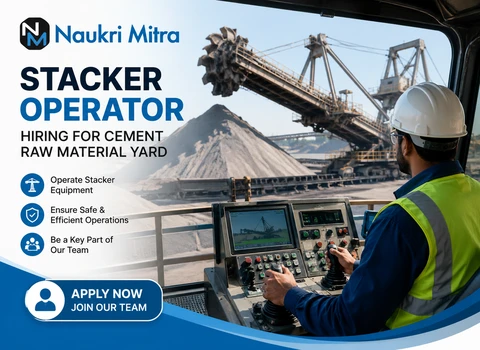
Understanding the Role of a Stacker Operator in a Cement Raw Material Yard
A Stacker Operator working in a cement raw material yard plays a key part in keeping the production process running smoothly. This position involves handling large stacking machines that arrange raw materials such as limestone, gypsum, clay, and other cement-making inputs into organized stockpiles. Without this step, factories would struggle to maintain a steady, well-mixed supply of material for the crushing and grinding stages that follow.
Why Cement Plants Need This Role
Cement manufacturing depends heavily on a consistent flow of raw material with balanced quality. Stockpiles stacked in layers help blend materials with varying compositions, improving the final quality of clinker and cement. This is why plants specifically recruit for a machine operator who can manage stacking equipment with precision, rather than leaving this task to manual labor.
What a Typical Workday Looks Like
The daily routine of a plant operator in this role usually begins with a safety check of the stacking machine, followed by a review of the day's material-handling targets. Work then involves operating the stacker from a control cabin or control panel, monitoring conveyor belts, and adjusting stacking patterns based on material type.
- Starting and inspecting the stacker before operations begin
- Monitoring conveyor belt speed and material flow
- Adjusting boom angle and stacking height as required
- Coordinating with reclaimer operators and yard supervisors
- Reporting unusual noises, vibrations, or blockages immediately
Core Responsibilities on the Job
Beyond running the machine, an equipment operator in this role is expected to maintain accurate records of the quantities of material stacked, follow shift handover procedures, and support basic housekeeping around the yard. Keeping the stacking area free of spillage and obstructions is considered part of daily duties, not an extra task.
Machines and Tools Commonly Used
Workers in this field operate boom-type or bridge-type stackers, along with associated conveyor systems, belt scales, and hopper feeders. Basic hand tools, grease guns for lubrication points, and PPE-related equipment are also part of daily use. Familiarity with control panel indicators and alarm systems is important for safe operation.
Industries and Work Locations
This role is primarily found in cement manufacturing plants, but similar stacking operations also occur in mining yards, thermal power plants handling coal, and steel plants handling raw ore. In Karnataka, cement production is an active industrial sector, and yard-based material handling roles like this one are commonly available in and around production units.
Skills That Matter for This Position
Technical understanding of conveyor and stacking systems is valuable, but so is the ability to stay alert during long shifts. Employers generally look for candidates who can read basic gauges, follow standard operating procedures, and respond quickly if a fault occurs.
Educational Background Preferred
Candidates with an ITI qualification in a mechanical or electrical trade often find it easier to understand machine functions. A diploma in mechanical engineering can also be helpful, though many plants train freshers on the job as long as they show mechanical aptitude and a willingness to learn.
Physical Demands and Working Conditions
This is a full-time position that may involve rotational shift work, including night shifts, since cement plants typically operate around the clock. The job requires standing or sitting for extended periods, working in dusty outdoor yard conditions, and tolerating exposure to noise from heavy machinery.
Safety Practices and Protective Equipment
Given the scale of machinery involved, safety is taken seriously in this line of work. Operators are expected to wear PPE such as safety helmets, dust masks, safety shoes, high-visibility vests, and ear protection. Following lockout-tagout procedures before any maintenance work and staying clear of moving conveyor parts are basic but critical habits.
Common Challenges Faced in the Yard
Dust exposure, heat, and the physical isolation of yard-based work can be demanding for newcomers. Material blockages or belt misalignments are frequent issues that require quick, calm troubleshooting rather than panic.
Tips for Building a Long-Term Career
Consistency in following safety protocols and a habit of reporting issues early often earns trust from supervisors. Learning to read stockpile patterns and understanding basic maintenance signs can open doors to becoming a senior operator or shift-in-charge over time within the same plant.
Salary and Benefits Overview
This Stacker Operator position in Sedam, Karnataka, India offers a monthly salary of ₹29,800. As with many industrial jobs, additional benefits may include overtime pay, Provident Fund (PF), ESI coverage, bonuses, uniforms, and possibly transport or canteen facilities, depending on the employer's policies.